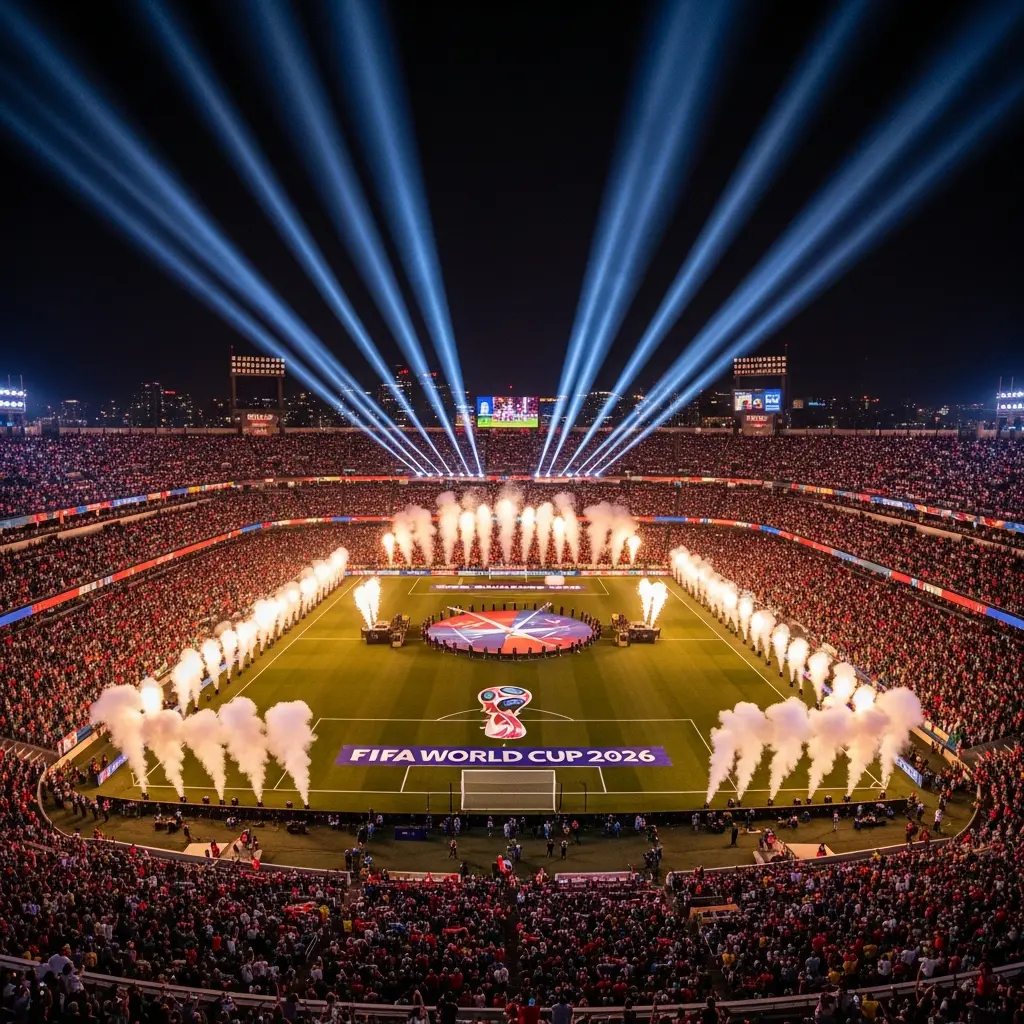
Night There are sporting moments that are bigger than the score. Moments where the noise of 80,000 people feels like something bigger than a crowd — something closer to a heartbeat. Thursday night at the legendary Azteca Stadium in Mexico City was one of those moments.
The FIFA World Cup 2026 officially opened its doors to the world and did so with a ceremony that wrapped history, culture and raw football emotion into something truly unforgettable. As the sun dipped behind the mountains and the stadium lights blazed to life, football’s greatest tournament was back — and it was bigger than ever.
A Stage Like No Other
The Azteca Stadium is not just a football ground. It’s a cathedral. It’s the place where Diego Maradona scored the Hand of God and the Goal of the Century in the same afternoon. It’s where Pelé lifted the Jules Rimet Trophy. Choosing it to host the World Cup opening was not just symbolic — it was a statement.
For the opening ceremony of the FIFA World Cup 2026, the Azteca delivered everything you’d expect and more. Performances paid tribute to the rich cultural tapestry of Mexico, with dazzling visuals, local musicians, and a colour and energy that only Latin America can produce. It felt less like a pre-match show and more like a love letter to football itself.
For the millions watching across the globe on television and digital platforms — and early projections suggest the audience will break records — the ceremony was the perfect curtain-raiser for what promises to be a landmark edition of the tournament.
Mexico’s Dream Start
Then came the football. And Mexico made sure the home faithful had plenty to celebrate.
El Tri took to the pitch carrying the hopes of an entire nation, the weight of history, and the knowledge that every eye in the football world was watching. They handled it beautifully. Playing with discipline, pace, and moments of genuine quality, Mexico secured a winning start in the opening match of the World Cup 2026 — sending the Azteca into absolute bedlam.
The victory felt personal for Mexican fans. This is a team that has reached the Round of 16 at seven consecutive World Cups only to fall agonisingly short each time. The “Quinto Partido” — the elusive fifth game — has become a near-mythical obsession in Mexican football culture. Winning on opening night, on home soil, in front of their own people, felt like more than just three points. It felt like a beginning.
The streets of Mexico City were alive long after the final whistle. Horns, flags, fireworks. A city choosing joy — and football giving it the excuse.
A Tournament Built for This Moment
The FIFA World Cup 2026 is no ordinary edition. For the first time in the tournament’s history, the expanded format brings 48 nations to the field — up from the 32 that competed previously. That means more countries represented, more storylines, more upsets, and more of the beautiful chaos that makes the World Cup the most-watched sporting event on the planet.
The multi-country hosting model — shared between Mexico, the United States, and Canada — is itself a fascinating experiment. Three nations, dozens of cities, thousands of miles, and one shared ambition: to pull off the greatest football tournament the world has ever seen. Early signs suggest they’re well on their way.
Sports analysts have been watching closely, and not just for the football. The logistical challenge of coordinating matches across three countries is unprecedented in World Cup history. But if the opening night in Mexico City is anything to go by, the organisers have every reason to feel confident.
A Global Audience Tuning In
Football news around the opening has dominated headlines from São Paulo to Seoul, from Lagos to London. The FIFA World Cup 2026 is already proving its universal pull — a reminder that whatever divides us as people, football has this remarkable ability to gather us together.
Streaming numbers from the opening ceremony and match have reportedly surpassed projections in several major markets. Younger audiences, in particular, are consuming football content across social and digital platforms at rates never seen before. This World Cup may well be the most digitally engaged in history.
For broadcasters, sponsors, and football federations alike, the message is clear: the appetite for this tournament is enormous, and it’s only just beginning.
The Journey Ahead
Over the coming weeks, 48 nations will chase football’s ultimate prize. There will be shocks, heartbreaks, heroics, and the kind of moments that people describe to their grandchildren. Some nation no one is talking about right now will capture the world’s imagination. A superstar will emerge from nowhere. A favourite will stumble.
That’s what makes the World Cup the World Cup.
But for now, on a warm night in Mexico City, with the Azteca roaring and the streets painted green, one thing feels certain: this tournament is going to be something special.
The FIFA World Cup 2026 has arrived. And the world watches.
FIFA World Cup 2026: The World Holds Its Breath, Mexico Will Never Forget This.