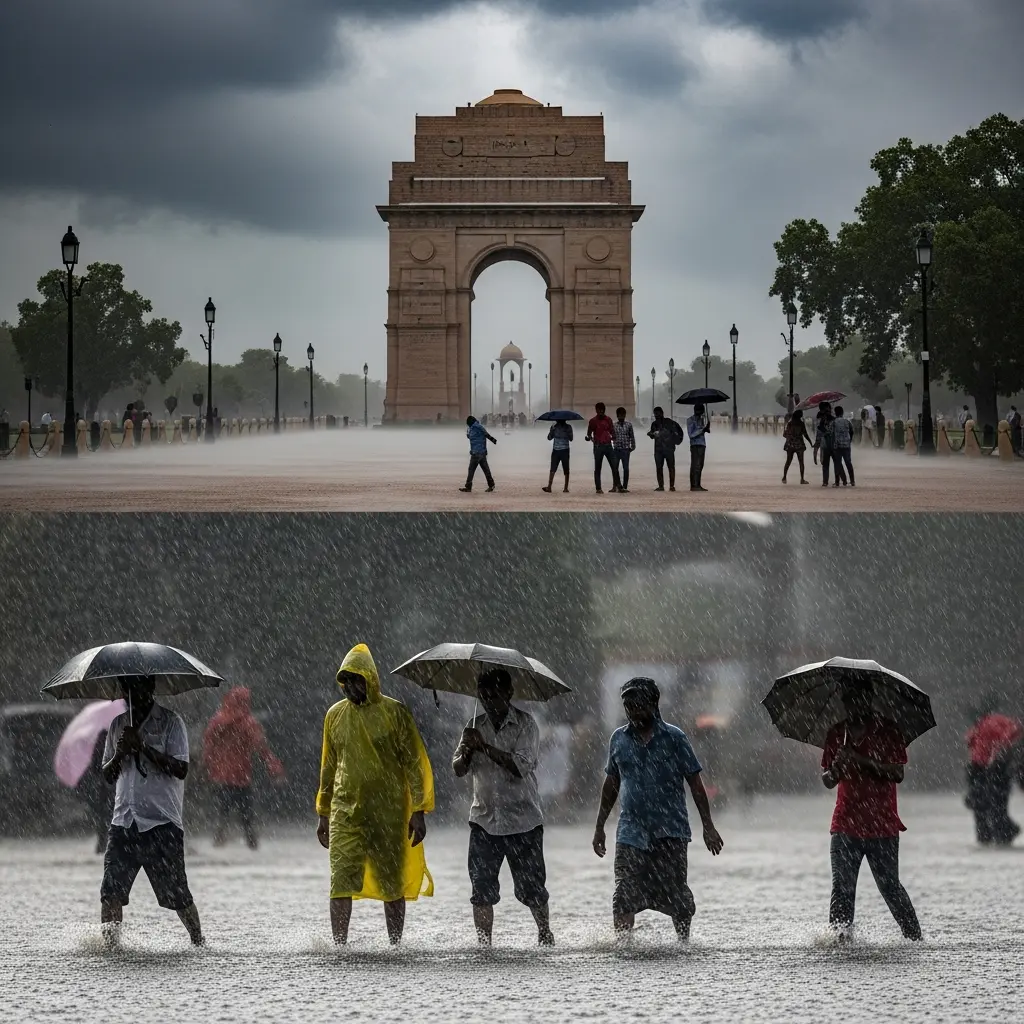
There’s a particular kind of anxiety that settles over a city when the sky changes colour in the middle of the afternoon. The air thickens. Leaves flip upside down. And then, without much warning, the heavens open up. Across large parts of India this week, that feeling has become achingly familiar — because the weather has turned, and it has turned hard.
The India Meteorological Department (IMD) has issued a series of alerts covering multiple states, warning of heavy rainfall, thunderstorms, hailstorms, and powerful winds. From the lush coasts of Kerala to the bustling streets of Delhi-NCR, millions of Indians are waking up each morning and checking the sky before they check their phones. And honestly, the sky isn’t offering much comfort right now.
Kerala in the Grip of the Monsoon
If there is one place in India that understands rain better than anywhere else, it is Kerala. The state greets the southwest monsoon every year with a mixture of relief, reverence, and caution. But even by Kerala’s standards, the rainfall expected this season is intense.
The IMD monsoon update has flagged Kerala for extremely heavy rain across several districts, with authorities urging residents — particularly those in low-lying and flood-prone areas — to stay vigilant. Landslides are a real concern in the hilly regions of Wayanad and Idukki, where soil saturation during heavy rain can turn a quiet hillside into a moving wall of mud within minutes.
Fishermen have been advised not to venture into the sea as rough weather and strong coastal winds make conditions dangerous. Schools in several districts have announced closures as a precautionary measure, and local disaster response teams are on standby. This is not panic — it is preparation. Kerala has learned, sometimes painfully, that when the IMD issues a red alert, you listen.
Delhi-NCR on Edge
While Kerala battles the monsoon’s full fury, Delhi and the surrounding National Capital Region are dealing with a different kind of weather anxiety. The capital, already sweltering through peak summer heat, has been placed under a weather alert for thunderstorms and high-speed winds — the kind that arrive suddenly, last twenty minutes, and leave behind fallen trees, power outages, and flooded underpasses.
Delhi weather in the pre-monsoon season can be genuinely chaotic. Dust storms roll in from Rajasthan, the humidity climbs, and then the thunderstorms crack open the afternoon like something that’s been building pressure for weeks — because it has.
Residents of Delhi-NCR have been advised to avoid stepping out during peak storm hours, secure loose objects on balconies and rooftops, and stay away from waterlogged areas after heavy rain episodes. For the city’s millions of daily commuters — auto drivers, office workers, street vendors, schoolchildren — these alerts are not abstract warnings. They are logistics problems that have to be solved every single morning.
The IMD alert for the region also covers Noida, Gurgaon, Faridabad, and Ghaziabad, where drainage infrastructure often struggles to cope with sudden, intense downpours. Flash waterlogging, which can submerge vehicles and block arterial roads within minutes, remains one of Delhi-NCR’s most persistent monsoon-season challenges.
A Wider Pattern Across India
It isn’t just Kerala and Delhi. The IMD’s current India weather warnings paint a picture of a subcontinent in the middle of significant meteorological activity. Thunderstorm and hailstorm warnings have been issued for parts of Uttar Pradesh, Madhya Pradesh, Rajasthan, and the northeastern states, where pre-monsoon and early monsoon systems are colliding with warm, moisture-laden air.
Hailstorms, in particular, have been causing concern for farmers. In states like Maharashtra and Madhya Pradesh, where crops are either still in the ground or recently harvested, hail can wipe out weeks of hard work in a matter of minutes. Agricultural losses due to unseasonal or extreme weather events have become one of India’s most pressing rural concerns, and this season’s weather patterns are adding to that anxiety.
The northeastern states — Assam, Meghalaya, Arunachal Pradesh — are already experiencing significant rainfall, and river levels in the Brahmaputra basin are being monitored carefully. Flood warnings in low-lying areas of Assam are not new, but they are never routine. Families who have experienced flood displacement before know exactly what those early warnings mean.
What You Should Do Right
Now Across all affected regions, the advice from authorities is consistent: stay informed, stay prepared, and don’t take chances with severe weather.
Practically, that means keeping an eye on the IMD’s official app and website for the latest monsoon update in your area. It means having emergency contacts ready, knowing your nearest higher ground if you live in a flood-prone zone, and not attempting to drive through waterlogged roads — a decision that has cost lives every monsoon season without fail.
It also means looking out for neighbours and elderly family members who may not have easy access to weather information. In a country as large and diverse as India, community awareness is often the most effective early warning system there is.
The Monsoon Is Not the Enemy
It’s worth remembering, amid all the disruption and the alerts and the anxiety, that the monsoon is not India’s enemy. It is, in the most fundamental sense, India’s lifeline. Agriculture, water reservoirs, river systems, and the ecological balance of the entire subcontinent depend on the seasonal rains arriving, roughly on time, with roughly the right intensity.
The problem is not the rain. The problem is when infrastructure isn’t ready, when warning systems don’t reach the right people fast enough, or when the rainfall tips from beneficial into extreme.
This week, as the IMD alert systems light up across the map and families from Thiruvananthapuram to Delhi check their weather apps with something between hope and dread, the message is the same one India has always had to live with: respect the weather. Prepare for the worst. And trust that the country, and its people, will find their way through.
Stay safe. Stay updated. And when the rains come — and they will — be ready.When the Sky Turns Angry: India Braces for Weather Disruptions Across Multiple States
There’s a particular kind of anxiety that settles over a city when the sky changes colour in the middle of the afternoon. The air thickens. Leaves flip upside down. And then, without much warning, the heavens open up. Across large parts of India this week, that feeling has become achingly familiar — because the weather has turned, and it has turned hard.
The India Meteorological Department (IMD) has issued a series of alerts covering multiple states, warning of heavy rainfall, thunderstorms, hailstorms, and powerful winds. From the lush coasts of Kerala to the bustling streets of Delhi-NCR, millions of Indians are waking up each morning and checking the sky before they check their phones. And honestly, the sky isn’t offering much comfort right now.
Kerala in the Grip of the Monsoon
If there is one place in India that understands rain better than anywhere else, it is Kerala. The state greets the southwest monsoon every year with a mixture of relief, reverence, and caution. But even by Kerala’s standards, the rainfall expected this season is intense.
The IMD monsoon update has flagged Kerala for extremely heavy rain across several districts, with authorities urging residents — particularly those in low-lying and flood-prone areas — to stay vigilant. Landslides are a real concern in the hilly regions of Wayanad and Idukki, where soil saturation during heavy rain can turn a quiet hillside into a moving wall of mud within minutes.
Fishermen have been advised not to venture into the sea as rough weather and strong coastal winds make conditions dangerous. Schools in several districts have announced closures as a precautionary measure, and local disaster response teams are on standby. This is not panic — it is preparation. Kerala has learned, sometimes painfully, that when the IMD issues a red alert, you listen.
Delhi-NCR on Edge
While Kerala battles the monsoon’s full fury, Delhi and the surrounding National Capital Region are dealing with a different kind of weather anxiety. The capital, already sweltering through peak summer heat, has been placed under a weather alert for thunderstorms and high-speed winds — the kind that arrive suddenly, last twenty minutes, and leave behind fallen trees, power outages, and flooded underpasses.
Delhi weather in the pre-monsoon season can be genuinely chaotic. Dust storms roll in from Rajasthan, the humidity climbs, and then the thunderstorms crack open the afternoon like something that’s been building pressure for weeks — because it has.
Residents of Delhi-NCR have been advised to avoid stepping out during peak storm hours, secure loose objects on balconies and rooftops, and stay away from waterlogged areas after heavy rain episodes. For the city’s millions of daily commuters — auto drivers, office workers, street vendors, schoolchildren — these alerts are not abstract warnings. They are logistics problems that have to be solved every single morning.
The IMD alert for the region also covers Noida, Gurgaon, Faridabad, and Ghaziabad, where drainage infrastructure often struggles to cope with sudden, intense downpours. Flash waterlogging, which can submerge vehicles and block arterial roads within minutes, remains one of Delhi-NCR’s most persistent monsoon-season challenges.
A Wider Pattern Across India
It isn’t just Kerala and Delhi. The IMD’s current India weather warnings paint a picture of a subcontinent in the middle of significant meteorological activity. Thunderstorm and hailstorm warnings have been issued for parts of Uttar Pradesh, Madhya Pradesh, Rajasthan, and the northeastern states, where pre-monsoon and early monsoon systems are colliding with warm, moisture-laden air.
Hailstorms, in particular, have been causing concern for farmers. In states like Maharashtra and Madhya Pradesh, where crops are either still in the ground or recently harvested, hail can wipe out weeks of hard work in a matter of minutes. Agricultural losses due to unseasonal or extreme weather events have become one of India’s most pressing rural concerns, and this season’s weather patterns are adding to that anxiety.
The northeastern states — Assam, Meghalaya, Arunachal Pradesh — are already experiencing significant rainfall, and river levels in the Brahmaputra basin are being monitored carefully. Flood warnings in low-lying areas of Assam are not new, but they are never routine. Families who have experienced flood displacement before know exactly what those early warnings mean.
What You Should Do Right Now
Across all affected regions, the advice from authorities is consistent: stay informed, stay prepared, and don’t take chances with severe weather.
Practically, that means keeping an eye on the IMD’s official app and website for the latest monsoon update in your area. It means having emergency contacts ready, knowing your nearest higher ground if you live in a flood-prone zone, and not attempting to drive through waterlogged roads — a decision that has cost lives every monsoon season without fail.
It also means looking out for neighbours and elderly family members who may not have easy access to weather information. In a country as large and diverse as India, community awareness is often the most effective early warning system there is.
The Monsoon Is Not the Enemy
It’s worth remembering, amid all the disruption and the alerts and the anxiety, that the monsoon is not India’s enemy. It is, in the most fundamental sense, India’s lifeline. Agriculture, water reservoirs, river systems, and the ecological balance of the entire subcontinent depend on the seasonal rains arriving, roughly on time, with roughly the right intensity.
The problem is not the rain. The problem is when infrastructure isn’t ready, when warning systems don’t reach the right people fast enough, or when the rainfall tips from beneficial into extreme.
This week, as the IMD alert systems light up across the map and families from Thiruvananthapuram to Delhi check their weather apps with something between hope and dread, the message is the same one India has always had to live with: respect the weather. Prepare for the worst. And trust that the country, and its people, will find their way through. Stay safe. Stay updated. And when the rains come — and they will — be ready.
There’s a particular kind of anxiety that settles over a city when the sky changes colour in the middle of the afternoon. The air thickens. Leaves flip upside down. And then, without much warning, the heavens open up. Across large parts of India this week, that feeling has become achingly familiar — because the weather has turned, and it has turned hard.
The India Meteorological Department (IMD) has issued a series of alerts covering multiple states, warning of heavy rainfall, thunderstorms, hailstorms, and powerful winds. From the lush coasts of Kerala to the bustling streets of Delhi-NCR, millions of Indians are waking up each morning and checking the sky before they check their phones. And honestly, the sky isn’t offering much comfort right now.
Kerala in the Grip of the Monsoon
If there is one place in India that understands rain better than anywhere else, it is Kerala. The state gets the southwest monsoon every year with a mixture of relief, reverence and caution. But this season’s rainfall is intense even by Kerala standards.
The IMD monsoon update has flagged Kerala for very heavy rain across many districts with authorities asking residents — especially those in low-lying and flood-prone areas — to be on their guard. Landslides are a real possibility in the hilly areas of Wayanad and Idukki where soil saturation during heavy rain can turn a quiet hillside into a flowing wall of mud within minutes.
Fishermen have been warned not to head out to sea as rough weather and strong coastal winds create dangerous conditions. Schools in several districts have announced closures as a precautionary measure, and local disaster response teams are on standby. This is not panic — it is preparation. Kerala has learned, sometimes painfully, that when the IMD issues a red alert, you listen.
Delhi-NCR on Edge
While Kerala battles the monsoon’s full fury, Delhi and the surrounding National Capital Region are dealing with a different kind of weather anxiety. The capital, already sweltering through peak summer heat, has been placed under a weather alert for thunderstorms and high-speed winds — the kind that arrive suddenly, last twenty minutes, and leave behind fallen trees, power outages, and flooded underpasses.
Delhi weather in the pre-monsoon season can be genuinely chaotic. Dust storms roll in from Rajasthan, the humidity climbs, and then the thunderstorms crack open the afternoon like something that’s been building pressure for weeks — because it has.
Residents of Delhi-NCR have been advised to avoid stepping out during peak storm hours, secure loose objects on balconies and rooftops, and stay away from waterlogged areas after heavy rain episodes. For the city’s millions of daily commuters — auto drivers, office workers, street vendors, schoolchildren — these alerts are not abstract warnings. They are logistics problems that have to be solved every single morning.
The IMD alert for the region also covers Noida, Gurgaon, Faridabad, and Ghaziabad, where drainage infrastructure often struggles to cope with sudden, intense downpours. Flash waterlogging, which can submerge vehicles and block arterial roads within minutes, remains one of Delhi-NCR’s most persistent monsoon-season challenges.
A Wider Pattern Across India
It isn’t just Kerala and Delhi. The IMD’s current India weather warnings paint a picture of a subcontinent in the middle of significant meteorological activity. Thunderstorm and hailstorm warnings have been issued for parts of Uttar Pradesh, Madhya Pradesh, Rajasthan, and the northeastern states, where pre-monsoon and early monsoon systems are colliding with warm, moisture-laden air.
Hailstorms, in particular, have been causing concern for farmers. In states such as Maharashtra and Madhya Pradesh, where crops are still in the ground or freshly harvested, hail can destroy weeks of work in minutes. Agricultural losses due to unseasonal or extreme weather events have become one of India’s most pressing rural concerns, and this season’s weather patterns are adding to that anxiety.
The northeastern states — Assam, Meghalaya, Arunachal Pradesh — are already experiencing significant rainfall, and river levels in the Brahmaputra basin are being monitored carefully. Flood warnings in low-lying areas of Assam are not new, but they are never routine. Families who have experienced flood displacement before know exactly what those early warnings mean.
What You Should Do Right Now
Across all affected regions, the advice from authorities is consistent: stay informed, stay prepared, and don’t take chances with severe weather.
Practically, that means keeping an eye on the IMD’s official app and website for the latest monsoon update in your area. It means having emergency contacts ready, knowing your nearest higher ground if you live in a flood-prone zone, and not attempting to drive through waterlogged roads — a decision that has cost lives every monsoon season without fail.
It also means looking out for neighbours and elderly family members who may not have easy access to weather information. In a country as large and diverse as India, community awareness is often the most effective early warning system there is.
The Monsoon Is Not the Enemy
It’s worth remembering, amid all the disruption and the alerts and the anxiety, that the monsoon is not India’s enemy. It is, in the most fundamental sense, India’s lifeline. Agriculture, water reservoirs, river systems, and the ecological balance of the entire subcontinent depend on the seasonal rains arriving, roughly on time, with roughly the right intensity.
The problem is not the rain. The problem is when infrastructure isn’t ready, when warning systems don’t reach the right people fast enough, or when the rainfall tips from beneficial into extreme.
This week, as the IMD alert systems light up across the map and families from Thiruvananthapuram to Delhi check their weather apps with something between hope and dread, the message is the same one India has always had to live with: respect the weather. Prepare for the worst. And trust that the country, and its people, will find their way through.
Stay safe. Stay updated. And when the rains come — and they will — be ready.
When the Sky Turns Angry: India Braces for Weather Disruptions Across Multiple States