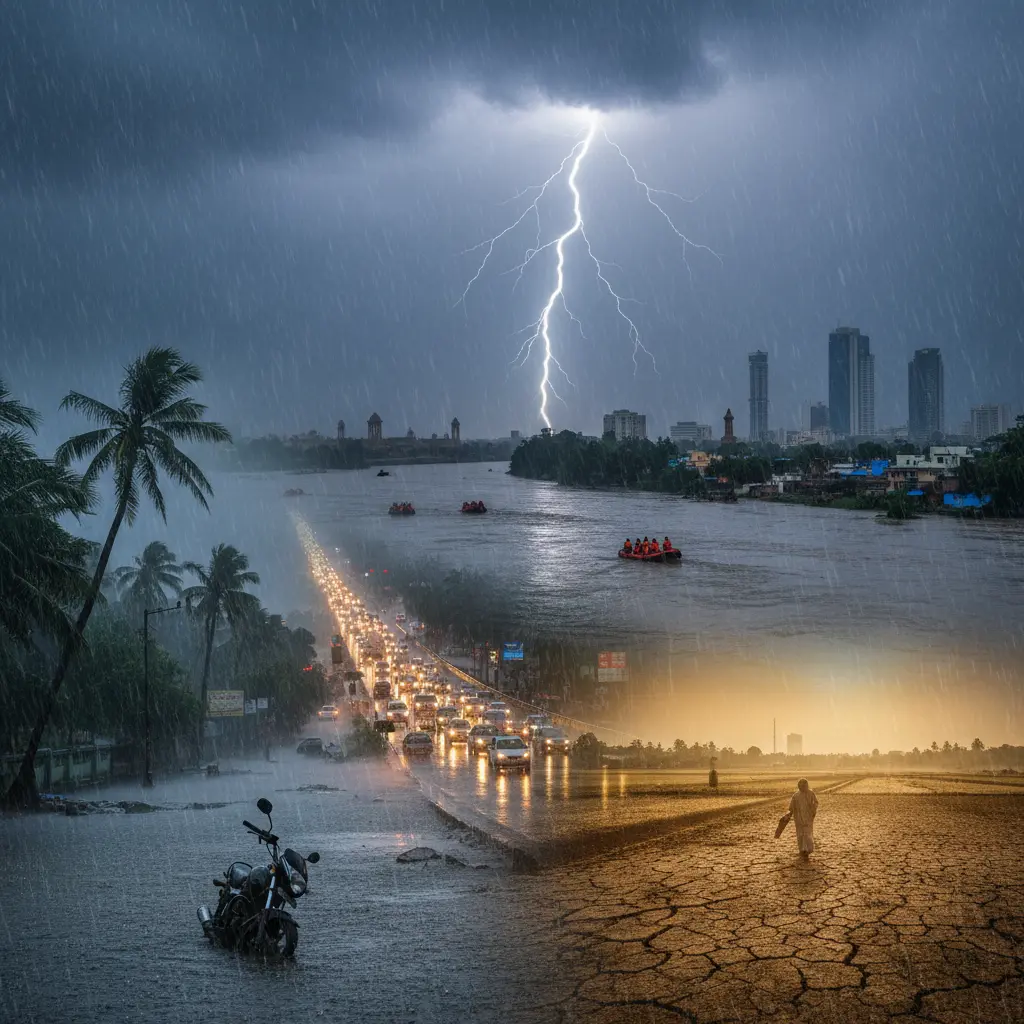
The southwest monsoon is flexing its muscles this week and the India Meteorological Department is not mincing words with its warnings. The latest IMD weather alert covers a large swathe of the country warning of heavy to very heavy rainfall in Kerala, Karnataka, Odisha, Gujarat and Assam. If you’ve got travel plans or outdoor work scheduled in any of these states over the next few days, it’s worth paying close attention to local forecasts.
According to IMD bulletins for the region, heavy rain is set to impact Kerala, Karnataka, Gujarat, and Assam, while Delhi and Chandigarh can expect thunderstorms and East Uttar Pradesh continues to grapple with heatwave conditions. That last part is the strange twist in this year’s India monsoon 2026 story — some parts of the north are baking under heat while others are bracing for flash floods. It’s the kind of contrast that makes early summer in India genuinely unpredictable.
Coastal regions seem to be bearing the brunt of it right now. Reports indicate orange alerts have been issued for coastal Karnataka and south Gujarat, with heavy downpours raising the risk of urban flooding in cities like Bengaluru and Guwahati. Anyone who’s lived through a Bengaluru monsoon knows exactly what that means — clogged drains, stalled traffic, and commutes that stretch on forever. Guwahati faces a similar story, especially given how quickly the Brahmaputra and its tributaries can swell.
Travel disruptions are also part of the picture. Commuters should brace for delays in both flight and rail services because of reduced visibility, and the hilly terrain of Northeast India faces a heightened risk of landslides as the rain intensifies. If you’re flying out of or into the Northeast this week, it might be smart to check your flight status a little more often than usual.
What’s driving all this? Turns out there’s a specific weather system behind the surge. The IMD has pointed to a low-pressure area forming over the Arabian Sea, which is fueling the heavy rainfall along south Gujarat and the Konkan coast. This is a fairly classic monsoon pattern — low-pressure systems over the Arabian Sea routinely pull in moisture and dump it along the western coastline, and this year is shaping up to follow that script closely. Fishermen along these coasts have been specifically warned not to venture into the sea given the strength of the winds.
Beyond the coast, the wider national picture backs up just how widespread this spell really is. IMD’s broader forecast for the day shows widespread monsoon rain expected across West Bengal, Kerala, Karnataka, and Tamil Nadu, even as Delhi-NCR, Punjab, and Haryana brace for incoming thunderstorms of their own. North India’s Delhi thunderstorms are expected to bring lightning and gusty winds rather than the sustained, days-long rainfall seen down south — but they’re no less disruptive when they hit during evening rush hour.
There’s also real concern building up in the Northeast. While this monsoon surge is good news for farmers who’ve been waiting on rain to soak into the soil, officials have flagged that isolated pockets of very heavy rainfall over Assam, Meghalaya, and Arunachal Pradesh raise the risk of serious flooding and landslides, something local administrations are being told to watch closely. Rivers in this part of the country don’t take long to rise, and once they do, low-lying villages and tea estates are usually the first to feel it.
The infrastructure angle matters here too. Heavy gusty winds aren’t just an inconvenience — they put real pressure on city drainage systems, power lines, and transport networks, especially in places that haven’t fully recovered from earlier spells of rain this season. It’s a reminder that monsoon damage often isn’t about the rain alone, but about how prepared (or unprepared) local systems are to handle it.
So what should people actually do with this information? If you’re in any of the alert zones — Kerala, Karnataka, Odisha, Gujarat, or Assam — it’s worth keeping an eye on local administration updates rather than just the national picture. Avoid low-lying roads and underpasses during heavy spells, keep emergency numbers handy, and if you live near a river or hilly terrain, pay attention to any evacuation advisories rather than waiting things out. For those in Delhi and the north, the main risk right now is more about sudden thunderstorms than prolonged rain, so keeping tabs on real-time weather today India updates before heading out is a smart move.
Disaster response teams are already on standby in several of these states, and that alone tells you how seriously this spell is being taken. Monsoon season always brings a mix of relief and risk — relief for agriculture and water tables, risk for anyone caught off guard by sudden flooding. Right now, India is seeing both sides of that coin play out at the same time, just in different corners of the map.
Bottom line: this isn’t a one-state story. It’s a genuinely national moment for the monsoon, with the IMD weather alert system actively tracking multiple fronts at once. Staying updated through official channels, rather than assumptions based on yesterday’s weather, is probably the smartest thing anyone in an alert zone can do right now.
Monsoon flexes muscles, IMD issues heavy rain warning in several states.