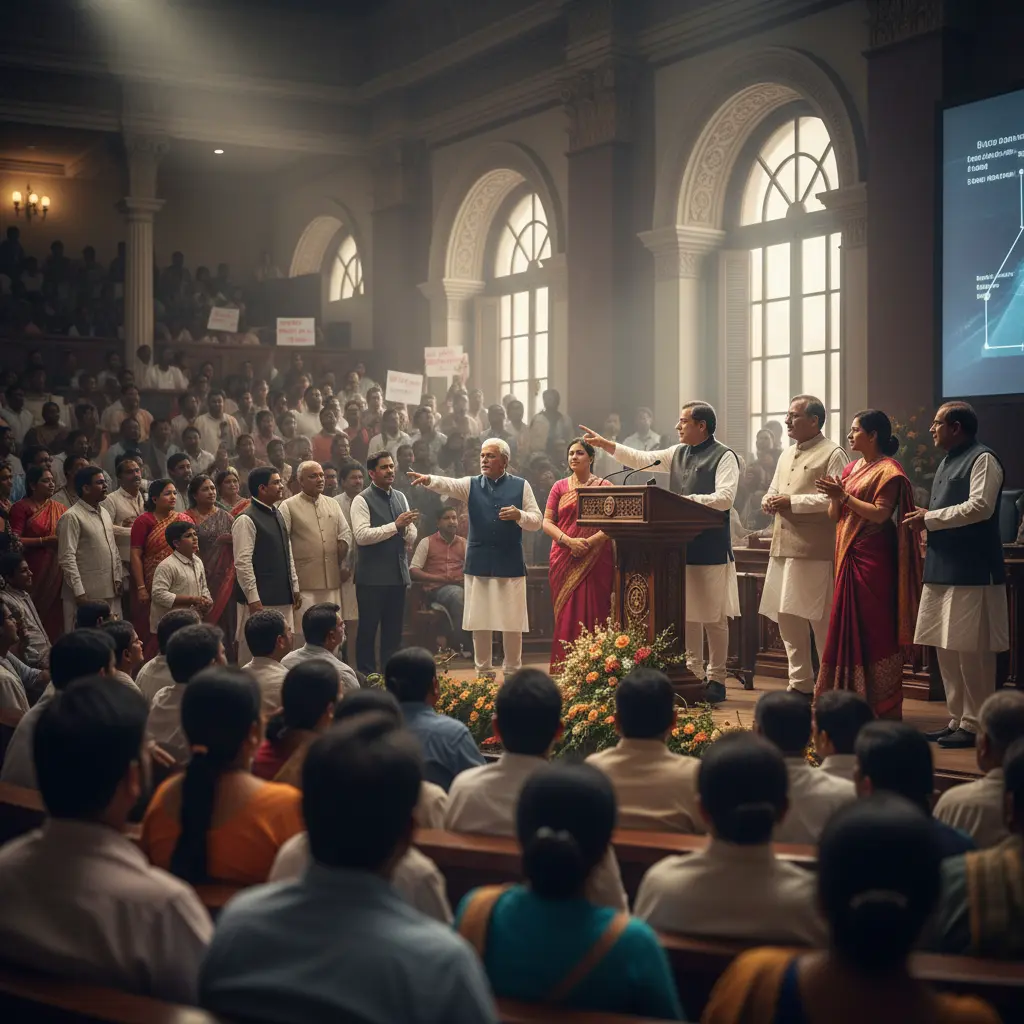
Bihar’s political landscape has rarely sat still for long, and the latest flashpoint is education — specifically, what role religious and traditional institutions like madrasas and Sanskrit pathshalas should play in the state’s broader schooling framework. This debate has picked up real momentum in recent weeks, becoming one of the more closely watched threads in Bihar politics right now.
The backdrop here matters. Samrat Choudhary became Bihar’s Chief Minister in mid-April 2026, taking over after Nitish Kumar resigned to contest the Rajya Sabha elections, making Choudhary the first BJP leader to hold the post in the state’s history. That kind of leadership change rarely comes without friction, and education policy has quickly become one of the arenas where the new government’s direction is being tested — and where the opposition is choosing to push back hardest. SamratchoudharyWikipedia
Government representatives have been fairly direct in defending their approach. Early decisions from the new administration have already touched education in tangible ways — Choudhary’s government moved to require private schools across the state to publish a clear fee structure, while also directing that students with pending fees should not be barred from sitting their exams. Supporters of the government frame this kind of regulatory push as proof that Indian politics in Bihar is finally getting practical about classroom realities rather than just talking about reform in the abstract. Wikipedia
But the more politically charged part of this debate centers on madrasas — Bihar’s network of religious schools that has existed, in one form or another, for a century. This isn’t a new institution suddenly under the microscope; it’s one with deep roots and a complicated, often strained relationship with state funding. Even under the previous government, tension simmered beneath the surface. At the Bihar State Madrasa Education Board’s centenary celebration last year, madrasa teachers staged a protest in front of the sitting chief minister, accusing the government of failing to deliver on long-promised salary support, with one teacher pointing out that a 2011 promise to fund 2,459 madrasas had shrunk to just 1,659 still receiving support. That history of unmet promises is exactly the kind of ammunition opposition parties are now using to question the new government’s intentions. Patna Press
Opposition voices, led largely by the RJD, have framed the current reform push as politically motivated rather than genuinely focused on improving outcomes for students. This criticism fits into a wider pattern playing out across BJP-governed states. In Uttarakhand, for instance, the state government decided to dissolve its Madrasa Board entirely, requiring all madrasas to adopt the state curriculum by July 2026 — a move religious scholars like Maulana Khalid Rashid Firangi Mahali called legally questionable, arguing that reforms could have been carried out without dissolving the board altogether. Bihar’s opposition has pointed to examples like this as a warning sign of where similar government reforms could be headed, even though Bihar’s own madrasa board has not been dissolved. Muslim Mirror
There’s also a sharper, more personal edge to this round of Bihar news. Political strategist-turned-politician Prashant Kishore has been particularly vocal, going after the new chief minister directly. Kishore has questioned Choudhary’s academic credentials, alleging a backdoor appointment to the CM’s post and suggesting that the state government is effectively being run from Delhi rather than Patna. Whether or not that charge sticks politically, it shows how quickly a debate over school curricula and institutional funding can spiral into a referendum on leadership legitimacy itself. Deccan Herald
For the government’s part, the response has largely echoed a familiar playbook: highlight the investment, downplay the criticism. The state’s recent budget signals where priorities officially lie — Bihar earmarked around ₹70,000 crore for education in its 2026-27 budget, a figure being presented as proof the state has entered a decisive phase of education reform, covering everything from basic schooling to higher and technical education. Whether that money translates into resolved grievances at the madrasa and minority-education level remains an open question — and likely the next chapter in this ongoing argument. Insider Live
What makes this particular education policy debate worth tracking isn’t just the funding numbers or the political point-scoring. It’s that Bihar sits at an unusually visible intersection of religious education, government reform, and electoral strategy. Madrasas and pathshalas aren’t abstract policy line items here — they’re institutions tied to community trust, caste politics, and decades of promises made and broken by successive governments, regardless of party.
As preparations continue for whatever comes next on Bihar’s political calendar, this fight over education policy isn’t likely to cool down soon. If anything, it’s shaping up to be one of the defining storylines of the new BJP-led government’s first year — a test of whether reform rhetoric in Indian politics can actually translate into trust on the ground, especially among communities who’ve heard similar promises before.