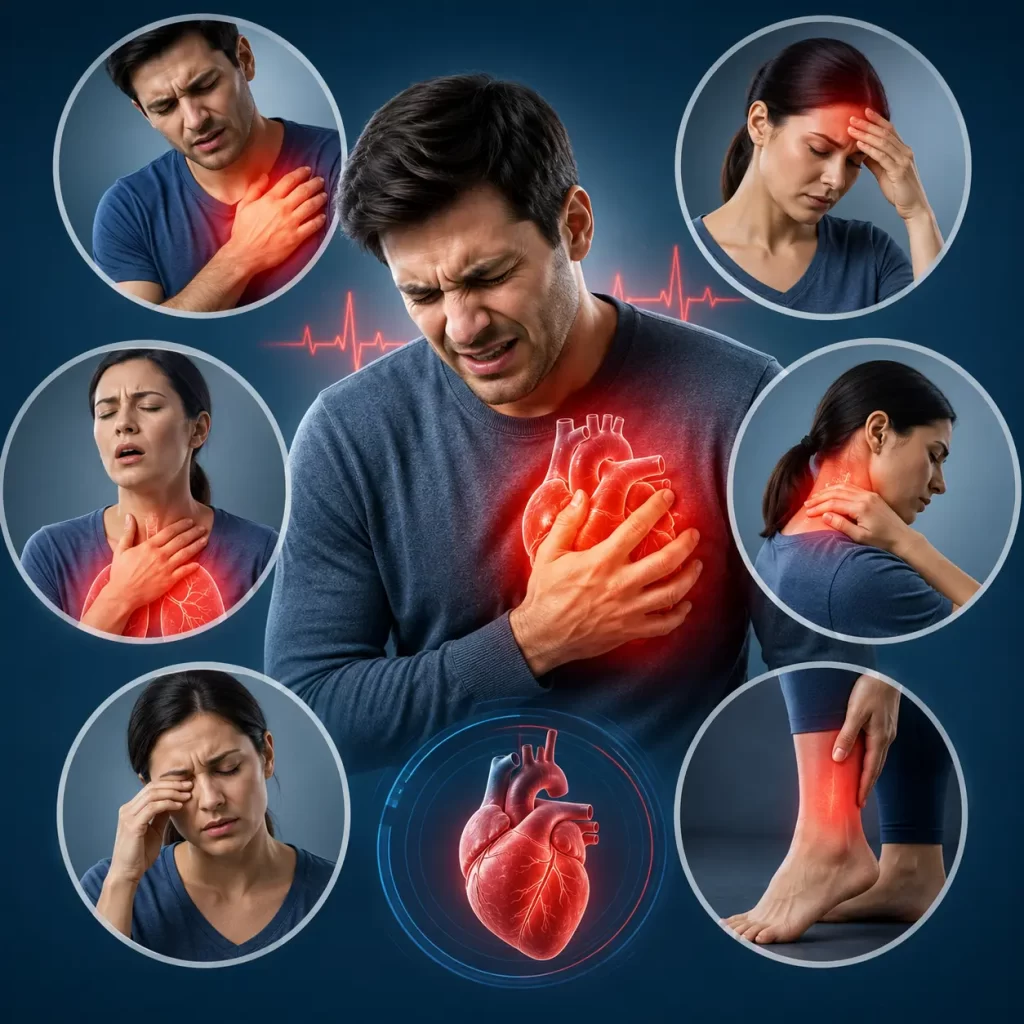
Most people think of a heart attack as something sudden – someone clutching their chest, collapsing out of the blue. In fact, the body can provide clues days, weeks or even months before a heart attack occurs. The problem is that these early warning signs are subtle, easy to ignore, and often misdiagnosed as stress, indigestion or just “getting older”.
Catching these signals early can mean the difference between a routine doctor’s visit and a life-threatening emergency. Here are six body signals that commonly show up before a heart attack, and what they might be telling you.
1. Fatigue Unusual
It’s normal to feel tired after a long day. But unexplained fatigue – the kind that doesn’t improve with rest, and occurs during simple tasks of daily living such as climbing stairs or carrying groceries – can be a red flag. “This occurs when the heart cannot pump blood efficiently, and the body has to work harder to do even basic tasks. In fact, many people, especially women, tend to report this symptom more often than the classic chest pain of heart attacks.
2. Difficulty breathing
If you get out of breath doing things that never bothered you before, take note. Dyspnea may be present without chest discomfort and is often associated with a reduced capacity of the heart to supply oxygenated blood to the rest of the body. This symptom may occur during physical activity, or in more serious cases, even at rest or lying down.
3. Chest pressure or pain
This is the symptom most people think of when they think of heart trouble. And rightly so. It doesn’t always feel like sharp pain — many describe it as pressure, tightness, squeezing, or a heavy weight sitting on the chest. You might feel this discomfort off and on for several days, instead of all at once—and that’s part of the reason it’s often dismissed as heartburn or a pulled muscle.
4. Pain radiating to the arm, jaw, neck or back
Heart-related pain doesn’t always remain in the chest. It can spread to the left arm, jaw, neck, shoulders or upper back. This referred pain occurs because the nerves that transmit signals from the heart share pathways with nerves from other areas of the upper body, so the brain can sometimes misinterpret the source of the pain. Prompt attention is warranted for discomfort that spreads to multiple areas, especially if accompanied by chest tightness.
5. Chills, dizziness, or lightheadedness
Sudden dizziness, lightheadedness or cold sweats without any apparent reason can be a sign that the heart is not pumping enough blood to the brain and the rest of the body. Sometimes these symptoms are accompanied by nausea or a feeling of impending doom – a sensation many heart attack survivors describe as one of the clearest signs something was seriously wrong.
6. Palpitations or irregular
heart beat If you experience a racing, fluttering, pounding or skipping heartbeat, don’t ignore it, especially if it happens repeatedly or with other symptoms on this list. The extra beats can be benign – caffeine or stress can bring them on – but a sustained irregular rhythm can indicate that the heart muscle is under stress or not getting enough blood flow.
Why These Signals Are Often Missed
A lot of these symptoms are like the ones you might complain about every day – tiredness from a busy week, breathlessness from being out of shape, or a racing heart from too much coffee. That overlap is exactly why heart attacks can sneak up on people. The difference is in pattern and persistence: when these signals occur together, get worse over time, or occur without an obvious cause, they are worth taking seriously rather than explaining away.
Also, it’s important to remember that symptoms can differ in men and women. Men are more likely to describe classic chest pain, while women are more likely to have fatigue, nausea, shortness of breath and back or jaw pain without severe chest discomfort. This difference has historically meant that women are underdiagnosed, making awareness of these more subtle signs all the more important.
What to do if you see these signs
If you or anyone around you has chest pressure, pain that radiates to the arm or jaw, sudden shortness of breath, cold sweats, or a combination of these symptoms, treat it as a medical emergency. Call emergency services immediately, and do not try to drive yourself to a hospital. Chewing an aspirin (if not allergic and advised by a medical professional at that moment) and staying calm while waiting for help might also lead to better outcomes.
If you have ongoing but milder symptoms, such as unexplained fatigue or palpitations that come and go, it is still a good idea to get a check-up with a doctor. A simple ECG, blood pressure check or cholesterol panel can tell you a lot about heart health long before a crisis hits.
Final Thoughts
The body rarely fails without warning. Heart attacks, despite feeling sudden, are usually preceded by signals that the body has been sending all along. Learning to recognize unusual fatigue, breathlessness, chest pressure, radiating pain, cold sweats, and irregular heartbeats can empower you to act early — and acting early is often what saves lives.
This article is for informational purposes only and is not a substitute for professional medical advice. If you have symptoms you are worried about, please see your doctor or seek emergency care.
6 Body Signals Before a Heart Attack You Should Never Ignore.