Remember when “watching TV” meant sitting down at a specific time because that’s when your show aired? That world feels almost quaint now. The rules of media consumption have been rewritten by digital entertainment and the pace of change is not slowing down. Streaming, short-form video, gaming, and creator-driven content have all merged into one sprawling, always-on ecosystem that’s reshaping how media companies think about audiences altogether.
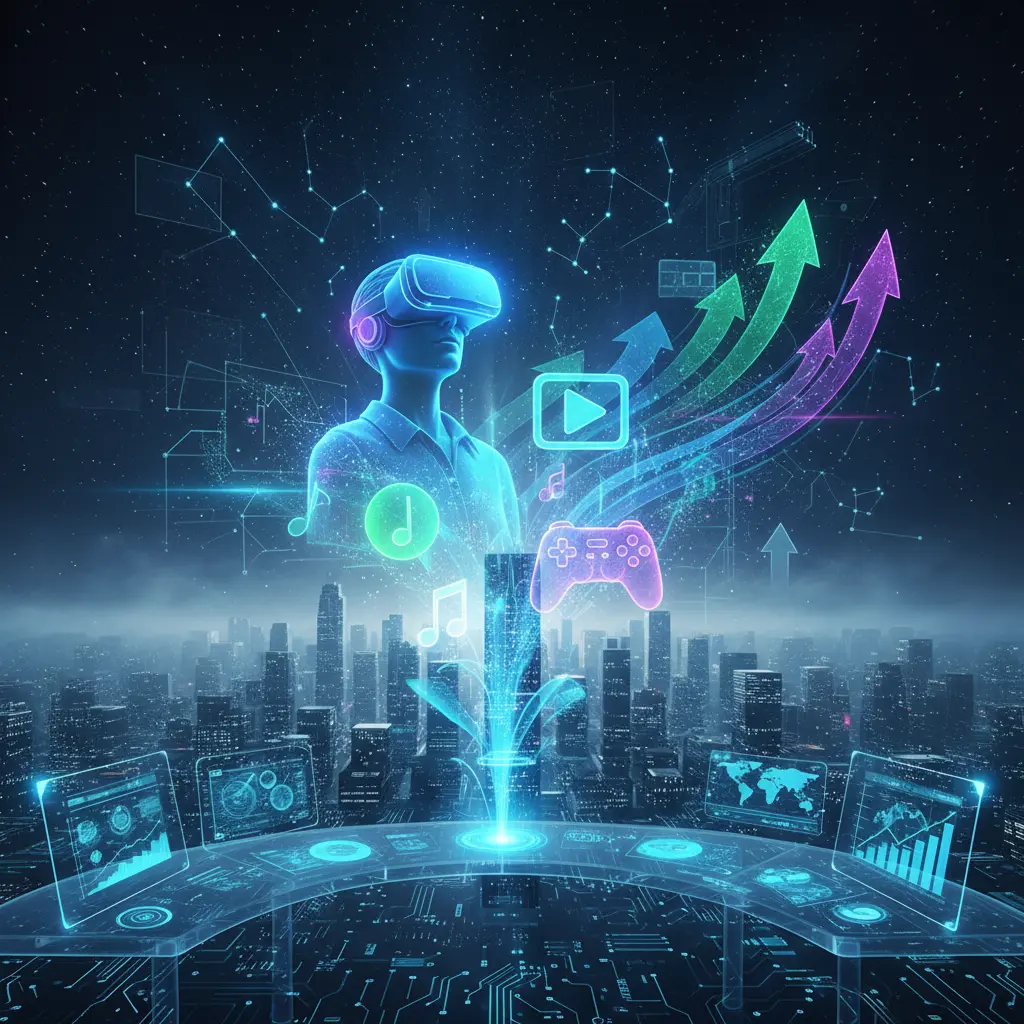
What’s striking isn’t just that digital entertainment is growing — it’s how it’s growing. This isn’t a single format winning out over others. It’s multiple formats coexisting, feeding into each other, and competing for the same increasingly fragmented attention span.
Streaming’s Maturity Phase
OTT platforms have moved past their early land-grab era, when the goal was simply to sign up as many subscribers as possible. That phase is largely over. What’s replaced it is a more competitive, profitability-focused approach, where streaming services are being far more deliberate about content spending, pricing tiers, and audience retention.
A major piece of this shift has been the introduction of ad-supported tiers. Platforms that once billed themselves as ad-free alternatives to traditional TV have quietly pivoted, introducing cheaper, ad-supported options to snare price-sensitive viewers before they go to the competition. It’s a pragmatic move, and it reflects a broader truth about the streaming business: growth alone isn’t enough anymore. Sustainable engagement is the real prize.
Bundling has also made a comeback, which is a little ironic given that streaming originally rose to prominence by unbundling cable packages. Now, platforms are partnering with telecom providers, other streaming services and even retail loyalty programs to bundle their offerings together, essentially recreating a more flexible, modern version of the very cable bundles they once disrupted.
Short-Form Video Isn’t Going Anywhere
As streaming services have fought for long-form content, short-form video has quietly emerged as one of the most powerful forces in digital entertainment. Bite-sized videos, meant to be devoured quickly and shared even quicker, have fundamentally changed viewing habits, particularly among younger audiences, who increasingly view short-form platforms as their primary source of entertainment, rather than a supplement to traditional media.
Such a shift has left media companies with very little choice to reconsider their content strategy. Producing a single premium piece and calling it done isn’t enough anymore. Content these days needs a short-form companion strategy — clips, behind-the-scenes snippets, audience-facing moments — all designed for platforms where attention spans are measured in seconds, not hours.
Gaming is an Entertainment, Not Only a Pastime
Gaming has continued its steady rise to become one of the biggest entertainment industries in the world and increasingly it’s blurring the lines between playing and watching. Gaming has become as much a spectator event as it is a participatory one with esports tournaments, social experiences within games, and livestreamed gameplay.
Media companies are taking notice. Traditional entertainment brands have increasingly partnered with gaming platforms, from licensed content and in-game events linked to shows and films to investment in gaming-adjacent creator content. There is just too much audience overlap between gaming and other forms of digital entertainment to ignore.
Creators Are the New Studios
The biggest change in digital entertainment may be the emergence of individual content creators as real competitors to traditional media companies. What started as amateur video blogging has evolved into a genuine industry, with creators building loyal, highly engaged audiences that in some cases rival those of established media brands.
This has pushed media companies into an interesting position: compete with creators, or partner with them. Increasingly, they’re choosing the latter. Studios and platforms are investing directly in creator partnerships, production deals, and even acquiring creator-led media companies outright, knowing that audiences often trust individual creators over slick, corporate-branded content.
The attraction is obvious. Creators bring their own built-in, engaged audiences and a level of authenticity that’s hard to manufacture through traditional production. For media companies trying to stay relevant with younger, more skeptical audiences, that authenticity has real value.
Personalization and the Year-Round Attention Game
Underneath all of these formats is a shared strategic shift: media companies are no longer thinking in terms of single releases or seasonal content calendars. They are looking for sustained, personalized engagement that brings audiences back all year long, not just during a big premiere week.
Recommendation algorithms, personalized streams of content, and data-based insights into audiences have become central to the functioning of digital entertainment platforms. It’s not about just getting viewers once, it’s about building habits that lead people to open the same app day in and day out, even when there isn’t a big new release to justify it.
Where This Leaves the Industry
Digital entertainment has become less about any single dominant format and more about an interconnected ecosystem where streaming, short-form video, gaming, and creator content all compete for — and increasingly complement — each other. Media companies that once specialized in one lane are now being pushed to operate across several simultaneously.
The audiences driving this growth show no signs of narrowing their habits back down to a single platform or format. If anything, the opposite is happening — attention keeps fragmenting further, and the companies succeeding in this environment are the ones willing to meet audiences wherever they happen to be, in whatever format they prefer that day.