
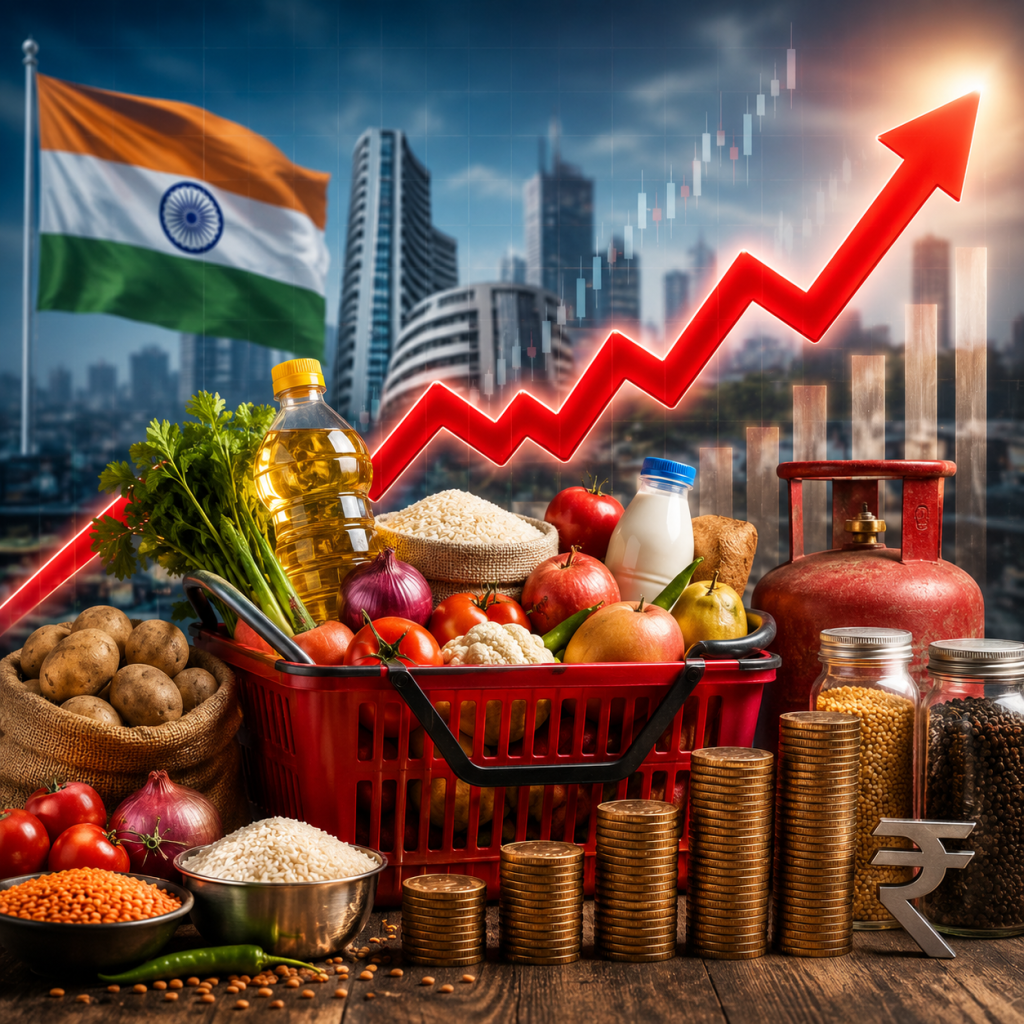
Grocery bills have been quietly getting heavier in India, and now the numbers have caught up with what a lot of households were already feeling. India’s retail inflation climbed to 4.38% in June 2026, its highest level in 18 months, according to fresh data from the Ministry of Statistics and Programme Implementation. It’s the third straight month of acceleration, up from 3.93% in May, and it’s landed just above what most economists were expecting.
That 4.38% figure still sits comfortably within the Reserve Bank of India’s tolerance band of 2-6%, so this isn’t a crisis-level print by any stretch. But the direction of travel — steadily climbing for three months running — is exactly what tends to put central bankers on alert.
Food and Fuel Are Doing the Heavy Lifting
The headline number rarely tells the full story, and this one is a good example. The real pressure is coming from two familiar culprits: food and fuel.
Food inflation, measured by the Consumer Food Price Index, jumped to 5.32% in June from 4.78% in May, and the details underneath are genuinely striking. Ginger prices shot up more than 50% year-on-year, tomatoes surged nearly 32%, and there’s been a sharp rally in silver and gold jewellery prices too, adding another layer of pressure on household budgets. Interestingly, not everything in the kitchen basket got more expensive — potatoes and peas actually saw prices fall sharply, a reminder of how uneven food inflation can be even within a single month.
Fuel and transport costs added their own push. June was the first full month to reflect recent hikes in petrol and diesel prices, and that pass-through showed up clearly in the transport inflation numbers, which rebounded after a period of near-flat readings. Economists widely expect this fuel effect to keep filtering through to other goods and services over the coming months, since higher transport costs eventually touch almost everything else in the economy.
Rural India is feeling this more acutely than urban India. Rural inflation came in at 4.74% against 3.92% in urban areas, a gap that reflects how food carries more weight in rural household spending and how rural markets are more exposed to supply-side shocks like patchy monsoon rainfall.
Where Inflation Is Headed Next
If there’s a reason to keep watching this space closely, it’s the forecasts for what comes next. ICRA expects headline inflation to firm up further, to about 4.6% by July 2026, mainly on account of the ongoing pass-through of higher fuel prices to the wider consumer basket. Other economists are even more cautious about the months ahead — some expect inflation to cross 5% by August-September and edge closer to 6% by December, citing weather-related risks and an unfavourable statistical base effect as key uncertainties.
A deficient monsoon linked to El Niño conditions is one of the wildcards analysts are watching most closely, since erratic rainfall directly affects food supply and, by extension, food prices — historically the most volatile and politically sensitive component of India’s inflation basket.
What This Means for the RBI’s Next Move
All of this sets up an interesting call for the Reserve Bank of India’s Monetary Policy Committee, which meets in August. Despite the upward trend, the consensus among most analysts is that the RBI will hold rates steady at its August meeting rather than move immediately. The logic is simple. Inflation is still in the comfort zone of the RBI at 4.38 per cent and the central bank will probably want to know more about the extent of pass-through of the recent fuel price hike to the economy before moving on policy.
That said, not everyone agrees this is the right call. A few economists are taking a notably more hawkish stance, arguing that the RBI may eventually need to raise rates meaningfully if inflation keeps climbing toward the upper end of its tolerance band later in the year. It’s a genuine split in expectations — most of the market is betting on patience from the RBI, but a vocal minority thinks a more decisive response may be needed sooner rather than later.
The Bigger Picture
For the average Indian household, none of this is abstract. Rising food and fuel inflation shows up directly in monthly budgets, and the divergence between what’s getting cheaper (potatoes, peas) and what’s getting dramatically more expensive (ginger, tomatoes, jewellery) makes grocery shopping feel unpredictable in a way it hasn’t for a while.
For now, the takeaway is fairly balanced: inflation is rising, but it hasn’t broken out of the RBI’s comfort zone, and policymakers appear inclined to wait and watch rather than react immediately. Whether that patience holds may depend heavily on how the monsoon behaves over the next couple of months, and how much of the recent fuel price hike continues working its way through the rest of the economy.

