In a rare moment of contrition from one of the world’s biggest tech companies, Meta CEO Mark Zuckerberg has reportedly apologised to the Indian government over child sexual abuse material, deepfake content, and a string of operational failures across Facebook and Instagram. The Zuckerberg apology India story broke this week after high-level talks between Meta executives and India’s IT Ministry, and it’s already being read as a turning point in how New Delhi plans to deal with global social media platforms going forward.
What Actually Happened in the Meeting
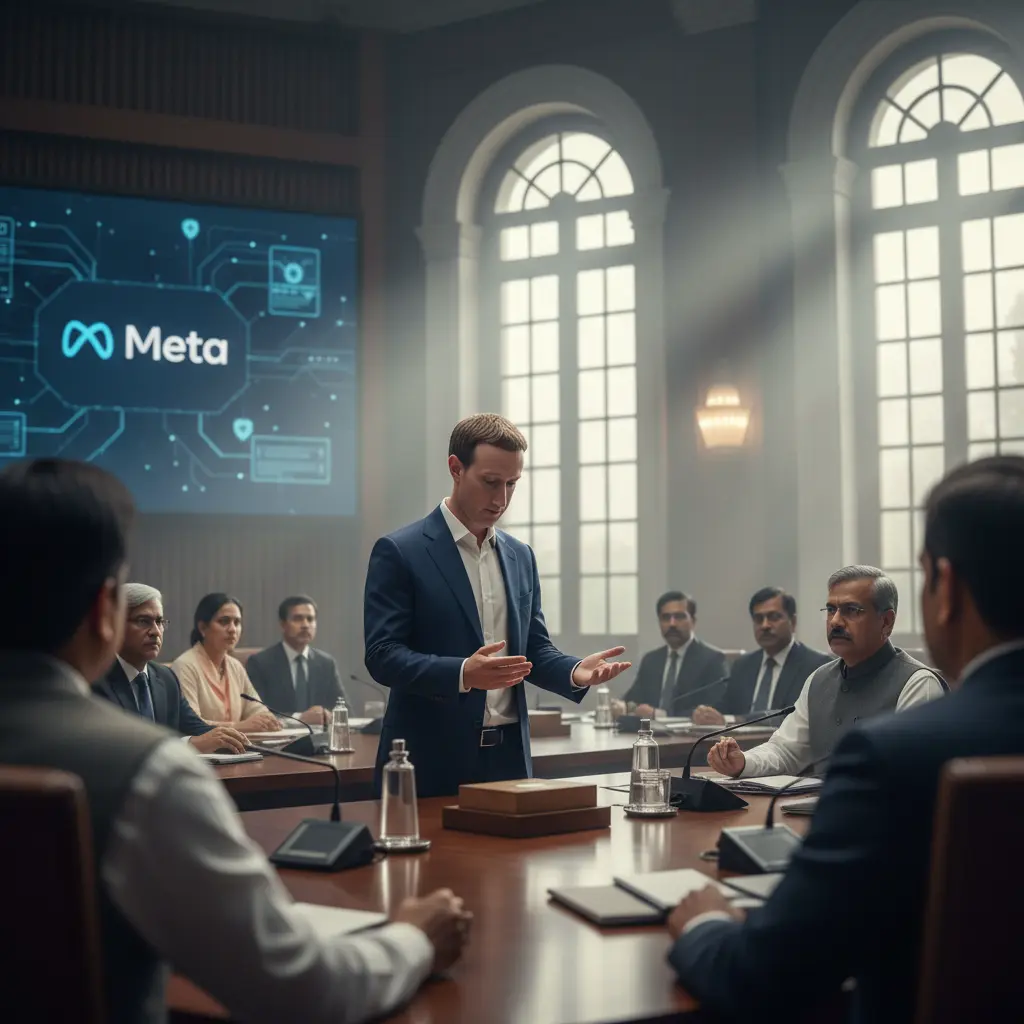
The apology was conveyed during discussions held at Rail Bhawan between a senior Meta delegation, led by Chief Global Affairs Officer Joel Kaplan, and top government officials including IT Secretary S Krishnan. According to sources familiar with the talks, the message from Zuckerberg was blunt: regret over the Meta CSAM content problem, the spread of unlabelled deepfakes, and errors in how the platform has been run.
Government sources quoted the exchange in fairly direct terms — that Zuckerberg sent his apologies for the CSAM material, the deepfake content, and the operational errors, and that Meta representatives even acknowledged paying significant sums to boost certain categories of content on the platform. That last admission is likely to raise fresh questions about how much control Meta’s algorithms actually exercise over what ordinary users end up seeing.
India Pushes Back on the “Intermediary” Argument
Perhaps the most consequential part of the meeting had nothing to do with the apology itself. Indian officials reportedly told Meta in no uncertain terms that it can no longer hide behind the legal shield typically available to “intermediaries” — platforms that merely host content without actively shaping its reach. The India intermediary status debate has simmered for years, but this appears to be the sharpest warning yet.
The reasoning, as conveyed by government sources, was straightforward: if a platform’s algorithms are actively deciding who receives which content — and if the company is being paid to boost specific posts — it starts to resemble a publisher rather than a passive host. That distinction matters enormously under Indian law, because “safe harbour” protections under Section 79 of the Information Technology Act only apply to genuine intermediaries. Officials made it clear that this protection may simply not apply to Meta if its algorithmic curation is found to go beyond passive hosting.
The Modi Post Removal That Triggered the Crisis
This entire episode traces back to an incident last month, when a Facebook post from Prime Minister Narendra Modi’s official account was briefly taken down. The video, addressed to India’s Gen Z during the student-led protests over alleged NEET-UG examination irregularities, was restored after Meta attributed the removal to what it called a technical error. That explanation didn’t sit well with lawmakers, and it triggered demands from Parliament’s Standing Committee on Communications and Information Technology for Zuckerberg himself to personally apologise — with committee chair Nishikant Dubey warning that safe harbour protections could be pulled if he refused.
The Hyderabad Case Adds Another Layer
Around the same time, the controversy deepened on a different front. Hyderabad’s cyber crime police registered cases against Meta India’s local head, Arun Srinivas, along with several social media accounts, over allegedly AI-generated and morphed content targeting the Prime Minister that circulated during the same protests. The complaints, filed by two individuals in Telangana, described obscene and manipulated videos and images that they say appeared on Facebook and Instagram. Police are now examining whether the content was created using AI tools and whether Meta failed to act despite being notified — an unusual move given how rarely platform executives are personally named in such cases.
What This Means for Deepfake Regulation in India
Taken together, these developments point to a much tougher regulatory mood in New Delhi. The MeitY Meta meeting appears to have set the stage for a broader conversation about how AI-generated content, especially material targeting public figures, should be regulated going forward. With deepfake regulation in India still evolving, this episode is likely to be cited as a case study for why platforms may need to take on greater responsibility rather than simply pointing to automated systems when things go wrong.
For Meta, the coming weeks will be about repairing trust — not just with regulators, but with a government that has now made clear it sees the company’s algorithmic choices as active decisions, not passive defaults. Whether that translates into policy changes, tighter content moderation, or a formal review of Meta’s legal status in India remains to be seen. But for now, the apology itself marks an unusually public admission from one of the world’s most powerful tech leaders that things went badly wrong on his platforms in India.