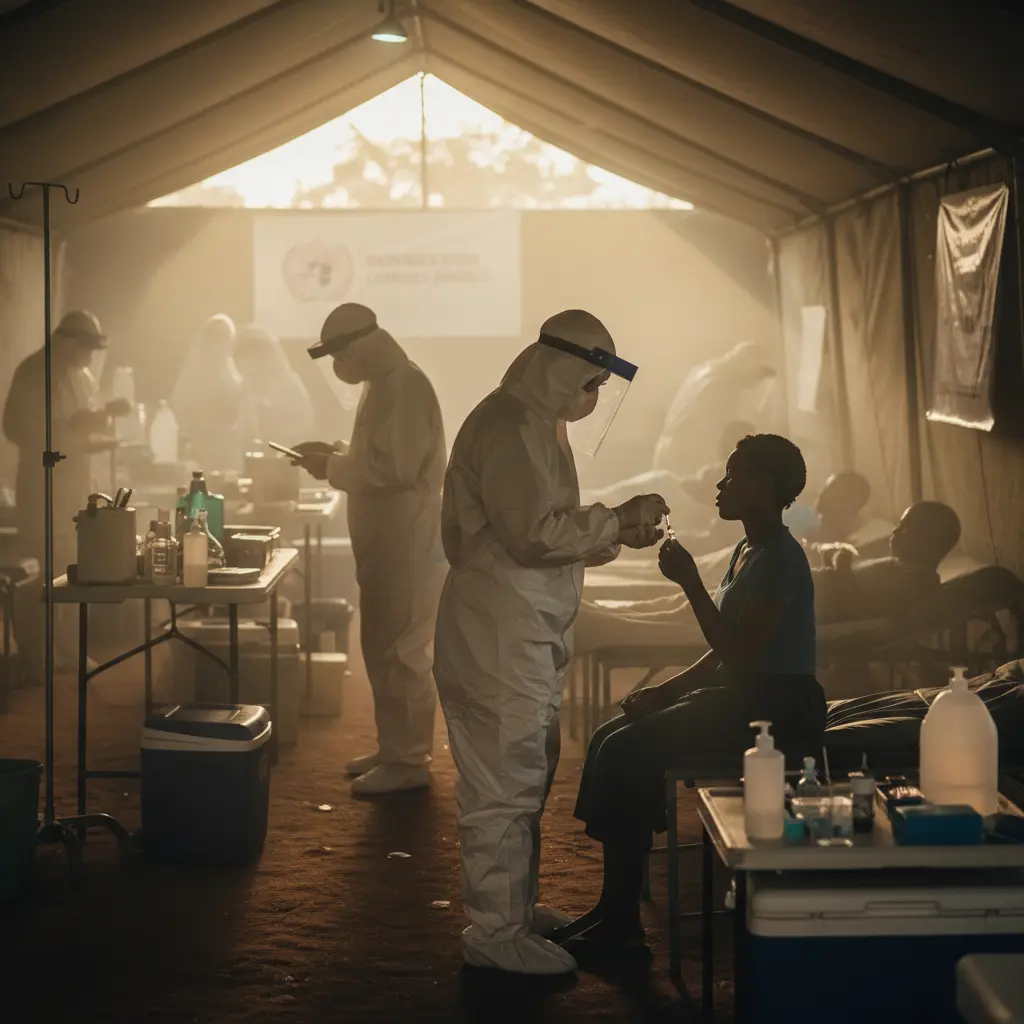
Nearly three months into what has become one of the worst Ebola crises in recorded history, the Democratic Republic of Congo is racing against time on two fronts at once — containing a virus that keeps outpacing every effort to slow it down, and pushing forward experimental treatments and vaccines faster than has ever been attempted during an active outbreak. The DRC Ebola outbreak 2026 has now become the second-largest on record, and health workers in the country’s northeastern Ituri province are bearing much of the human cost.
A Fast-Moving, Unusual Outbreak
The outbreak was first confirmed on May 15, when laboratory tests identified the Bundibugyo virus in samples from patients in Ituri’s Mongbwalu and Rwampara health zones. It’s the 17th Ebola outbreak the DRC has faced since the disease was first identified in 1976, but this one has moved differently from the ones before it. By the end of July, it had already become the fastest-spreading Ebola epidemic ever recorded, and it has since crossed a grim milestone: more than 3,800 confirmed cases and over 1,750 deaths, according to the latest figures reported by health authorities. Ituri province alone accounts for close to 90 percent of all reported cases, though infections have also turned up in North Kivu, South Kivu, Haut-Uele, and Tshopo, including in the major city of Kisangani.
What makes this outbreak especially difficult is the strain behind it. Unlike the more familiar Zaire ebolavirus, which has an approved vaccine and several licensed treatments, the Bundibugyo virus has none. Existing Ebola countermeasures were developed and certified for a different species entirely, leaving frontline responders with far fewer tools than they’d normally have at this stage of an outbreak.
The Toll on Health Workers
The WHO Ebola response has repeatedly flagged the disproportionate burden falling on medical staff. More than 100 healthcare workers have been infected since the outbreak began, and around 35 have died — a toll made worse by chronic shortages of protective equipment and, in some communities, outright hostility toward medical teams. In Ituri, some health workers have gone on strike over unpaid wages and unsafe working conditions, further straining a response that was already stretched thin. Facilities have also come under direct attack: a hospital and treatment centre in the Nyakunde health zone were targeted in mid-July, forcing international partners to temporarily relocate and disrupting contact tracing and supply chains at a critical moment.
Community mistrust has compounded the problem. In several areas, residents have questioned whether the disease is even real, and there have been reports of patients fleeing treatment centres and of attacks on burial teams. All of this makes an already difficult epidemiological picture harder to manage, since roughly two-thirds of deaths are occurring among people who never made it to a health facility at all — a pattern that raises the risk of continued community transmission.
Treatment and Vaccine Trials Moving at Record Speed
Despite the grim numbers, the WHO says the scientific response has moved unusually quickly. Vasee Moorthy, acting head of the WHO’s R&D Blueprint programme, told reporters in Geneva that research protocols drafted before this outbreak even began have allowed trials to start far sooner than in past epidemics.
A prophylaxis study led by the DRC’s National Institute for Biomedical Research, working with international partners, has enrolled more than 25 high-risk contacts in Ituri to test whether a 10-day course of the oral antiviral Obeldesivir can prevent disease after exposure. Four testing sites have now opened across the province to support this and other trials, with patients able to enrol and be monitored under safe conditions.
On the vaccine front, two Bundibugyo-specific candidates have entered clinical trials for the first time ever. One, developed jointly by the University of Oxford and the Serum Institute of India, began a phase 1 trial in Britain on July 24. A second candidate from Moderna is expected to start its own phase 1 trial in Canada around the same period. Neither vaccine is yet approved or proven effective, but their arrival at the clinical trial stage marks real progress against a strain that has never before had a dedicated vaccine candidate this far along.
What Comes Next
WHO Director-General Dr. Tedros Adhanom Ghebreyesus has acknowledged that, despite this progress, the outbreak in the DRC continues to outpace the response, with intense transmission in Ituri remaining the organization’s biggest concern. Neighbouring Uganda, which recorded 20 cases linked to cross-border spread, managed to declare its own outbreak over in late July after going 12 days without a new case — a result officials credited to being able to trace every case back to a documented point of entry.
For the DRC itself, the picture remains far more difficult. Conflict in the region continues to hamper access to affected communities, funding shortfalls have added pressure to an already overstretched health system, and the sheer scale of this Africa disease outbreak means the coming weeks will be pivotal both for containing the virus on the ground and for determining whether the treatments and vaccines now in trial can be fielded in time to make a real difference.