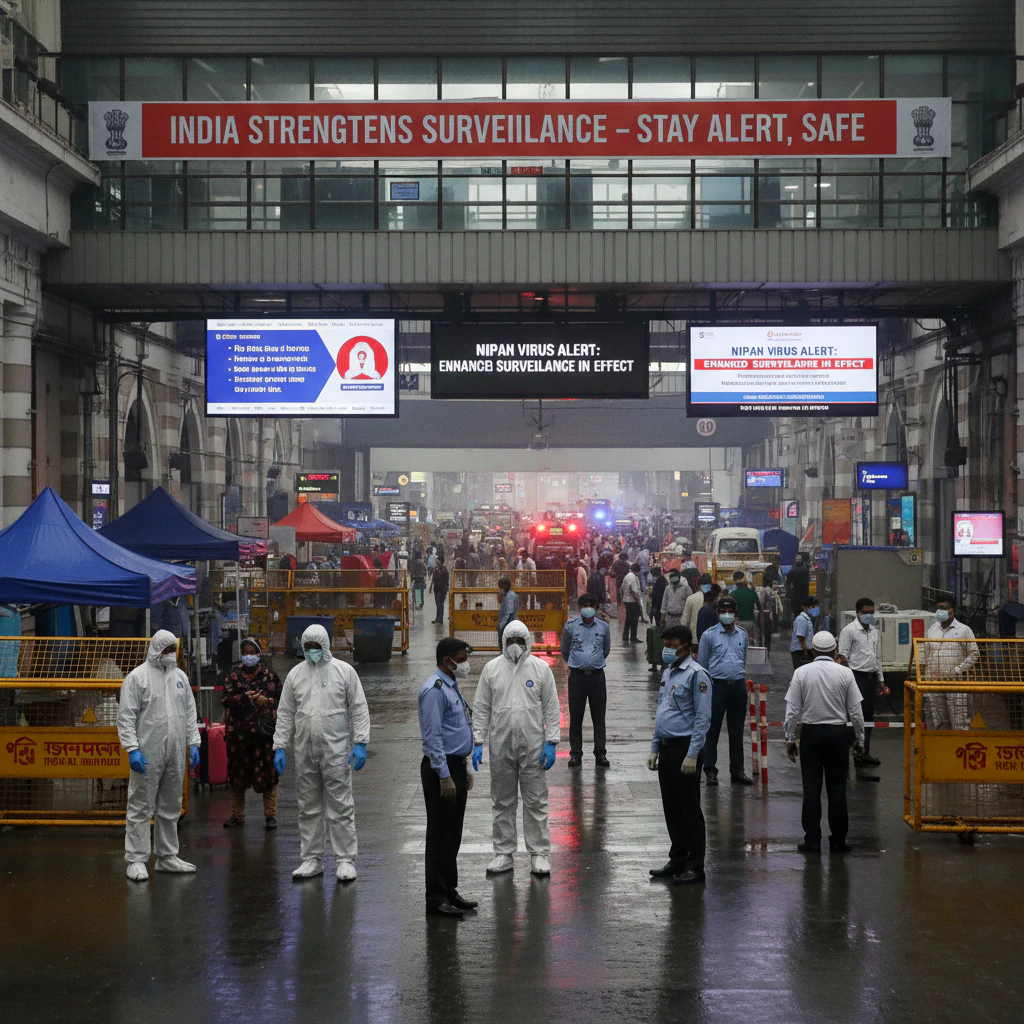
Health authorities in West Bengal are closely monitoring the situation after confirming cases of Nipah virus infection in the state, notably among healthcare workers who were treating patients before falling ill themselves. The confirmation has prompted a swift and well-coordinated response with rapid contact tracing and containment measures rolled out almost immediately to prevent any further spread.
For those following Nipah virus West Bengal developments, the story is in some ways a familiar one, even if each outbreak throws up its own set of anxieties. The health workers, working at a private hospital in North 24 Parganas district, developed symptoms which progressed rapidly, prompting immediate isolation and testing. And what followed was a textbook case of how India’s health surveillance system is supposed to respond to exactly this kind of threat.
A Quick and Comprehensive Answer
Once the infections were confirmed, authorities wasted no time. Nearly 200 people who had been in contact with the patients were identified, traced and tested – a major undertaking that reflects just how seriously health officials treat any hint of Nipah transmission. All of those contacts have tested negative and there have been no new cases since, which is reassuring. This strongly points to the containment measures having done their job, at least for this specific cluster.
A national response team was also sent to work with state health officials, adding additional expertise and resources to manage the situation on the ground. Such centre-state coordination has become the hallmark of India’s response to outbreaks of this nature, having learned from previous Nipah events, especially from Kerala, which has had to deal with recurring spillovers over the last few years.
Experts say it’s not a new, growing threat
One of the more reassuring aspects of this Nipah outbreak India 2026 episode is the broader context that experts have given around it. Public health specialists have been quick to point out that outbreaks like this tend to follow pretty predictable patterns, closely tied to local environmental and cultural factors rather than signaling some kind of new or escalating danger.
Fruit bats are the natural hosts of Nipah virus and human infections usually occur through direct contact with these animals, or more commonly, through consumption of food or drink contaminated with bat saliva or droppings – raw date palm sap has been a particularly well-documented example in past outbreaks across the region. This knowledge of the transmission pathway is crucial in effective control of bat-borne viruses as it allows health officials to focus on the specific behaviors and seasonal patterns that open opportunities for the virus to pass on from animals to humans.
Crucially, while human-to-human transmission is possible, it generally requires very close contact with someone who is already symptomatic — hence why healthcare workers, who are often in close contact with patients during the most infectious stages of illness, remain among the higher-risk groups even while the wider public is at little risk.
Global risk of transmission Very low
While any case of Nipah is worrying because of the high fatality rate, the health authorities and international agencies have maintained that the risk of this outbreak spreading outside India is very low. This assessment is more than just a reassurance to settle frayed nerves. It is grounded in the specific epidemiology of the virus, which simply does not spread as easily or as far as viruses that are primarily airborne.
However, some countries in the region and neighboring countries have taken precautionary measures such as increasing screening at points of entry, which is a prudent, proportionate response, rather than alarm.
The search for a vaccine continues The most important long-term challenge highlighted by this episode is the continuing absence of an approved vaccine or antiviral treatment for Nipah virus. The virus has led to sporadic outbreaks in South Asia for over two decades, but medical science has yet to develop a licensed tool to prevent or directly treat it.
But there is some reason for optimism. Some vaccine candidates are promising now in animal trials, and researchers are hopeful that ongoing investment will eventually lead to a viable option for humans. But that takes sustained funding and real international research collaboration – the kind of long-term commitment that is hard to sustain once the initial headlines fade and public interest wanes.
Why Vigilance Should Continue
This latest cluster of cases is a useful reminder that diseases like Nipah do not have to cause massive outbreaks to be a cause for serious concern. The early detection by India’s surveillance systems, efficient contact tracing and prevention of further spread is a public health success story in itself that needs to be acknowledged.
It also highlights why sustained investment in surveillance infrastructure, laboratory capacity and research on treatments cannot be considered as optional extras. Nipah virus may not be a widespread threat at the moment, but its high fatality rate and unpredictable emergence pattern means that the systems put in place to catch it early are doing the exact kind of quiet, essential work that rarely makes headlines until something goes wrong. For now, West Bengal’s experience shows that when those systems work as they should, even a serious virus like Nipah can be contained before it becomes a much bigger crisis.
India steps up surveillance following Nipah virus cases in West Bengal.