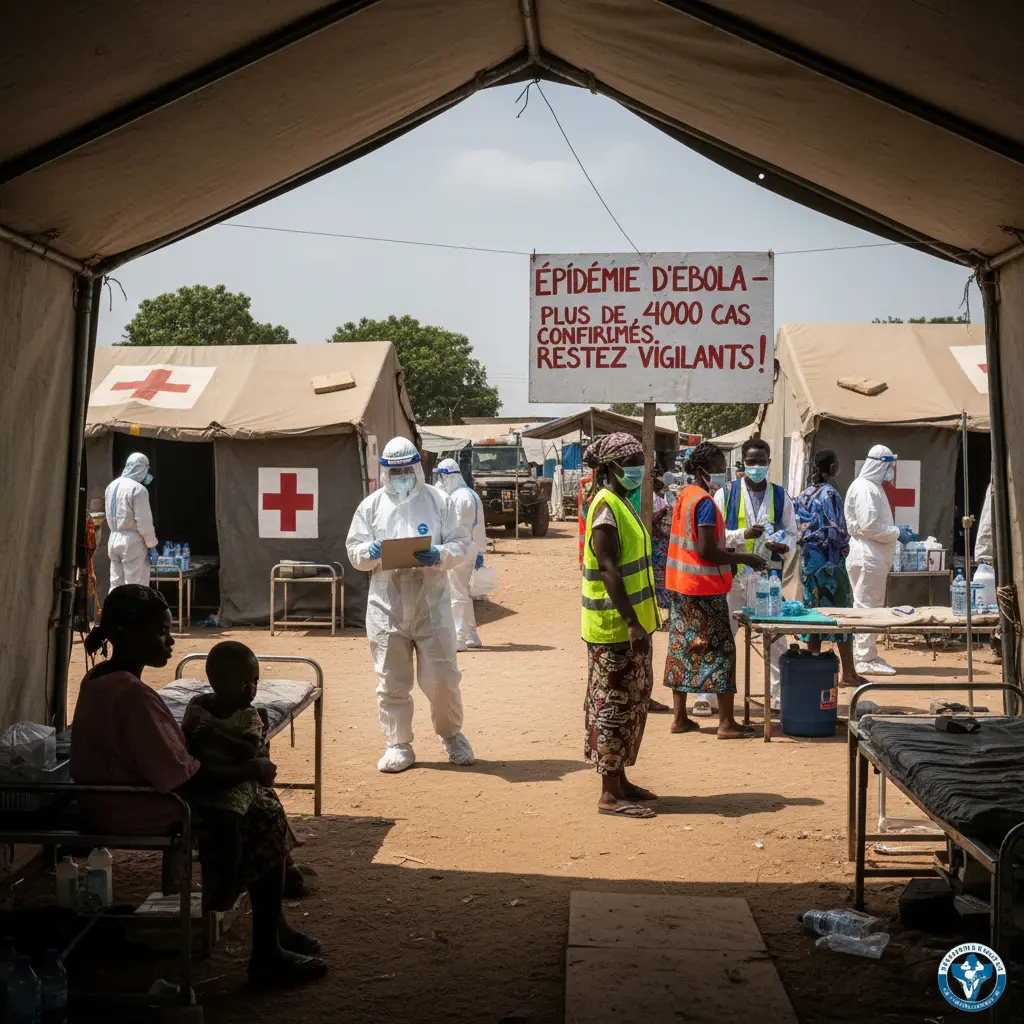
The number of confirmed Ebola cases in the Democratic Republic of Congo’s Ituri province has crossed the grim milestone of 4,000. It’s the fastest-spreading Ebola outbreak ever, say the health officials and aid workers on the ground, and the numbers are rising every day. This started as a local health scare in a remote mining region, and in only a few months has snowballed into one of the most serious outbreaks the world has seen for years.
For those following the story of the Ebola outbreak DRC 2026, the magnitude of this crisis is hard to overstate. It is the second biggest Ebola epidemic ever after the devastating epidemic in West Africa in 2014-2016. The really scary thing about this one is not just how many people have gotten sick, but how fast it’s been growing – faster than any outbreak we’ve seen before in terms of how fast the number of infections has gone up.
Women and Children Pay the Heaviest Price But what makes this crisis the most heartbreaking is who it’s impacting the hardest. Women and children continue to make up a disproportionate share of those affected, a pattern that has been repeated in past Ebola outbreaks across Africa but remains no less devastating each time. Pregnant women are particularly vulnerable and often cannot find the specialized care they need even under normal circumstances, let alone during a raging epidemic. Children, in the meantime, are especially vulnerable to the virus itself and the disruption it causes to already fragile health care systems.
This is not a statistic buried somewhere in a health ministry report – this is families being torn apart, this is caregivers falling ill trying to look after loved ones, this is communities losing their most vulnerable members at an alarming rate.
Almost a Million People Displaced
And the outbreak itself has created a massive humanitarian crisis of its own, separate from the direct health impact. Almost a million people have been displaced, families leaving affected areas and seeking safety in less affected areas. This sort of mass displacement breeds a vicious circle – as people migrate they risk carrying the virus to new communities, while also straining resources in the places where they have sought refuge.
Insecurity and conflict have ravaged Ituri province for a long time, making the situation all the more complicated. Violence by armed groups in the region has made it very dangerous for health workers to reach some of the worst-affected communities, delaying efforts to trace contacts, treat and contain new flare-ups before they can spread further.
WHO declares global health emergency
The World Health Organization upgraded the situation to a Public Health Emergency of International Concern – the agency’s highest level of alert, used only for crises that pose a real risk of spreading across borders, given the scale and speed of the outbreak. The WHO declaration of a public health emergency has helped unleash a wave of international support, from funding and medical supplies to specialist teams being deployed directly into affected zones.
That international mobilization is under way. Containment efforts are being stepped up in the most affected health zones, treatment centers are being expanded to cope with the growing number of patients and vaccine deployment campaigns are underway in an effort to slow transmission. But it’s a race against time – health workers on the ground have repeatedly warned the virus is spreading faster than response efforts can keep up with in some areas.
a difficult virus to fight
The strain of the virus itself adds to the challenge. This outbreak, unlike some past Ebola outbreaks in the region, includes a strain that current vaccines and treatments were not originally made to target, so health authorities need to rely on newer trials and adapted protocols, rather than only on tools that worked in the past. That has slowed the pace of the response in ways that have frustrated public health officials who know how critical speed is in terms of containing Ebola.
Why This Matters Outside the DRC
This is no remote tale from one side of Central Africa. The rapid spread and rising number of Ebola cases in Africa this year demonstrate how quickly a localized outbreak can turn into a global health crisis if containment efforts lag. Cases linked to this outbreak have already been detected outside the borders of the DRC, a reminder of how connected travel and trade routes can carry a virus far from its source.
Health officials continue to emphasize that international cooperation, sustained funding and a rapid on-the-ground response are still needed to get this outbreak under control before it gets any larger. For the communities that are directly affected, however, the crisis is already personal — families displaced from their homes, health workers risking their safety to save others, and a death toll that continues to rise week after week.
The next few weeks will be crucial in determining whether the outbreak can be contained, or whether it continues on its present trajectory as one of the worst Ebola epidemics in history.
Confirmed cases of Ebola outbreak in DRC exceed 4,000.