
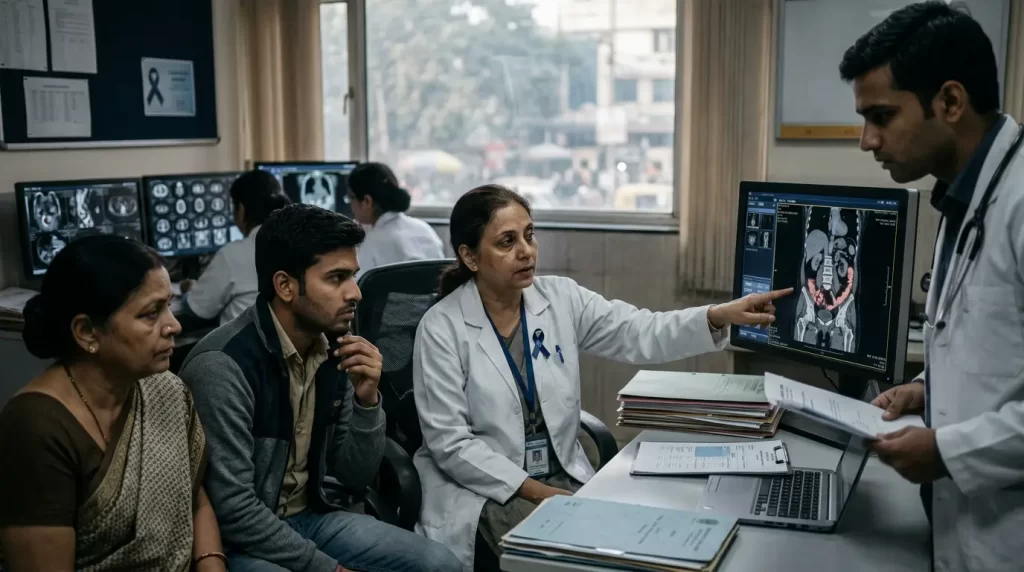
At a conference held at Sir Ganga Ram Hospital on 10 and 11 October, oncologists shared an observation that is hard to hear. They are now seeing patients with gastrointestinal cancer as young as 15. Five years ago, that would have been uncommon.
For most families, cancer is something they expect to meet later in life, if at all. A diagnosis in a teenager or a young adult upends that assumption, and it is prompting doctors in the capital to ask harder questions about what is changing.
A Shift Doctors Can No Longer Ignore
The specialists at the Sir Ganga Ram Hospital conference described a trend they see in their own clinics: more gastrointestinal cancer in young adults, and even in adolescents. The gastrointestinal tract includes the food pipe, stomach, intestines, liver, and pancreas, and cancers can develop in any of these organs.
Colorectal cancer in India has been part of this conversation for some time. Globally, doctors have noticed that bowel cancers are being diagnosed in younger people more often than before. What the Delhi oncologists describe fits that wider pattern, though a handful of cases in a clinic is not the same as a confirmed national trend. The doctors themselves were careful on that point. They spoke about what they are seeing, and they called for better data to understand it.
The Pollution Question
One topic drew particular attention: Delhi air pollution and its possible link to health problems. Anyone who has lived through a Delhi winter knows how heavy the air can get, and fine particles known as PM2.5, along with ground-level ozone, are among the pollutants people worry about most.
Experts at the conference called for India-specific research on whether PM2.5 and ozone contribute to cancer risk. That request is reasonable. Much of what the world knows about air pollution and health comes from studies done in other countries, with different pollution mixes, diets, and lifestyles. Indian cities have their own conditions, and the evidence should reflect them.
But the experts were also clear about the limits of what is known. Existing studies show associations only. They do not prove that pollution causes these cancers, and they do not explain the rise in younger patients. That distinction is easy to lose in a headline, so it deserves to be said plainly: nobody has shown that the air in Delhi is giving teenagers cancer. What doctors are saying is that the question is worth investigating properly.
Why Careful Language Matters
It would be easy to turn this story into a simple one, with pollution as the villain. Simple stories spread quickly, but they can mislead.
Cancer rarely has a single cause. Genetics, diet, body weight, physical activity, infections, smoking, alcohol, and environmental exposures can all play a part, and they often interact. A rise in cases among the young could reflect several of these factors at once. It could also partly reflect better detection, since more people now have access to scans and endoscopy than they did a decade ago.
Pinning it on one thing before the research is done risks causing needless fear, or worse, distracting from steps people can actually take today. This is why the call for India-specific studies matters. Good evidence can guide policy, and it can also tell families what is worth worrying about and what is not.
Symptoms Not to Brush Aside
The most practical message from the conference was also the simplest. Do not ignore persistent digestive symptoms, and seek timely medical advice.
Many young people, and their parents, assume that stomach trouble is just acidity, stress, or something they ate. Usually, that is true. Digestive complaints are common, and most have harmless causes. The concern is when a symptom does not go away. Signs that deserve a doctor’s attention if they last include:
- Ongoing stomach pain or discomfort
- Blood in the stool, or changes in bowel habits that persist
- Unexplained weight loss
- Constant tiredness or signs of anaemia
- Difficulty swallowing, or loss of appetite that doesn’t settle
None of these automatically means cancer. Plenty of other conditions cause them. But a doctor can tell the difference far better than guesswork or an internet search, and earlier checks mean earlier answers.
Why Early Diagnosis Changes Everything
With gastrointestinal cancers, timing matters a great deal. Cancers found at an earlier stage are generally easier to treat, and outcomes tend to be better. In young patients, delays can happen for an understandable reason: neither the patient nor the doctor expects cancer in someone so young, so symptoms get explained away for months.
That is part of why the oncologists are speaking up. By sharing what they are seeing, they hope to make families and general physicians more alert, so that a persistent symptom in a 20-year-old, or a 15-year-old, is taken seriously rather than dismissed.
What Comes Next
Several things would help from here. Better research, tracking cancer patterns by age across Indian cities, would show whether this is a true rise and what might be driving it. Studies on PM2.5, ozone, and cancer risk in Indian settings would help answer the pollution question with evidence rather than speculation. And greater awareness among families and primary care doctors would help catch cases sooner.
For now, the honest summary is that doctors are seeing something that worries them, and they do not yet know why. That uncertainty is uncomfortable, but it is better than false certainty.
If you or someone in your family has had a digestive problem that will not go away, do not wait it out. A visit to a doctor costs little compared with the peace of mind it can bring, and sometimes much more than that.