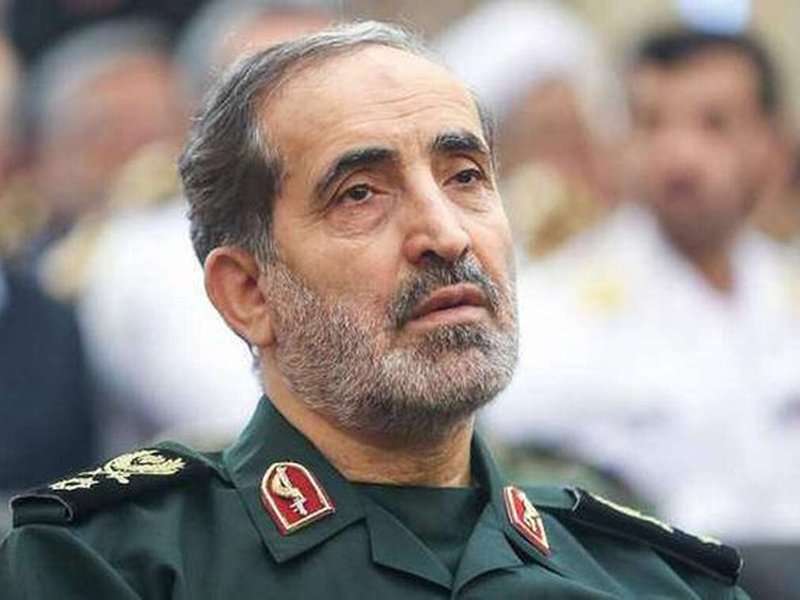
June 18 — In a significant development that threatens to further escalate tensions in the Middle East, Iran’s newly appointed Army Chief of Staff, Major General Ali Shadmani, was reportedly killed in an Israeli strike. Iranian sources confirmed the death late Monday, describing it as a “targeted assassination” carried out by Israel.
Major General Shadmani, a senior figure in Iran’s military hierarchy and a close aide to Supreme Leader Ayatollah Ali Khamenei, was seen as a key architect of Tehran’s regional military strategy. His assassination marks one of the most high-profile losses for Iran’s armed forces in recent years.
Although the exact circumstances of the attack remain undisclosed, multiple intelligence sources suggest the strike was a precision operation. It is still unclear whether the assassination was carried out via drone, missile, or a clandestine ground unit. Israel has not officially confirmed responsibility, adhering to its longstanding policy of strategic ambiguity in such cross-border operations.
Shadmani’s death comes amid growing hostilities between Israel and Iran, who are locked in a prolonged shadow conflict across several fronts, including Syria, Iraq, and Lebanon. As Chief of Staff, Shadmani was reportedly responsible for coordinating with Iran’s regional proxy groups, including Hezbollah in Lebanon and various Shia militias in Iraq and Syria.
Iranian state media has condemned the killing, referring to Shadmani as a “martyr of the resistance” and promising a strong retaliatory response. The Islamic Revolutionary Guard Corps (IRGC) issued a statement accusing Israel of “criminal aggression” and vowed that “this cowardly act will not go unanswered.”
The targeted killing also coincides with rising tensions along Israel’s northern borders and renewed clashes involving Hezbollah forces. Security analysts believe this move by Israel is aimed at weakening Iran’s strategic command structure and disrupting its influence across the region.
International observers have expressed concern that the killing could spark a broader confrontation. Diplomatic channels between Iran and Western powers, already strained over the nuclear deal impasse, are likely to be further tested. The United Nations has called for restraint, urging all sides to avoid any steps that may lead to wider conflict.
Shadmani, who had recently succeeded Major General Mohammad Bagheri as Iran’s army chief, was known for his strategic acumen and was considered a hardliner within Iran’s military establishment. His proximity to Khamenei gave him significant influence over both national defense and foreign military policy.
As Iran prepares to mourn a top military leader and Israel heightens its security alert, the region faces the prospect of a new phase of conflict. Analysts warn that Tehran’s response could come through asymmetric warfare tactics, including cyberattacks or strikes via proxy forces in neighboring countries.
The assassination of General Shadmani is expected to have far-reaching implications not only for Iran’s military strategy but also for the fragile security architecture of the Middle East.