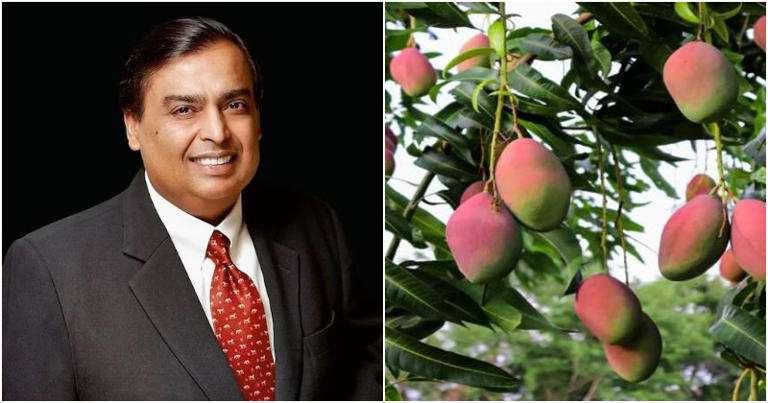
In a remarkable and unexpected diversification move, Indian billionaire Mukesh Ambani has become the world’s largest mango exporter. What makes this achievement even more extraordinary is that the sprawling mango orchard was cultivated on previously barren land in Maharashtra. The project, once dismissed as unviable, now stands as a shining example of sustainable agriculture, technological innovation, and visionary leadership.
The orchard, spread over thousands of acres near Jamnagar in Gujarat and parts of Maharashtra, was developed as part of Reliance Industries’ green initiatives. Originally barren and arid, the land was transformed through years of careful soil regeneration, drip irrigation systems, and plantation of over 1.3 lakh mango trees of premium varieties, including Alphonso, Kesar, and Banganapalli.
According to sources within Reliance, the project began over a decade ago as a passion initiative of Nita Ambani, who envisioned transforming unproductive land into a horticultural marvel. Over time, the orchard has not only flourished but also created hundreds of jobs and contributed significantly to India’s mango exports.
In 2024-25, the Ambani-led mango export operations shipped over 52,000 metric tonnes of mangoes to international markets, including the U.S., Europe, Japan, and the Middle East — surpassing long-time global exporters from Mexico and the Philippines. This marks the first time an Indian private enterprise has taken the global lead in mango exports.
Experts attribute the success to Reliance’s integration of advanced agri-tech, including satellite soil monitoring, climate-controlled storage facilities, AI-driven pest control, and organic farming practices. The orchard also functions as a biodiversity hub, with over 20 varieties of birds and pollinators nurtured within the ecosystem.
Speaking on the achievement, Mukesh Ambani stated, “This success story is not just about mangoes. It is about innovation, perseverance, and our commitment to making barren land bloom. We see agriculture as a key pillar of India’s future economy, and we’re proud to lead this transformation.”
Agricultural economists have hailed this development as a landmark moment for India’s agri-sector. Dr. Meera Kulkarni, an agriculture expert at IIM Ahmedabad, said, “What Reliance has done is proof that large-scale, export-oriented farming can be sustainable and profitable if supported by the right vision and technology.”
This agricultural initiative is also part of Reliance’s broader push towards green and sustainable business models. It aligns with the company’s strategy to diversify from traditional energy and telecom into green energy, food security, and rural development.