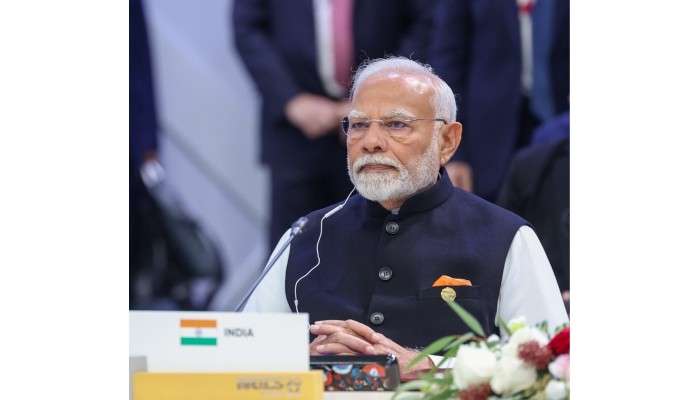
The 16th BRICS Summit concluded in Moscow on Friday with a strong joint declaration condemning military interventions and unilateral coercive measures. Leaders from the expanded group of ten nations, including Brazil, Russia, India, China, South Africa, Egypt, Iran, Ethiopia, the UAE, and Saudi Arabia, expressed their commitment to a multipolar world and fair global governance.
The summit, held under the theme “Strengthening Multilateralism for Equitable Global Development,” focused heavily on the need to reform international institutions, promote peace, and resist the dominance of any single global power.
In a clear message aimed at the West, the BRICS declaration stated:
“We oppose the use or threat of force in international relations and reject the imposition of unilateral coercive measures not endorsed by the United Nations Security Council.”
The leaders called for respect for international law, the UN Charter, and national sovereignty, emphasizing the importance of peaceful conflict resolution. The statement also highlighted growing concern over sanctions imposed by Western powers, which BRICS nations argue undermine the economies of developing countries.
Key Resolutions of the Summit:
- Opposition to Sanctions and Military Action: BRICS countries condemned economic sanctions imposed without UN approval, criticizing their impact on global economic stability and development.
- Support for Reform of Global Institutions: The bloc urged reforms in the United Nations, International Monetary Fund (IMF), and World Trade Organization (WTO) to better represent emerging economies.
- Peace Calls for Conflict Zones: BRICS called for ceasefires in global conflict areas such as Ukraine and Gaza, advocating inclusive dialogue and diplomatic solutions.
- Push for De-Dollarization: The New Development Bank (NDB) reinforced plans to increase trade in local currencies to reduce dependence on the U.S. dollar.
- Expansion of BRICS Role: With its recent enlargement, BRICS reaffirmed its mission to represent the Global South and create an alternative voice in international politics.
The summit highlighted growing solidarity among non-Western nations seeking to challenge the post-World War II international order led by the United States and its allies. Russian President Vladimir Putin, who hosted the event, praised BRICS for promoting “sovereignty, mutual respect, and fair cooperation.”
Indian Prime Minister Narendra Modi called for “a world order where all voices are heard,” while Chinese President Xi Jinping reiterated the need for “inclusive growth and shared security.”
The closing of the summit marked a significant moment in global geopolitics, as BRICS continues to position itself as a counterbalance to Western alliances such as the G7 and NATO.
The next BRICS summit is scheduled to take place in Brazil in 2026.