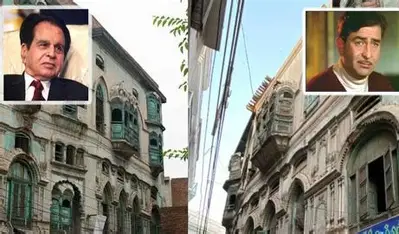
The government of Pakistan has officially sanctioned funds for the restoration of the ancestral homes of legendary Bollywood actors Dilip Kumar and Raj Kapoor, located in Peshawar’s historic Qissa Khwani Bazaar. The move aims to preserve the shared cultural heritage of the Indian subcontinent and promote cross-border cultural tourism.
According to officials from the Khyber Pakhtunkhwa Directorate of Archaeology and Museums, an amount of PKR 2 crore has been allocated for the conservation of both heritage properties. The homes, which have stood in a state of neglect for decades, will now be restored and converted into museums dedicated to the lives and legacies of the two Indian film icons.
Dilip Kumar, born Yusuf Khan in 1922, and Raj Kapoor, born in 1924, both hailed from Peshawar before their families migrated to India during the 1947 Partition. Their contributions to Indian cinema remain unparalleled, and their birthplaces are considered vital cultural landmarks that connect Pakistan and India through a shared cinematic history.
“These houses are more than structures — they are part of our collective cultural memory,” said Dr. Abdul Samad, Director of Archaeology, Khyber Pakhtunkhwa. “Restoring them will not only attract heritage tourism but also reinforce the idea that art and culture know no borders.”
The government had declared both homes as national heritage sites in 2014 under the Antiquities Act. However, restoration efforts had been repeatedly delayed due to legal disputes and lack of funding. With the latest budget approval, the Directorate has confirmed that work will begin in phases, with efforts to preserve the original architecture and historical integrity of the buildings.
Film historians and cultural experts have lauded the decision. Many believe it could be a meaningful act of cultural diplomacy between India and Pakistan. The restoration project has also received positive responses from Indian cinema circles, with calls for further cultural collaboration across the border.
“This initiative shows respect for our shared past,” said a senior official from India’s Film Heritage Foundation. “Cinema has always united people emotionally, and this effort honors that legacy.”
As restoration efforts commence, the government hopes the project will become a model for future conservation initiatives, emphasizing the importance of safeguarding cultural landmarks that represent historical and emotional connections across South Asia.