
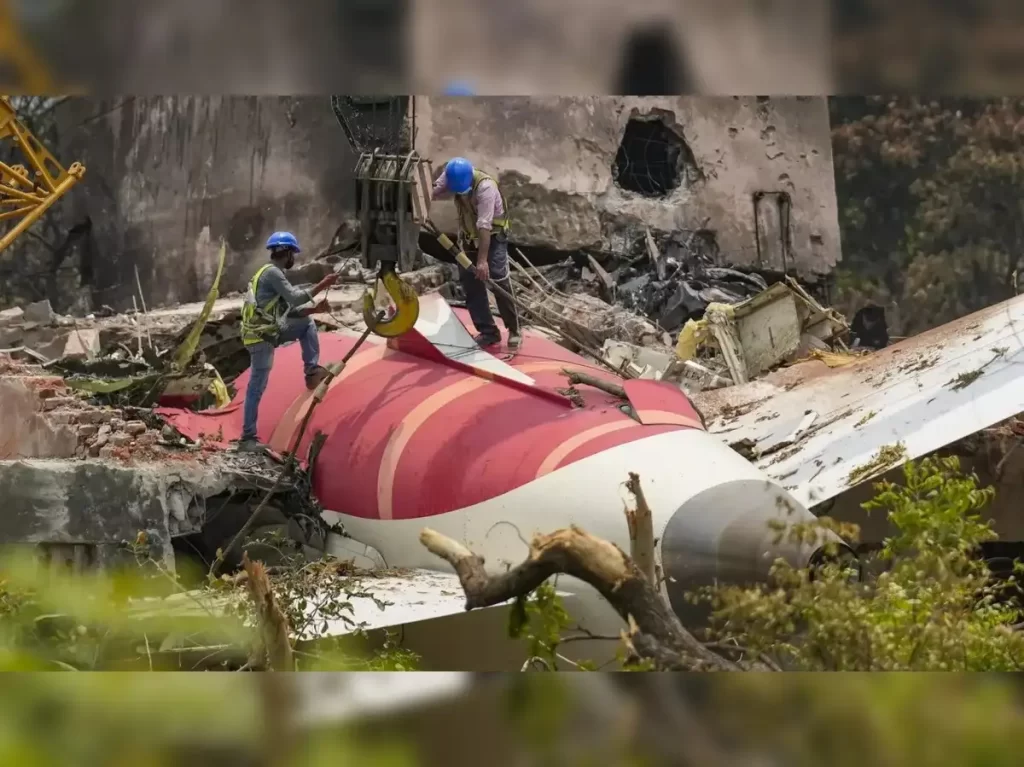
July 12,2025 — A preliminary report by the Air Accidents Investigation Branch (AAIB) has revealed that the fatal crash of an Air India Express aircraft, which claimed 260 lives, was caused by an inadvertent fuel cut-off and the pilots’ inability to restore engine thrust. The findings offer a chilling insight into the moments leading up to one of India’s deadliest aviation disasters.
The Boeing 737 aircraft, operating as Air India Express Flight IX-812, lost engine power shortly after takeoff. According to data retrieved from the flight data recorder and cockpit voice recorder, both engines experienced a sudden loss of thrust, leaving the crew struggling to regain control.
Investigators believe that the crew may have unintentionally activated the fuel cut-off switches, resulting in a complete loss of power to the engines. Despite attempts to recover, the aircraft was unable to maintain altitude and crashed minutes later, killing nearly all passengers and crew on board.
“The pilots were unable to recover engine thrust after the fuel supply was cut off. The evidence suggests human error may have been a factor, likely exacerbated by cockpit design issues,” the AAIB stated in its report.
The report further notes that while the aircraft was mechanically sound before departure, the fuel cut-off switches may have been activated accidentally due to their position in the cockpit. The design layout is now under scrutiny, as similar configurations could pose risks in high-stress scenarios.
The Directorate General of Civil Aviation (DGCA) is working closely with Boeing and the AAIB to assess the findings and determine whether urgent design modifications or pilot training changes are needed.
“This tragic incident underscores the importance of stringent cockpit safety protocols and advanced simulator-based training. It is essential that lessons are learned swiftly to prevent future occurrences,” said a senior DGCA official.
Families of the victims have expressed outrage and disappointment over the findings. Many are calling for a thorough investigation into Air India’s operational procedures, pilot training standards, and overall safety compliance.
Aviation experts have also raised concerns about system redundancy and human factor risks in emergency scenarios. “The incident points to gaps not just in execution but in system design and training methodology,” said Captain R.K. Sharma, a former commercial pilot and safety analyst.
While the AAIB report is still in its preliminary phase, officials stress that more details will be released in the final investigation report. In the meantime, safety audits across airlines operating similar aircraft are expected to intensify.
The crash has reignited a nationwide debate on aviation safety standards in India and is likely to prompt regulatory changes aimed at preventing such catastrophic failures in the future.

