
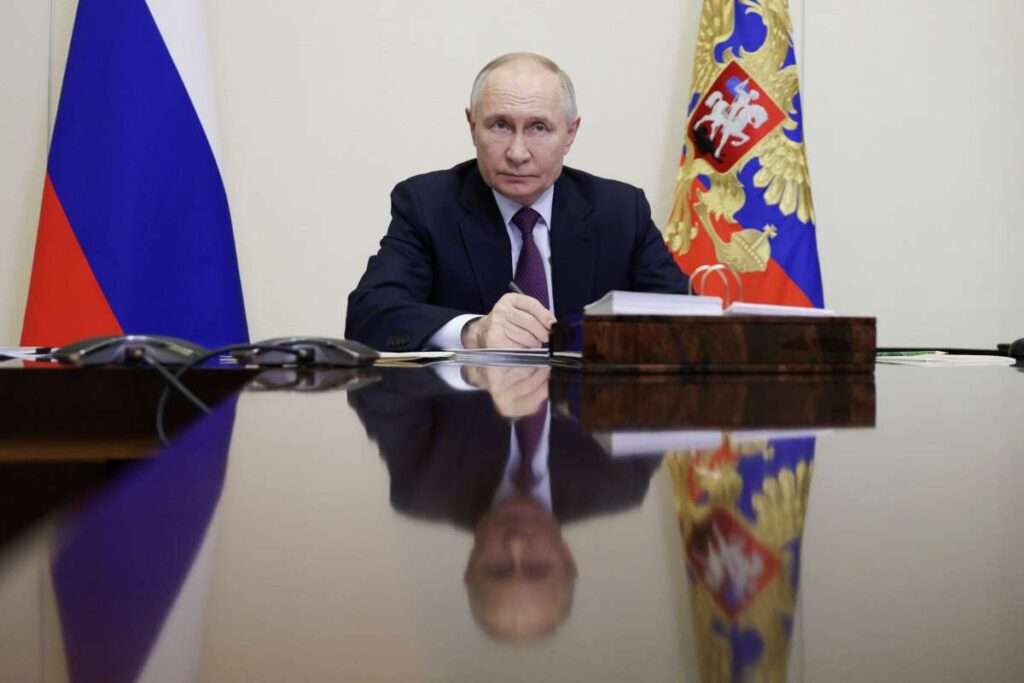
August 5, 2025 — Russia has officially announced its withdrawal from the 1987 Intermediate-Range Nuclear Forces (INF) Treaty, declaring it is no longer bound by the landmark arms control agreement signed during the Cold War. The Russian government cited actions by the United States and NATO as the primary reasons for its decision.
In a statement issued by the Russian Foreign Ministry, officials said that “hostile and destabilizing” moves by the West—including the deployment of missile defense systems in Europe and the expansion of NATO military infrastructure—have rendered the treaty ineffective.
“The INF Treaty has been systematically undermined by the United States and its NATO allies. Under such conditions, Russia cannot continue to observe a treaty that no longer reflects current strategic realities,” the ministry stated.
Treaty Background
The INF Treaty was signed in 1987 by U.S. President Ronald Reagan and Soviet leader Mikhail Gorbachev. It required both nations to eliminate ground-launched ballistic and cruise missiles with ranges between 500 and 5,500 kilometers. The agreement led to the destruction of nearly 2,700 missiles and was regarded as a cornerstone of Cold War-era arms control.
The United States formally withdrew from the INF Treaty in 2019 under the Trump administration, accusing Russia of non-compliance. Russia denied the allegations and maintained that U.S. missile deployments in Europe were themselves in violation of the treaty.
U.S. and NATO React
The White House responded sharply to Russia’s announcement, calling the move “a direct threat to global stability.” A National Security Council spokesperson said that Russia had been in violation of the treaty “for years” and that its exit only confirms its disregard for international security norms.
NATO Secretary-General Jens Stoltenberg also condemned the development, stating, “Russia’s decision weakens arms control efforts and increases risks for Europe. NATO will respond in a measured and coordinated way to ensure the security of its member states.”
Rising Concerns of a New Arms Race
Security analysts warn that the end of the INF Treaty could pave the way for a renewed arms race between global powers. Without the treaty’s restrictions, both Russia and the U.S. are now free to develop and deploy intermediate-range missile systems in regions such as Eastern Europe and the Asia-Pacific.
Dr. Irina Lebedeva, a Moscow-based military analyst, said, “This is a clear signal that the last remaining barriers to nuclear escalation are crumbling. We are entering a period of greater unpredictability.”
The withdrawal adds to growing global concerns about the decline of nuclear arms control frameworks, particularly as the future of other key agreements like New START also remains uncertain.
Global Implications
With both superpowers now outside the INF framework, diplomatic observers stress the urgent need for renewed negotiations to prevent further deterioration of global nuclear stability. The United Nations has not yet issued a formal response, but several member states have called for emergency discussions on the matter.
As tensions rise, the international community faces mounting pressure to rebuild a cooperative approach to arms control and prevent the re-emergence of Cold War-era threats.

