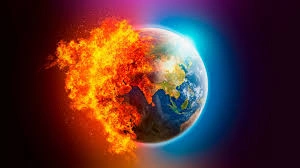
Climate experts have been saying for a long time that global warming doesn’t happen in a straight line with minor consequences. A modest rise in temperature, like a few tenths of a degree, can affect ecosystems and people’s health in ways that can’t be fixed. This makes it much more vital for the world to act soon.
The Science of Warming in Parts
The average temperature on Earth has gone raised by around 1.2°C during the Industrial Revolution. The following few degrees are where the actual risk lies. According to research by leading climate groups, every 0.1°C rise in temperature makes extreme weather worse, speeds up the loss of biodiversity, and raises the risk of health problems.
The Intergovernmental Panel on Climate Change says that every little bit of heat makes it more likely that things will go wrong. Coral reefs are almost completely gone at 1.5°C. But if the temperature rises by just 0.2°C, the Arctic sea ice may disappear in the summer by the middle of the century. This would change the way ocean currents move all across the earth.
Due to this non-linear rise, 2°C is not only “twice as bad” as 1°C; it has far worse effects. Ecosystems that have been stable for thousands of years can’t change quickly enough. This means that the distribution of species and ecosystem services that are important to people will change for a long time.
Coral reefs and forests are in jeopardy, and ecosystems are on the verge of collapse.
Coral reefs, which are often termed the rainforests of the sea, are a great example of how even small levels of heat may affect ecosystems. A rise of just 0.5°C above current levels might kill 99% of tropical corals because it would generate more bleaching events. When the heat stress destroys the algae that dwell with the corals, bleaching happens.
Marine biodiversity would suffer because reefs are home to a quarter of all ocean species. This will have an effect on fishing firms that feed a billion people. Reefs store CO2 while they are healthy. They let it out when they get hurt, which makes the world warmer. By 2050, the world might lose more than $500 billion a year in business because of tourism and protecting the coast.
Forests, which are like the lungs of the Earth, are also under danger. The Amazon rainforest dies quicker as the temperature rises by 1.5°C. If the temperature goes up by 0.3°C, the rainforest will turn into a savanna. This will let go of carbon that has been stuck for decades. In Canada’s and Russia’s boreal forests, melting permafrost and wildfires are changing drains into sources.
These changes can’t be undone right away since regrowth needs steady conditions that haven’t been around for thousands of years.
Changes in the food chain and the ocean become more acidic
The oceans take in 90% of the extra heat, yet heating them up makes the acidity worse. Every 0.1°C rise makes more CO2 get absorbed, which lowers the pH and tears down the shells of shellfish, which are particularly important to marine food webs.
The Arctic has warmed by 0.8°C, and since the 1970s, the quantity of krill, which are a significant food source there, has fallen by 80%. This causes a chain reaction: whales starve, penguins can’t have offspring, and every degree reduction in temperature means 20% to 30% fewer fish are caught.
Pteropods are tiny snails that salmon and seabirds need to exist. When the water gets too acidic (more than 1.8°C), they perish. Every ten years, fish migrate 70 km north, which hurts tropical stocks and makes it tougher for 3 billion people to get enough food. The rates of species loss are like those of the Permian mass extinction, and it takes thousands of years for species to come back.
Heat waves and bugs that spread diseases are bad for people’s health.
The European heat dome in 2023 raised temperatures by 1.2°C and killed 61,000 people. When the temperature goes up by 0.1°C, something like what happened in Paris will happen 100 times more often. The temperatures in wet-bulb are very close to being deadly. The elderly, outdoor laborers, and poor individuals in cities are the most affected.
Mosquitoes move 250 miles farther away for every degree as the temperature goes up. This distributes malaria and dengue to new places, such southern Europe and the southern US. A 0.2°C rise might make 5.2 billion more people unwell at times. Right now, 800 million people don’t have enough food. That number might go up to 1.5 billion if farm outputs drop by 10 to 25% and don’t come back.”Eco-anxiety” and having to move can make your mental health worse. Every year, 21.5 million climate refugees go through traumatic events that make their health risks worse.
Floods, droughts, and storms are all examples of extreme weather that gets worse.
Every little thing makes the weather worse. The air holds more moisture as it grows warmer. This means that for every 0.5°C rise in temperature, hurricanes get 5–10% stronger and rain gets 7% stronger for every degree.
Droughts dry out 18% more land for every degree Celsius, which is why the 20-year Southwest tragedy in the US was so catastrophic. Floods are worse because they happen every year in many places, even though they only happen once every hundred years.
The Antarctic is melting at a rate of 1.5°C + 0.1°C, which is causing sea levels to rise more quickly. This could put 1 billion people who live on the coast in danger by 2100. Ice sheets that can’t be replaced last for hundreds of years.
How it affects the economy and society
By 2050, the world will lose $38 trillion, or 11% of GDP, if the temperature climbs by 2°C or less. This is a huge price to pay for a small amount of heat. Every 0.1°C makes storms and heat worse for buildings than the last one.
Every degree of warming makes farming worse: maize yields decrease 7%, wheat yields drop 6%, and rice yields drop 3.3%. Small farmers in the tropics lose 20% to 40% of their crops, which leads to food riots and people moving.
The countries that pollute the least are the ones that are hurt the most by inequality. If the temperature goes up more than 1.8°C, little island countries like Kiribati may go under.
Not Following Through on Global Promises
The Paris Agreement says that the temperature should stay at 1.5°C, but it will rise to 2.5–2.9°C by 2100. The most recent COP results aren’t particularly good. Even though renewable energy is now as inexpensive as fossil fuels, the phaseout of fossil fuels is taking longer than expected.
Experts say that by 2030, emissions should be cut in half. By 2030, 60% of all energy must come from renewable sources. Trees must expand by 30%, while methane emissions must go down by 45%. But emissions went up by 1.1% in 2025, which means that the rules aren’t working.
What Experts Think: Voices from the Frontlines
Dr. Valerie Lang, an IPCC writer, says, “There is no point at which damage stops; every fraction increases risks permanently.” Greta Thunberg, an environmentalist, says, “Delay is death—ecosystems don’t vote, but they decide our fate.”
According to reports from the Great Barrier Reef in Australia, 91% of the reef bleached in 2024 when the temperature went up by 0.1°C. Scientists who study Alaskan permafrost say, “Thaw is now self-sustaining, releasing methane on its own.”
Ways to Mitigation: Finding Hope When You Need It
The key is to get rid of carbon as soon as possible. Making transportation electric decreases emissions by 40%, while making industries more efficient cuts them by 30%. One example of a nature-based strategy that takes in 15 GtCO2 per year is planting trees on 350 million hectares.
Some of the policy tools are putting a price on carbon ($135 a ton by 2030), giving clean tech companies money ($4 trillion per year), and forgiving impoverished countries’ debts.
Direct air capture can now grab gigatons of carbon, and fusion is getting closer to working. But time is running out; beyond 2030, the costs of mitigation go up three times per year.
In short, you need to do something now or pay for it for the rest of your life.
Every degree of heat that goes up hurts ecosystems and human health in ways that can’t be fixed. For instance, reefs are falling apart and infections are spreading. The science is clear: 1.5°C is not a goal; it is a limit. The economy may collapse, people could move in large numbers, and society could be put under a lot of stress. Forward, aggressive net-zero by 2050, with fairness for the Global South, charts survival. We’re about to fall off a cliff. We can either go back or feel awful about it.
A Climate Disaster That Can’t Be Stopped: Every Degree Matters