There are moments in history when the world holds its breath. Right now, we are living through one of them.
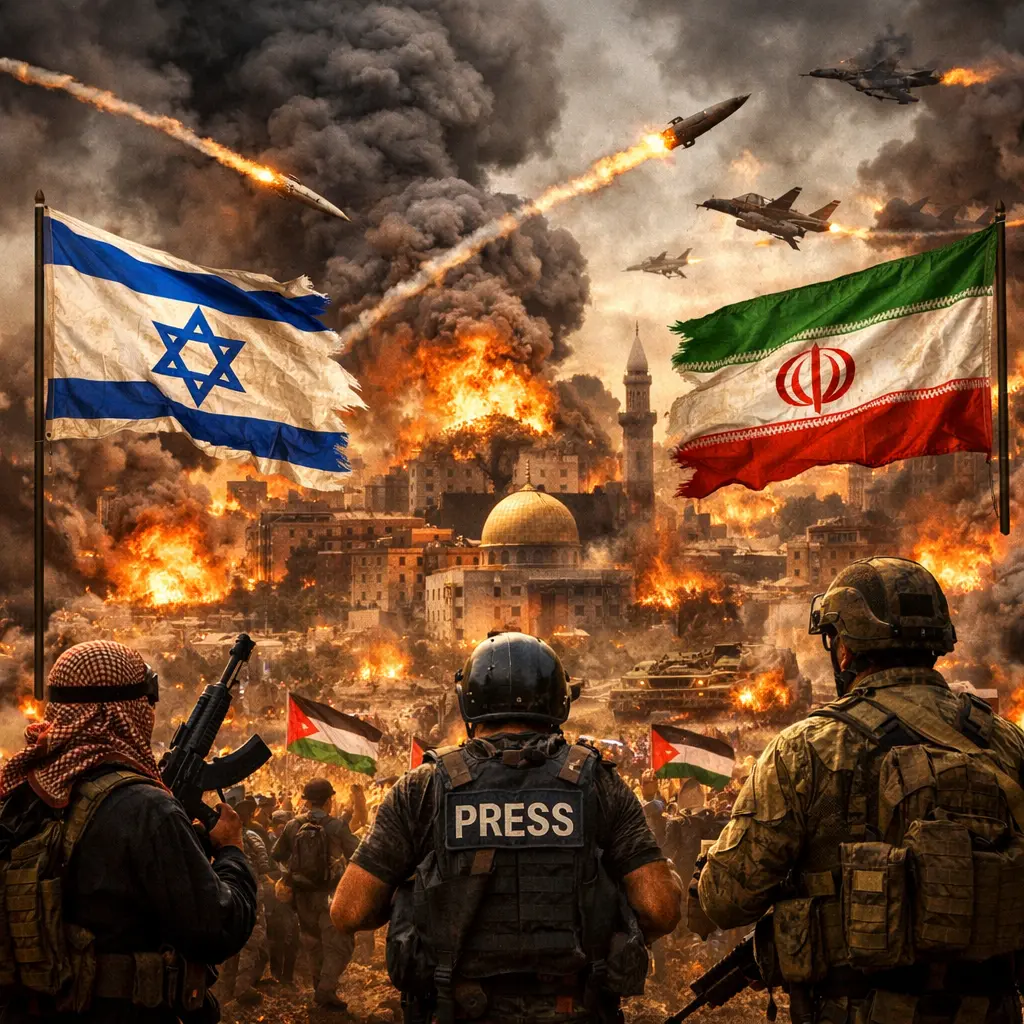
What began on February 28, 2026 as a coordinated military operation has rapidly spiraled into one of the most consequential conflicts the Middle East has seen in decades. The United States and Israel launched a series of surprise airstrikes on sites and cities across Iran, targeting military infrastructure, command facilities, and what officials described as nuclear weapons sites. The speed and scale of the operation caught many off guard. Within hours, Tehran was shaking.
The Iranian government did not stay silent.
Iran responded with missile and drone strikes against Israel, US military bases in the region, and military and civilian locations in Arab states that house US forces. Gulf nations that had spent years carefully building diplomatic ties with Tehran suddenly found themselves in the crossfire. In the first four days of conflict, the United Arab Emirates suffered the highest number of strikes, both intercepted and successful, followed by Kuwait and Bahrain — all hosts to US bases.
This is not just a war between two countries. It is a regional earthquake, and the aftershocks are being felt far beyond the Persian Gulf.
Inside Tehran: Lights Out, Fear On
For ordinary Iranians, the past month has been a nightmare lived in real time. Internet connectivity in Iran dropped to just 4% of ordinary levels, making it one of the longest internet blackouts ever recorded. People couldn’t call relatives. News was filtered, rumors spread. Civilians in Tehran taped their windows to prevent them shattering from airstrike shock waves — a practice last seen during the War of the Cities in the 1980s.
The deadliest single incident of the conflict occurred in the city of Minab, where a strike on an elementary girls’ school killed more than 170 people, most of them schoolchildren. That number alone should stop us. These were children sitting at desks, and now they are gone. Whatever the geopolitical arguments at play, this is the human cost that tends to get buried under press briefings and military maps.
According to the World Health Organization, at least 18 hospitals and health facilities have been hit since the fighting began — a fact that has drawn sharp condemnation from humanitarian organizations worldwide.
The Gulf Is on Edge
The Iran war is not staying within Iran’s borders. Missiles and drones have cut across Gulf skies night after night. Kuwait has reported intercepting missile and drone attacks, while Bahrain has activated emergency sirens and urged residents to seek shelter.The sense of normalcy that Gulf residents had grown used to has evaporated quickly.
The Strait of Hormuz — one of the world’s most critical shipping lanes, through which a significant portion of global oil passes — has effectively become a war zone. Iran’s parliament approved tolls on vessels transiting the strait, a key oil and gas route that has been largely closed by the conflict. The ripple effects on global energy markets have been immediate and severe, pushing oil prices to levels not seen in years and straining supply chains across Europe and Asia.
The 32 members of the International Energy Agency have released 400 million barrels of oil in an effort to stabilize prices. It is a sign of just how seriously the world is taking the economic fallout of this Middle East crisis.
Diplomacy in the Dark
Even as bombs fall, back-channel conversations are quietly happening. Pakistan has emerged as a possible peace broker, passing messages between Washington and Tehran, with its Foreign Minister expressing hope that meaningful talks could be facilitated in the coming days. It is a fragile thread, but it is there.
US Secretary of State Marco Rubio confirmed that communication between Tehran and Washington is ongoing, mostly through intermediaries, and suggested that US war objectives could be achieved in “weeks, not months.” That framing, however clinical it sounds, has done little to ease tensions on the ground.
President Trump, for his part, has kept pressure high. He threatened to destroy Iran’s electric plants and oil wells if a deal is not reached — language that alarmed diplomats and analysts who worry that escalating rhetoric makes a negotiated exit harder, not easier.
Meanwhile, ministers from Pakistan, Saudi Arabia, Turkey, and Egypt gathered in Islamabad in an attempt to find a de-escalation framework, a sign that regional powers know the current trajectory is unsustainable.
What Comes Next?
The honest answer is: nobody knows.
Pentagon chief Pete Hegseth described the coming days as “decisive” and refused to rule out a US ground operation. Iranian officials, for their part, have warned that any ground invasion would be met with full force. The gap between those two positions is enormous, and bridging it will require a level of diplomatic courage that has so far been in short supply.
What is clear is that the global conflict unfolding across the Middle East carries consequences that reach every corner of the world — from energy prices in Europe, to refugee movements in Afghanistan, to the safety of university campuses across the Gulf. This is not a regional story anymore. It is everyone’s story.
The people caught in the middle — the families sheltering in basements, the aid workers unable to reach hospitals, the children who should be in school — deserve more than to be footnotes in a geopolitical crisis. They deserve a world that is trying harder to find peace.