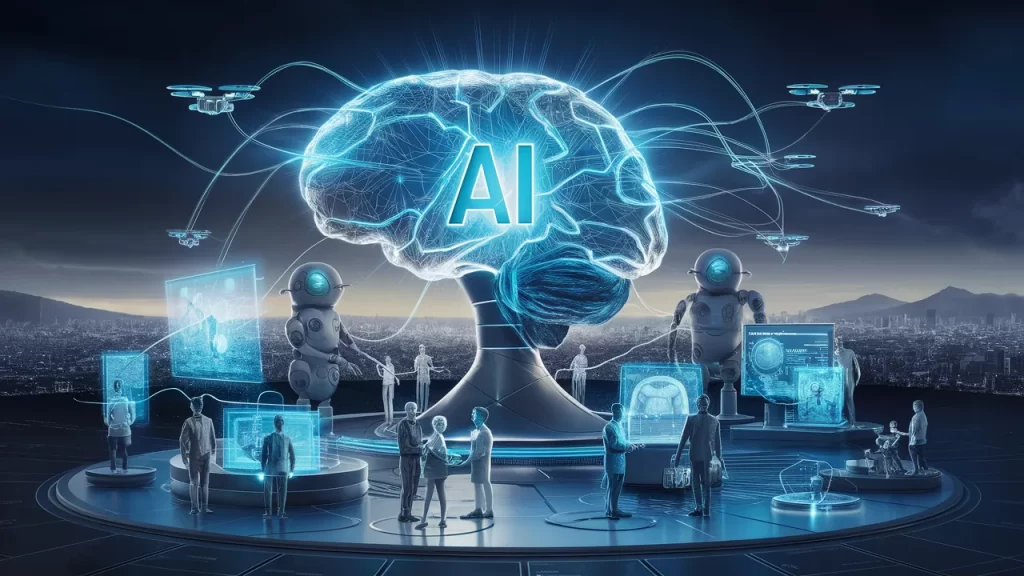
August 6, 2025 — As artificial intelligence (AI) continues to make its way into critical aspects of daily life and industry operations, global concerns are mounting over the ethical implications of AI-driven decision-making and its impact on employment. Governments, corporations, and ethicists are grappling with how to regulate the growing influence of AI while balancing innovation with social responsibility.
AI systems are now being used in fields ranging from healthcare and finance to education and law enforcement. These systems often make or influence decisions on matters such as loan approvals, job recruitment, school admissions, and even criminal sentencing. While proponents argue that AI offers increased efficiency and data-driven precision, critics warn of embedded bias, lack of transparency, and a troubling absence of accountability.
A recent report by the World Economic Forum highlights the dangers of algorithmic discrimination. “AI models are only as fair as the data they’re trained on,” the report stated. “Biased training data can lead to biased outcomes, which disproportionately affect marginalized communities.” This has been observed in hiring algorithms that favor certain demographics, facial recognition software that misidentifies minority groups, and predictive policing tools that unfairly target specific neighborhoods.
The issue of job displacement is another growing concern. According to a 2025 study by the International Labour Organization (ILO), up to 300 million full-time jobs worldwide could be impacted by AI automation in the next five years. Routine and administrative roles are especially vulnerable, as companies increasingly adopt AI-powered chatbots, robotic process automation, and machine learning systems to reduce labor costs.
India is witnessing the effects firsthand. In major urban centers like Bengaluru and Pune, tech-driven layoffs in the customer service, data entry, and IT support sectors have raised alarms. Industry leaders are calling for reskilling initiatives to help workers transition to roles that require human creativity, critical thinking, and emotional intelligence—areas where AI still lags behind.
Speaking at a recent AI ethics summit in Mumbai, NASSCOM President Debjani Ghosh emphasized the need for ethical frameworks. “AI must be explainable, transparent, and fair,” she said. “Regulations and corporate governance should ensure that technology serves humanity—not the other way around.”
Meanwhile, international bodies like UNESCO and the European Union are pushing for global AI regulations. The EU’s Artificial Intelligence Act, expected to be implemented in phases starting later this year, sets strict standards for high-risk AI applications, including those affecting human rights and employment.
India, too, is in the process of drafting its own national AI ethics guidelines. The Ministry of Electronics and Information Technology (MeitY) recently announced a task force to evaluate ethical risks and propose regulatory mechanisms for responsible AI use in public and private sectors.
As AI continues to shape the future, the debate over its ethical use is likely to intensify. Experts agree that the path forward requires a collaborative approach—one that ensures transparency, protects jobs, and places human values at the core of technological progress.