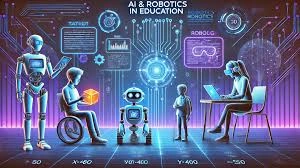
Schools all over the world are changing because of AI, robots, and learning based on skills. The goal is no longer to acquire facts; instead, it’s to develop the abilities that will help you get a job in the 21st century. Teachers will have to adapt how they educate because of these developments in education. This is due to the requirements of enterprises and emerging technologies.
How Schools Use AI
AI isn’t something that will happen in the future; it’s now in every classroom. AI-powered technologies keep track of how well students are doing right now and suggest individualized learning routes that work for each student. For example, systems that use machine learning algorithms can figure out what someone doesn’t know and suggest activities that are perfect for them. This makes people more interested and helps them remember what they learnt.
Teachers say that using AI in the classroom has helped youngsters get better at math and language arts by as much as 30%. This tendency sped up much more after 2020, when remote learning showed how important adaptive technologies are. More than 60% of K–12 schools in the US already use AI tutors. Finland and other European countries are at the front of the pack when it comes to employing AI to plan lessons.
The terms “AI adaptive learning platforms” and “personalized education AI” are the most common searches. This indicates that parents and other people who make choices are interested. Experts all agree that doing things ethically is highly important. This means that rules like the GDPR must preserve people’s privacy. AI may also help with administrative work like grading, which frees up teachers to help students and try out new ways of teaching.
AI is also useful for a lot of students. For example, interactive simulations can aid those who learn best by seeing, and teachers who can talk to students can benefit people who learn best by hearing. AI helps fill in the gaps that regular teaching approaches often leave. Schools that deploy these technologies had fewer kids drop out, especially those who are already at risk.
Robotics: Learning by Doing for Builders of the Future
In the past few years, robotics education has shifted to focus more on hands-on learning. By programming, building, and fixing robots, students learn about science, technology, engineering, and math (STEM). Two programs that make complicated engineering easy for kids to understand are LEGO Mindstorms and VEX Robotics. These programs help kids learn how to work together and solve problems.
Forty percent of high schools throughout the world will teach robotics by 2026. They cost a lot of money in the Asia-Pacific area. For example, Singapore’s schools require youngsters to start learning robotics in fifth grade, which is in keeping with their high PISA science scores. The numbers show that those who are in robotics groups do 25% better on exams of critical thinking than people who aren’t.
Students who learn robotics that focuses on skills are ready for jobs that are becoming more and more automated. The expense of the equipment is a problem, but there are methods to get around it, such using open-source software or getting sponsorship. More parents are getting involved, and seminars are helping families perform STEM activities at home and at school.
Some of the best aspects about school robotics programs are
Students learn how to code and how to think in three dimensions when they have to put things together and code them by hand.
People can work together on group projects that are similar to real engineering teams.
Fits with what businesses need, like automating manufacturing, which gives them an edge in their future jobs.
This hands-on method combines the digital and physical worlds in a way that keeps people from growing bored with screens, which keeps their interest in technology for life.
Not just taking tests, but learning by experience
Skill-based learning transforms how we think about learning by getting rid of assessments and moving toward competency frameworks that focus on things like emotional intelligence, digital literacy, and critical thinking. In Finland, phenomenon-based learning is a way of teaching that mixes multiple subjects to assist students deal with real-world problems. This gets pupils more interested and helps them learn more.
The National Education Policy 2020 in India specifies that middle school pupils should start studying work skills, with the goal of having half of them enrolled by 2025. The World Economic Forum states that 70% of companies throughout the world value skills more than degrees. The figures show that graduates who focus on skills make 15–20% more money in the first few years of their jobs. This shows how this will help the economy.
More and more people are using micro-credentials and project-based evaluations. Students can show off their digital badges on their professional profiles to show that they have these skills. They need to learn new things, and programs like Google’s Educator Certificates give them the tools they need to teach in new ways. People worry about fairness when places don’t have a lot of resources. That’s why it’s so vital for public-private partnerships to make things easier to get to.
Skill-based models promote diverse methodologies, including the integration of historical analysis with data examination to evaluate previous events through contemporary technologies. This helps workers be more flexible, which is excellent in job markets that are changing quickly because of AI and automation.
Case studies and uses in different parts of the world
Countries are the first places to use these new ways of teaching. The White House’s programs in the US pay for AI-robotics hubs in 100 districts, focusing on areas that don’t get enough help so that everyone may join in. The “Made in China 2025” plan for China says that 80% of classrooms should have robots. This helps students come up with fresh ideas and get more patents.
Kenya’s Ajira Digital program teaches African youths and young adults how to use AI. People who do this have a 12% lower likelihood of being out of work. Erasmus+ initiatives in Europe let robots go from one country to another. This helps people learn about other people’s cultures and how to use technology. Atal Tinkering Labs in India give 10,000 schools maker spaces that use AI and skill-building to help young inventors improve.
AI, robotics, and skill-based learning are changing the way people learn all across the world.