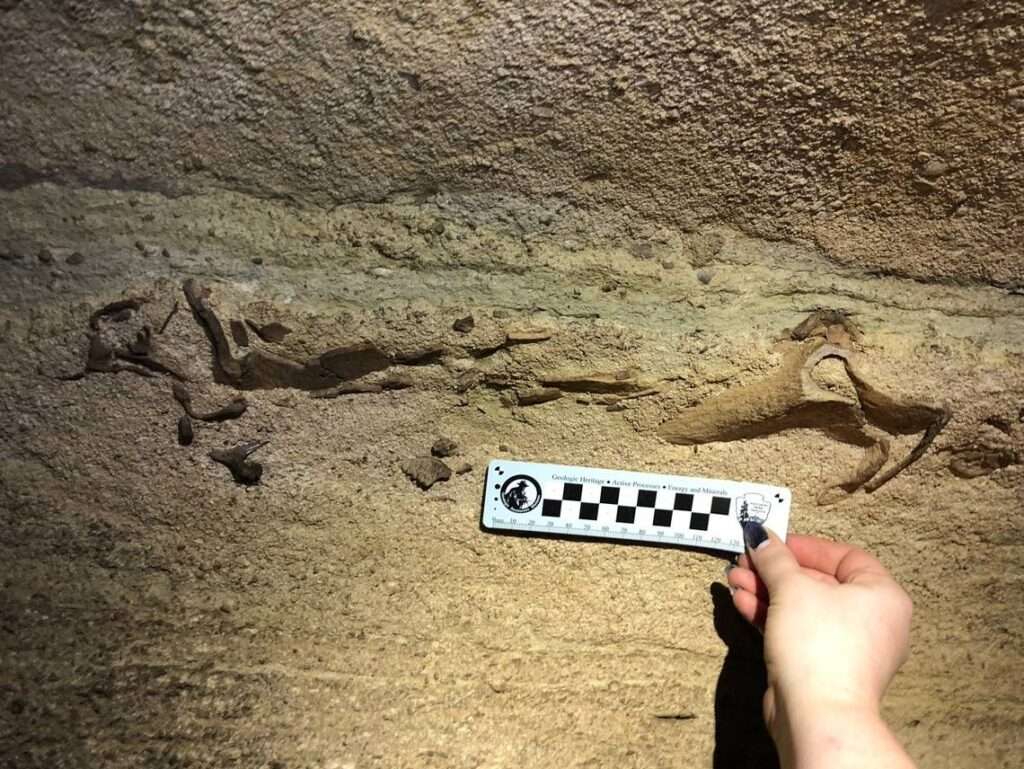
July 26, 2025 — A fossilised tooth belonging to a previously unknown species of ancient shark has been discovered in Kentucky’s Mammoth Cave National Park. The fossil, estimated to be around 340 million years old, is believed to be one of the oldest shark remains ever found in the region. The newly identified species has been named Macadens olsoni.
The discovery was made during an ongoing paleontological survey conducted within the cave system, which is the largest in the world. Scientists found the fossil embedded in limestone formations dating back to the Mississippian period, a time when the area was covered by a shallow sea.
According to experts, the unique structure of the tooth suggests that Macadens olsoni belonged to a group of cartilaginous fishes that evolved long before the appearance of dinosaurs. The tooth features distinct ridges and cusps, indicating a specialized feeding pattern that may have been adapted to specific marine environments of the Carboniferous era.
“This is more than just a tooth — it’s a glimpse into a time when Kentucky was underwater and home to ancient sharks,” said Dr. John-Paul Hodnett, a paleontologist involved in the research. “Each discovery adds a new layer to our understanding of prehistoric marine ecosystems.”
The species was named in honor of David Olson, a volunteer fossil preparator who played a key role in the Mammoth Cave fossil project. The genus name Macadens references the mysterious and cavernous nature of the site where the fossil was found.
The fossil was uncovered as part of a joint initiative between the National Park Service and academic researchers to document and preserve paleontological resources within the cave system. Hundreds of other fossils, including those of early amphibians and invertebrates, have also been cataloged through the project.
Officials believe that the find not only expands the known diversity of prehistoric sharks but also provides critical insight into the evolution of marine life during the Carboniferous period.
Mammoth Cave National Park continues to be a significant site for fossil discoveries. Researchers say the region’s geological history, combined with its well-preserved cave systems, offers ideal conditions for uncovering ancient remains.
Further studies on Macadens olsoni are expected to shed light on its ecological role and its relationship with other species of its time.
The discovery has been welcomed by both scientists and conservationists, who view it as a strong case for continued fossil exploration and preservation in national parks.