
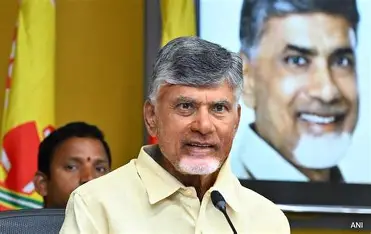
In a significant policy announcement, Andhra Pradesh Chief Minister N. Chandrababu Naidu has revealed that his government plans to offer financial incentives to families with more children. The move, aimed at addressing demographic and workforce challenges in the state, marks a shift in population policy amidst national discussions focused on population stabilization.
Speaking at a public gathering on June 10, 2025, CM Naidu highlighted the need to reassess population-related policies in light of changing economic and social realities. “In the coming years, a strong and young workforce will be essential for the economic development of Andhra Pradesh. We must ensure that our demographic profile supports this vision,” Naidu stated.
Under the proposed plan, families who choose to have more than two children may be eligible for government support in the form of direct cash transfers, tax rebates, and access to certain welfare schemes. While the details are still being finalized, the scheme is expected to be launched later this year after stakeholder consultations and policy review.
This announcement has sparked debate across the political spectrum. Supporters of the policy argue that a carefully planned population growth strategy can ensure a more dynamic labor force and reduce the risk of demographic stagnation. Critics, however, warn that encouraging larger families may put additional pressure on state resources and contradict long-standing national goals of population control and sustainability.
Experts have pointed out that Andhra Pradesh’s fertility rate is already below the replacement level in urban areas, signaling a potential demographic decline if current trends persist. Economists argue that incentives could help counterbalance declining birth rates and aging populations, drawing parallels with similar strategies adopted by countries like Japan and South Korea.
The opposition parties, meanwhile, have questioned the timing and intent of the announcement. Some leaders have accused the ruling Telugu Desam Party (TDP) of using welfare policies as political tools ahead of upcoming local body elections. “The government should focus on improving healthcare, education, and women’s employment instead of pushing for more children,” said YSRCP spokesperson B. Lakshmi Reddy.
Social organizations and health professionals have also expressed concern over the implications of incentivizing childbirth without adequate investment in maternal health and child welfare infrastructure.
In response to these concerns, CM Naidu has promised that the policy will be supported by parallel investments in healthcare, child nutrition programs, and early education. He emphasized that the scheme will remain voluntary and inclusive, without any form of coercion or discrimination.

