
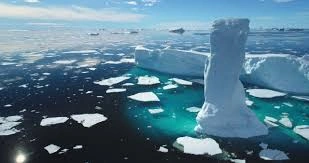
The Arctic north is a treasure mine of gold that big countries can’t ignore since the ice there is melting faster than ever before as the world’s temperatures rise. Russia is building up its military bases, China is attempting to become a “near-Arctic power” with a strong economy, and the US is upgrading its strategic defences in case President Trump is re-elected in 2024. These actions show that there is a race for oil, gas, minerals, and trade routes that could have an impact on the economy and politics of the whole world. This article discusses about the main reasons why competition in the Arctic is getting worse: money, military needs, environmental issues, and political actions.The Arctic is melting because of climate change, which is opening up large areas that were once frozen. This is why the Arctic is so vital strategically. This cuts down on marine excursions and gets seabeds ready for claims. The Northern Sea Route, which runs along the coast of Russia, should shorten shipping delays between Asia and Europe by 40%. In the past, people used the Suez or Panama Canals to go around. Countries use the provisions of UNCLOS to plan how to extend their continental shelves in order to claim resources. When these maps overlap, it can be hard.Russia is aggressively increasing its claim to the Lomonosov Ridge, which covers more than 1.2 million square kilometres, by utilising icebreakers and research under the water. sends naval patrols to protect its right to free navigation even though it hasn’t signed UNCLOS. International institutions are steadily working out these conflicting claims, which make standoffs more likely.
More soldiers in the North
The race for security is all about Russia’s military coming back to life. They have 50 bases that are back in use, hypersonic weapons on Novaya Zemlya, and submarines from the Northern Fleet that are hiding under the ice. They are ready because they have done drills like Vostok, which had more than 100,000 soldiers. NATO states that Norway trains U.S. Marines in the Arctic, Finland and Sweden will join NATO after 2024, and surveillance posts in Greenland will be brought back to life.
Drones that don’t need a pilot keep an eye on the seabeds, satellites monitor movements, and AI produces forecasts about what will happen. These new technologies make things more perilous. It’s quite dangerous to play with fire near nuclear plants, as evidenced by close calls like when Russian planes chased NATO ships. The Trump administration’s primary priority is Arctic defence because it sees Russian submarines as a threat to trade and underwater cables right now.
China’s Brave Step into the Arctic
China gets stronger by buying stuff and building ships, not by taking over land. It boasts a fleet of icebreakers that will soon be the largest in the world. These ships help with research and getting information. There are more than 40 deals with Arctic countries, one of which pays for rare earth mines in Greenland. People in the West call this economic coercion, like what happened in the South China Sea, since they are afraid that data from Svalbard stations could help Beijing’s goals.
The damage to the environment and the trouble Native Americans have
Searching for resources destroys ecosystems, and melting permafrost releases methane, which makes climate loops worse. Marine life is also harmed by spills. When the ice sheet on Greenland melts, it raises sea levels and makes the weather worse all around the world. Indigenous communities like the Inuit, Sami, and Chukchi are losing the places where they hunt and forced to eat seafood that is full of pollutants. Even if people are striving for power, they are fighting back through forums, even if their voices are frequently ignored.
Some of the biggest hazards are that open-water polynyas would lose biodiversity and fisheries will be harmed by acidification. Advocacy emphasises long-term strategies; yet, geopolitics frequently prevails.
Diplomacy’s Moves and Structures
Eight countries and native peoples make up the Arctic Council. They discuss about science and the environment, but things are progressing slowly because the West is boycotting it after Russia attacked Ukraine. Bilateral agreements last: Norway and Russia share fish stocks in the Barents Sea, and the U.S. and Canada agree on how to split up the Beaufort Sea. Other countries are concerned because the U.S. relies on custom instead of UNCLOS, which is the basis for maritime law.
Most Recent Flashpoints Putting more at risk
Things are clearer now that some things have changed. In 2025, Russia builds a facility on Wrangel Island with S-400 missiles. China contracts Xue Long 3 to go to the poles without stopping. The U.S. is in command of Operation Nanook, which tests supply lines that are under dispute. Trump’s instructions for 2025 save resources and go against China. On the other side, NATO’s 2026 plan improves joint exercises against minor threats.
Risks and Gaps in Governance
It’s a “tragedy of the commons” when people take things without permission and order breaks down. India and other countries that aren’t in the Arctic want to be part too, which makes control less centralised. It’s harder to keep an eye on private tankers and miners when the restrictions aren’t strict.
What this means for the future
There will be summers without ice by 2035. This will make it easier for everyone to get to nuclear plants, but it will also make them more likely to be attacked. Mistakes make wars more likely, but the Council’s return after Ukraine gives us hope.

