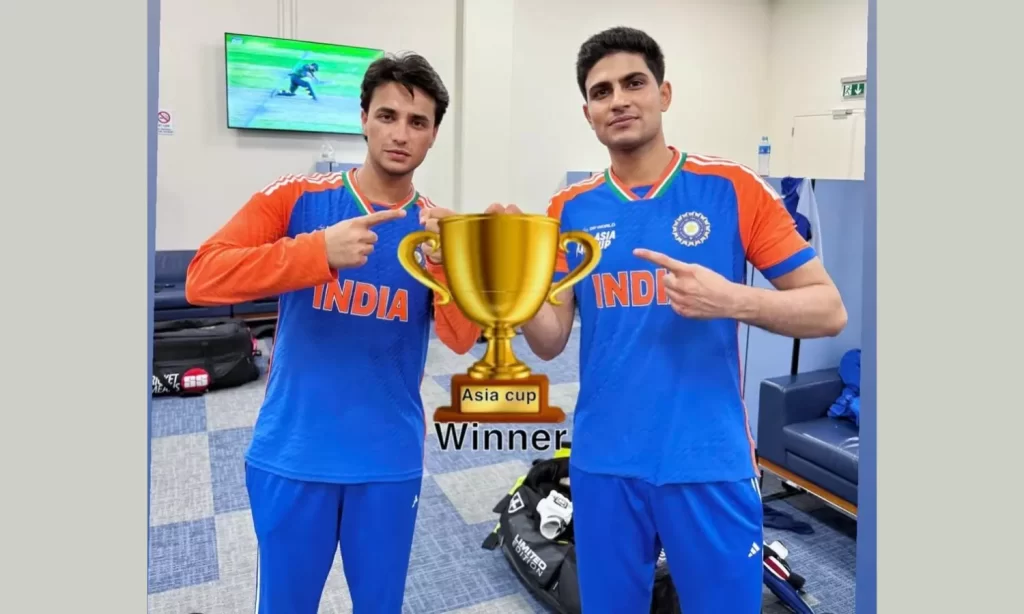
The 2025 Asia Cup concluded with India’s thrilling victory over Pakistan in the final on September 28, but the celebratory moment soon turned into a diplomatic controversy. The Indian team refused to accept the trophy from Asian Cricket Council (ACC) President Mohsin Naqvi, who is also Pakistan’s Interior Minister, triggering a political storm across the cricketing world.
The incident unfolded moments after India clinched the title with a commanding performance at the packed stadium in Dubai. As per protocol, Naqvi was expected to hand over the trophy to the winning side. However, Indian skipper Rohit Sharma, supported by his teammates, politely declined to receive the trophy from the ACC Chief, instead requesting a neutral representative of the council to conduct the presentation. The rare gesture immediately drew global attention, blurring the lines between sportsmanship and geopolitics.
According to reports, the Indian team’s decision was influenced by recent diplomatic tensions between New Delhi and Islamabad. Sources close to the Board of Control for Cricket in India (BCCI) suggested that the move was a “collective stand” to highlight concerns over political interference in cricketing matters. While no official statement was released by the BCCI at the time of writing, insiders hinted that the team had been briefed to avoid any direct association with Pakistani government representatives in high-profile events.
The refusal sparked mixed reactions worldwide. Indian fans largely applauded the team’s stance, calling it a “bold assertion of national pride.” Social media platforms in India were flooded with messages praising the players for upholding what many described as “diplomatic discipline on the global stage.” On the other hand, Pakistani media criticized the move, labeling it “unsportsmanlike” and an “unnecessary politicization of the game.”
The Asian Cricket Council has yet to issue an official statement addressing the controversy. However, insiders revealed that the council may convene an emergency meeting to discuss the fallout, as the incident could set a precedent for future tournaments. Cricket experts also expressed concern that such moments risk overshadowing the spirit of the game, with the focus shifting from sporting excellence to political tensions.
This is not the first time cricket has mirrored the strained ties between India and Pakistan. Over the years, bilateral cricketing ties have been suspended multiple times due to political and security concerns, with contests between the two nations largely restricted to ICC and ACC tournaments. The 2025 Asia Cup, which had already witnessed heated on-field exchanges and high-pressure performances, only intensified the rivalry, both on and off the pitch.
As the debate continues, the spotlight now shifts to the International Cricket Council (ICC), which may face calls to issue guidelines ensuring that cricket remains insulated from political disputes. Analysts argue that while national pride is important, the essence of international sport lies in fostering unity and mutual respect.
The trophy presentation controversy has undoubtedly added a dramatic layer to India’s latest Asia Cup triumph. While the team’s victory on the field will be celebrated for years, the off-field standoff may shape conversations about the intersection of cricket, diplomacy, and national identity in South Asia.