
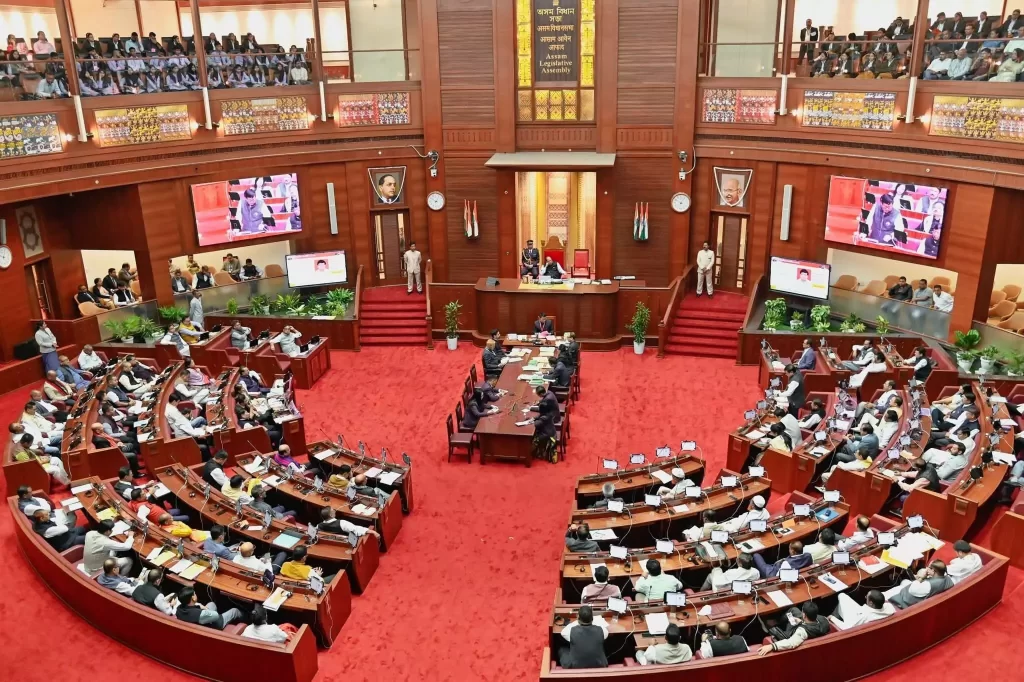
In a significant legislative move, the Assam government on 25 November 2025 tabled the Assam Prohibition of Polygamy Bill, 2025 in the state assembly. Chief Minister Himanta Biswa Sarma introduced the bill after receiving approval from Speaker Biswajit Daimary. Aimed at prohibiting polygamy across the state, the legislation forms a crucial part of the government’s broader agenda to promote gender justice and strengthen legal uniformity in marital laws.
The bill’s introduction coincided with a walkout staged by opposition parties, including the Congress, CPI(M), and Raijor Dal, indicating political friction surrounding the measure. Despite the walkout, the government proceeded with the tabling of the bill, highlighting its commitment to advancing reforms that, according to the Chief Minister, are essential for protecting the rights and dignity of women.
Under the proposed law, entering into a second marriage without legally dissolving the first would be treated as a punishable offence. The bill clearly outlines that no religious, cultural, or customary practices can be used as a defence to justify multiple marriages. The legislation proposes a minimum imprisonment term of seven years, along with fines and additional penalties for offenders. It also extends liability to individuals who aid or facilitate such marriages, including community elders, guardians, and officiants.
Significantly, the bill is part of a larger legislative push by the state government. On the same day, more than 11 bills were tabled, covering areas such as policing reforms, land regulation, and administrative restructuring. The anti-polygamy bill, however, emerged as the most widely discussed due to its direct impact on personal law and social practices.
Key Provisions of the Assam Prohibition of Polygamy Bill, 2025
| Provision | Details |
|---|---|
| Definition of Offence | Marriage contracted without dissolution of existing marriage |
| Minimum Jail Term | Seven years of rigorous imprisonment |
| Additional Penalties | Fines and penalties for concealment or facilitation |
| No Customary Defence | Religious or traditional justification not allowed |
| Applicability | Statewide, with potential exemptions for Sixth Schedule areas |
Implications and Context
The bill is seen as a major step toward ensuring equality in marriage and addressing social vulnerabilities faced by women in polygamous households. While polygamy is not widely practiced in Assam, it persists in certain communities, making the legislation an important intervention for safeguarding women’s rights.
Experts note that one challenge lies in the application of the law in Sixth Schedule areas, which enjoy constitutional autonomy. The bill may not automatically extend to these regions unless approved through separate procedures. Additionally, the lack of opposition participation during the bill’s introduction raises questions about the depth of legislative debate and consensus on the matter.
Implementation remains another key concern. Criminalising polygamy would require increased vigilance, public awareness campaigns, and coordination across law-enforcement agencies to prevent misuse and ensure fair enforcement.

