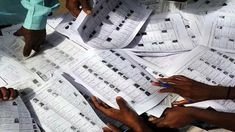
Schools in three Indian states—Kerala, Assam, and Puducherry—are closed in the hot month of April 2026, but not for summer holiday. They’re closed for something bigger: assembly elections. Students will have days off on April 10, 12, and 26, which are polling days. This is meant to increase voter turnout by making it easier for parents and families to vote. It’s a familiar sight in Indian democracy, and it inevitably stirs up debate. Officials are banking on the idea that shuttering these locations will boost voter turnout, given the more than 10 million eligible voters affected. However, for working parents and educators, it raises some tough questions. Is this really the best way to encourage participation, or does it simply add to the already overwhelming demands on their time?
These elections are important for more than simply the area. They’re all fighting for state control in a staggered way. Kerala is in a high-stakes Left Democratic Front (LDF) vs. United Democratic Front (UDF) war, Assam is trying to keep its BJP stronghold, and Puducherry is dealing with its own peculiar union territory issues. The Representation of the People Act, 1951 says that schools and institutions must close on polling day and give workers paid time off to vote. On paper, it seems sense to include schools—kids stay home and parents can vote without stress. But in a society where many families have to work more than one job, the truth is different.
How Poll-Day Holidays Work and Why Schools Close
The norms of the Election Commission of India (ECI) are unambiguous. Section 135B of the RP Act says that employers must provide voters time off, and this also applies to schools. The Kerala state election department scheduled holidays for April 26, which is the day of the single-phase poll for all 140 assembly seats. For its initial phase, which covered 39 seats, Assam declared April 10 and 12 to be dry days. No lessons, no drinking, and no trading stocks were allowed. Puducherry did the same thing for its elections on April 10 in 30 districts.
What is the logic? Get as many people as possible to vote. The average voter turnout in India is between 65% and 70%, however places like Kerala often have more than 75%. In last year’s Lok Sabha elections, Kerala got 77.6% of the votes, Assam got 81.5%, and Puducherry got a respectable 82.5%. Closures help, especially in rural locations where schools are often polling places. With more than 25,000 polling booths in Kerala alone, many institutions become voting centers that are protected overnight by CCTV and police.
But it’s not just about the logistics. According to the ECI, holidays are linked to higher turnout, sometimes by as much as 5–7%. 73.5% of people voted in the 2021 Kerala elections, even though COVID restrictions were in place. This was mainly because of these restrictions. But critics point to the other side. A teacher we talked to in Kochi said, “What about the learning loss?” “Kids skip tests, and revisions build up.” Yes, with board examinations coming to an end, abrupt holidays mess up the schedules.
Important effects on schools:
Kerala: All public, private, and government schools closed on April 26, and the tests were moved.
Phase 1 (April 10) affects 5 districts in Assam; Phase 2 (April 12) affects 5 more. In total, 126 schools are turned into booths.
Puducherry: Full shutdown on April 10, affecting more than 500 schools.
This isn’t new. In 2016, Assam’s votes caused similar restrictions, and parents protested traffic jams near the booths. But the ECI stands by its decision, saying that democracy is more important than a day of education.
The High-Stakes Fight in Kerala: Red vs. Rainbow
The single-phase election in Kerala on April 26 seems like a vote on the Pinarayi Vijayan government’s ten years in office. The LDF is doing well with welfare programs like free healthcare and help for women, but the UDF, led by Congress, is coming back strong. The BJP wants to make big gains in Thrissur and Nemom, where it came close to winning last time.
School closures have a big effect here. Parents in God’s Own Country expect their children to go to school without any breaks. Schools like Govt Model Boys in Thiruvananthapuram turned into huge polling places for 1,500 voters apiece. There are no drop-offs nearby because traffic is banned from 5 AM to 6 PM. One father said, “The mock tests for my daughter’s Class 10 were put off. Voting is important, but so is her future.
It could all come down to turnout. Kerala’s approach, which had 78% of women participating in 2021, depends on family support. Holidays make sure that women, who are often the main caregivers, may vote. But because the Malabar region is prone to floods and the coast is still recovering from cyclones, logistics are putting a pressure on resources. ECI sent 70,000 people, including CRPF, to 44,000 booths.
What if turnout falls below 70%? Would it mean that voters are tired with the LDF after ten years? There are early signs of a close three-way race, with protests against the CAA and rising prices as flashpoints.
Assam’s Two-Phase Drama: Floods, Borders, and the BJP’s Hold
Assam votes in two parts: on April 10 for seats in the Kaziranga Valley and on April 12 for seats in the Barak Valley. Himanta Biswa Sarma of the BJP wants to be re-elected and talks about things like the Bhupen Hazarika bridge as proof of his work. The Congress-AGP combination, which is against the BJP, says that delimitation is unfair.
Schools are the ones that suffer the most. In Dibrugarh, which was affected by floods, schools are closed, so youngsters have to stay home while the Brahmaputra River rises. More than 200 schools transformed into polling places, and the VVPAT devices were examined three times. Ferries stop running on dry days, leaving voters in rural areas stranded. Goal for turnout: 80%, the same as the record set in 2021.
Parents complain about holes in the syllabus. A tea garden worker from Tinsukia adds, “Our local school shuttered for a week to be ready.” “Kids play, and we wait in line for hours.” But holidays help women vote, which is important in places like Karimganj where Muslims make up most of the population.
The setting of Assam provides depth. There are a lot of arguments over illegal immigration, and NRC revisions are coming up. The BJP promises to keep the borders closed, but the opposition cautions that this will cause division. School breaks liberate workers, which is important for the 82% turnout goal.
Puducherry’s Compact Contest: The Land Is at Stake
Puducherry has 30 seats and votes on April 10. CM N. Rangasamy’s BJP-NTK alliance holds a very small majority. Congress-AIADMK responds by talking about problems in the area, like not having enough water and power cuts.
All 512 schools shuttered, and many of them turned into booths. Each of Karaikal’s coastal schools has 800 voters. Holidays line up with Easter, which makes it less bad. But moms who work are in a hurry. A Pondy shopkeeper says, “No school, no daycare.”
Puducherry’s literacy rate of 82% is the same as Kerala’s, hence education is important. The ECI’s cVIGIL app has already received 500 complaints, most of which are over infractions of the model code. NRIs voting through proxies might push turnout up to 85%.
The Bigger Picture: How Many People Vote vs. How Many Schools Are Closed
These closings bring attention to India’s election machine. There are 96 crore voters in India, thus states change the regulations to get more people to vote. Countries like Australia make people vote by threatening to fine them, while India prefers to reward people for voting.
It’s really important in India. Low attendance in some cities, as Delhi’s 57% in 2020, weakens credibility. Holidays work: 67% of people voted in the 2019 national elections, the most ever. But the education lobby fights back. NCERT says that taking breaks like this leads to a loss of learning over time.
It hurts the economy. Assam’s tea farms lose a day’s work, and Kerala’s IT hubs witness parents not showing up for work. Studies demonstrate that women benefit the most; turnout goes up by 10% when childcare is provided.
But there are other options. Longer hours, evening booths, or classes via the internet? ECI tries out postal ballots for people with disabilities, but the scale is the problem.
Benefits of school breaks:
Increases family voting, especially among women and people who work for a living.
Clears booths for safety.
Average turnout in the past: +5%.
Cons:
Learning problems, especially before tests.
A lot of work for single parents.
Opportunity cost: daily GDP loss of Rs 500 crore predicted.
Voices from the Ground: Parents, Teachers, and Voters Speak Up
People have different opinions when you talk to them. A teacher in Kozhikode, Kerala explains, “It’s our duty. One day won’t damage careers.” An Assam mom responds, “My son missed Olympiad prep.” Yes, democracy, but what about balance?
People who vote like it. A fisherman from Puducherry said, “No school rush, I voted early.” The ECI’s SMS notifications and helplines are helpful, but heat waves, like the one in Assam that reached 40°C, challenge people’s fortitude.
Question to think about: How do we value the vote in a country that is racing to grow without putting the classroom on hold?
Assembly Elections Trigger School Closures Across Kerala, Assam, and Puducherry: A Push for Voter Turnout or Burden on Families?