
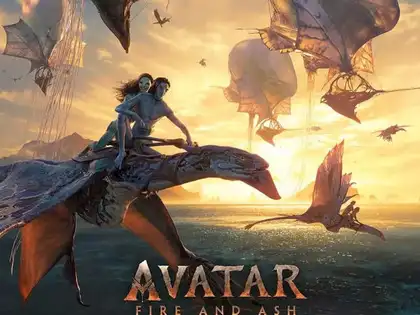
James Cameron’s long-awaited third chapter in the Avatar franchise arrives with unprecedented technical ambition, but early reactions reveal a sharp divide over its storytelling depth.
James Cameron’s “Avatar: Fire and Ash”, the third installment in the globally successful Avatar franchise, officially premiered worldwide on December 19, 2025, reigniting massive audience interest in the cinematic universe of Pandora. As one of the most anticipated Hollywood releases of the year, the film has already begun shaping conversations across the global film industry. While critics and viewers largely agree on its breathtaking visuals and technological innovation, opinions remain split on whether the film delivers the emotional and narrative impact expected from a franchise of this scale.
A Technological Spectacle That Pushes Cinematic Boundaries
From its opening sequence, Avatar: Fire and Ash reinforces James Cameron’s reputation as a pioneer of cinematic technology, visual effects innovation, and immersive world-building. The film introduces a darker, volcanic biome of Pandora, dominated by fire-based ecosystems and ash-covered landscapes, marking a sharp tonal shift from the oceanic beauty of The Way of Water.
Critics have widely praised the film’s:
- Next-generation visual effects and CGI realism
- Advanced motion-capture performance technology
- Expansive and richly detailed Pandora world design
- Seamless integration of action, environment, and character movement
Industry analysts note that Cameron once again raises the bar for large-scale filmmaking, positioning Fire and Ash as a benchmark for future science fiction and fantasy productions.
Storytelling Draws Mixed Reactions
Despite its visual triumphs, early reviews suggest that Avatar: Fire and Ash struggles to achieve the same narrative cohesion that defined the original Avatar film. Some critics argue that the storyline feels overextended, with multiple character arcs competing for emotional attention.
Key points of criticism include:
- A perceived lack of narrative depth
- Slower pacing in the second act
- Limited emotional development of new characters
However, supporters of the film highlight its thematic ambition, particularly its exploration of conflict, cultural identity, environmental destruction, and moral consequence. The introduction of fire-based clans adds complexity to the franchise’s lore, expanding Pandora’s social and ideological landscape.
Box Office Expectations and Franchise Impact
Despite divided critical reception, Avatar: Fire and Ash is projected to perform strongly at the global box office, driven by the franchise’s loyal fan base and premium-format screenings. Early advance bookings indicate high demand for IMAX and 3D showings, reinforcing Avatar’s dominance as a theatrical experience rather than a streaming-centric franchise.
Key factors driving box office momentum include:
- Strong international market appeal
- Holiday season release timing
- James Cameron’s established blockbuster credibility
- Ongoing interest in the Avatar cinematic universe
Looking Ahead: What This Means for Avatar’s Future
As the Avatar saga moves toward its planned future installments, Fire and Ash may prove to be a transitional chapter—one that prioritizes world expansion and technological evolution over tightly focused storytelling. While it may not achieve universal critical acclaim, the film underscores Cameron’s long-term vision for the franchise as a multi-generational cinematic epic.
In the broader context of modern cinema, Avatar: Fire and Ash reaffirms that spectacle still commands global attention, even as audiences increasingly demand stronger narratives. Whether remembered as a bold experiment or a necessary bridge to future chapters, the film has undeniably reignited debate about the balance between visual innovation and storytelling substance in big-budget filmmaking.

