
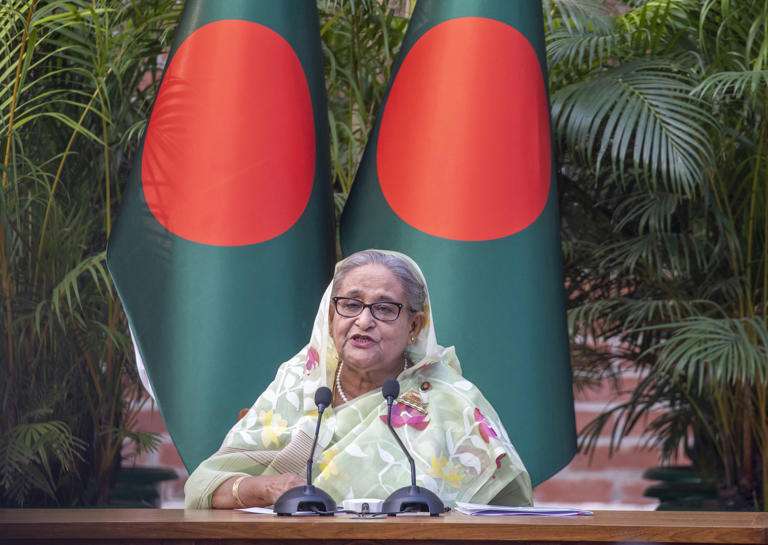
Bangladesh Prime Minister Sheikh Hasina has been sentenced to six months in jail by the Supreme Court on charges of contempt of court. The judgment, delivered on Tuesday, comes in response to remarks she made earlier this year that were found to undermine the authority of the judiciary.
The court, headed by Chief Justice Obaidul Hassan, ruled that the Prime Minister’s public statements had cast aspersions on the impartiality of the judiciary, warranting punitive action. According to the court, Hasina’s comments questioned the integrity of judicial decisions, thereby constituting a direct violation of constitutional conduct expected from the head of government.
“Sheikh Hasina’s remarks eroded public trust in the legal system. No one is above the Constitution, regardless of their political stature,” the Chief Justice stated while reading the verdict.
The incident dates back to a political gathering held in early 2025, where Hasina reportedly criticized recent court rulings and implied judicial interference in government affairs. Despite a written clarification submitted by her legal team, the court maintained that her explanation failed to justify the statements made.
The ruling Awami League party has condemned the verdict, describing it as a politically charged move aimed at destabilizing the government ahead of national elections. “This is a dangerous precedent. We believe the court’s decision is influenced by political motives,” said senior party leader Obaidul Quader.
On the other hand, leaders from opposition groups, including the Bangladesh Nationalist Party (BNP), welcomed the court’s decision. They hailed it as a sign that judicial accountability can extend to even the most powerful political figures.
The legal implications of the sentence are still being assessed. Constitutional lawyers suggest that the Prime Minister has the right to appeal the decision and may seek a stay on the sentence. However, questions remain over her ability to remain in office while serving a custodial sentence. The Constitution of Bangladesh does not provide clear directives in such scenarios.
Internationally, the ruling has drawn cautious responses. Human rights organizations and foreign missions have urged the Bangladeshi government to ensure adherence to due legal process while preserving democratic stability.
As the country moves closer to general elections, this development is expected to have wide-ranging political consequences. Whether this ruling marks a new era of judicial independence or deepens existing political divisions is yet to be seen.

