As the political landscape of Bihar heats up, the stage is set for the 2025 Bihar Legislative Assembly elections, scheduled for November 6 and 11, with results to be declared on November 14. The elections will determine the composition of the 243-member assembly, with a majority threshold of 122 seats. The National Democratic Alliance (NDA), led by Chief Minister Nitish Kumar’s Janata Dal (United) and the Bharatiya Janata Party (BJP), faces a formidable challenge from the opposition coalition, the Mahagathbandhan (MGB), spearheaded by Rashtriya Janata Dal (RJD) leader Tejashwi Yadav.
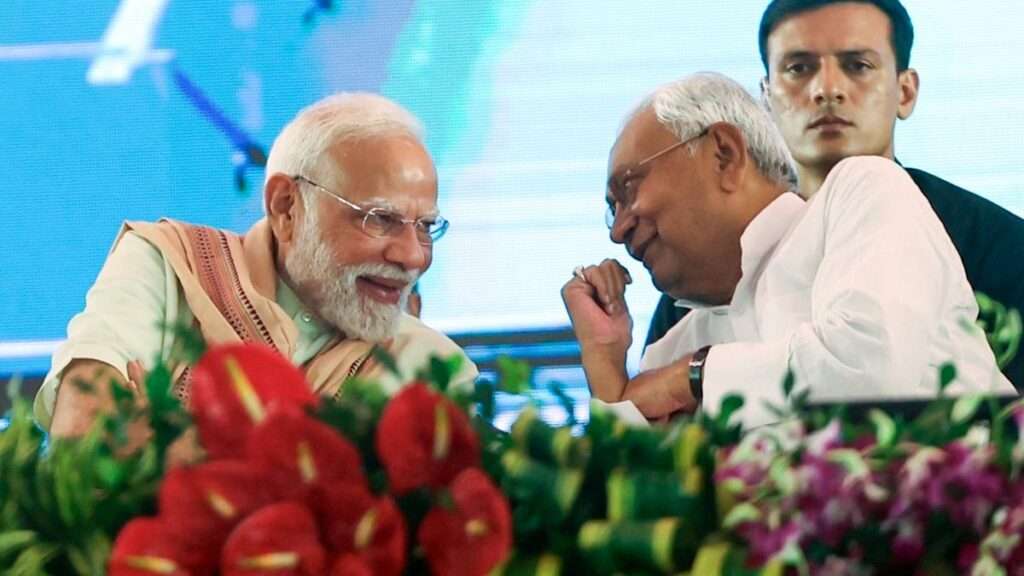
The NDA has consolidated its position by finalizing seat-sharing arrangements, with JD(U) and BJP each contesting a significant number of seats. Chirag Paswan’s Lok Janshakti Party (LJP) has also been allocated constituencies in Purnia and Katihar. This strategic distribution aims to strengthen the alliance’s presence across the state, particularly in regions with substantial OBC and Dalit populations. The NDA’s campaign is bolstered by endorsements from leaders such as Uttarakhand Chief Minister Pushkar Singh Dhami and Maharashtra’s Devendra Fadnavis, who have expressed confidence in the alliance’s prospects. Dhami highlighted the developmental initiatives under Modi and Kumar’s leadership, while Fadnavis actively participated in nomination events, underscoring the alliance’s commitment to a strong electoral performance.
Tejashwi Yadav has emerged as a central figure in the opposition’s campaign, presenting himself as a viable alternative to the incumbent government. He has accused the NDA of fostering a “politics of illusion,” alleging that the alliance’s promises are disconnected from the ground realities of Bihar’s development. Yadav’s rhetoric emphasizes the need for accountability and transparency, resonating with voters disillusioned by the current administration’s performance. His leadership is further solidified by opinion polls favoring him as the preferred chief ministerial candidate.
The Seemanchal region, encompassing Purnia, Katihar, Araria, and Kishanganj, is poised to play a pivotal role in the elections. With a combined total of 24 assembly seats, the region’s significance is amplified by its substantial Muslim electorate, ranging from 35% to 60%. Both major alliances are intensifying their efforts in this area, distributing election symbols and engaging in targeted campaigning. Key candidates, such as JD(U)’s Leshi Singh and RJD’s Bima Bharti, are set to contest in Dhamdaha and Rupauli, respectively, making the region a focal point of electoral activity.
Ensuring the integrity of the electoral process remains a top priority. The Election Commission of India has mandated stringent measures to prevent the misuse of cash, liquor, and drugs to influence voters. A “zero-tolerance” policy has been adopted, with enhanced coordination among enforcement agencies, including the Central Board of Direct Taxes, Enforcement Directorate, Narcotics Control Bureau, and the Reserve Bank of India. Special attention is being given to constituencies prone to smuggling and unaccounted cash flow, particularly along the porous India-Nepal border.
As Bihar approaches the 2025 assembly elections, the contest between the NDA and the MGB is set to be a defining moment in the state’s political trajectory. With both alliances mobilizing resources and support, the outcome will hinge on voter perceptions of governance, development, and leadership. The elections are not just a political event but a reflection of the aspirations and challenges of Bihar’s populace. The coming weeks will witness intensified campaigning, strategic alliances, and a keenly contested battle for the state’s future.