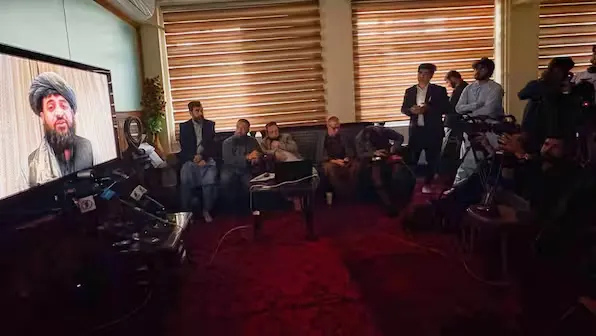
Diplomatic efforts between Afghanistan and Pakistan have suffered a major setback after the latest round of negotiations in Istanbul collapsed on Saturday, 8 November 2025. The talks, which aimed to cement a fragile ceasefire and establish a framework for long-term stability, ended without agreement, with both sides trading sharp accusations.
In mid-October, mediated by Qatar and Turkey, Afghanistan and Pakistan agreed to a ceasefire following some of the worst cross-border clashes in years. The truce was designed to halt hostilities and pave the way for formal dialogue. The November talks in Istanbul were the latest in a series of attempts to convert that truce into concrete commitments.
Negotiations fell apart primarily because of a fundamental disagreement over security responsibilities. Pakistan insisted that Afghanistan prevent militant groups operating from its territory — notably the Tehrik-e Taliban Pakistan (TTP) — from launching attacks into Pakistan. Afghanistan’s ruling Taliban side said those demands were “beyond our capacity” and called Pakistan’s stance “irresponsible and non-cooperative.” Pakistan, in turn, criticised the Afghan delegation for declining to formalise a written agreement and for relying only on verbal assurances. Islamabad declared the talks over and said there was “no hope” for a fourth round.
Despite the breakdown in dialogue, Afghanistan’s spokesman reaffirmed that the ceasefire remains intact — at least for now — and that Kabul remains committed to it provided Pakistan honours Afghan sovereignty. Nevertheless, sporadic exchanges of fire continue along the 2,600-kilometre border. The conflict has disrupted trade, closed border crossings, and heightened humanitarian concerns in the region.
The collapse of these talks carries wider implications. For one, the closure of key crossings has hit commerce between South and Central Asia, affecting border-communities dependent on transit and trade. Also, the inability to agree on verification mechanisms for militant activity raises the risk of renewed large-scale hostilities, which could further destabilise an already fragile region. Analysts note that while diplomacy is still possible, it now faces significant trust deficits.
The failed Istanbul negotiations mark a critical moment in Afghanistan-Pakistan relations. The keywords “ceasefire,” “border tensions,” “militant sanctuaries,” and “regional stability” all point to the high stakes involved. Unless both sides return to the table with more flexible negotiation terms and mutual verification mechanisms, the ceasefire may hold only temporarily. The wider region watches closely: renewed conflict would not only worsen humanitarian conditions but could also destabilise neighbouring countries and corridors vital for trade. The collapse of this round of talks thus serves as both a warning and a call for urgent diplomatic action—before the fragile peace unravels completely.