
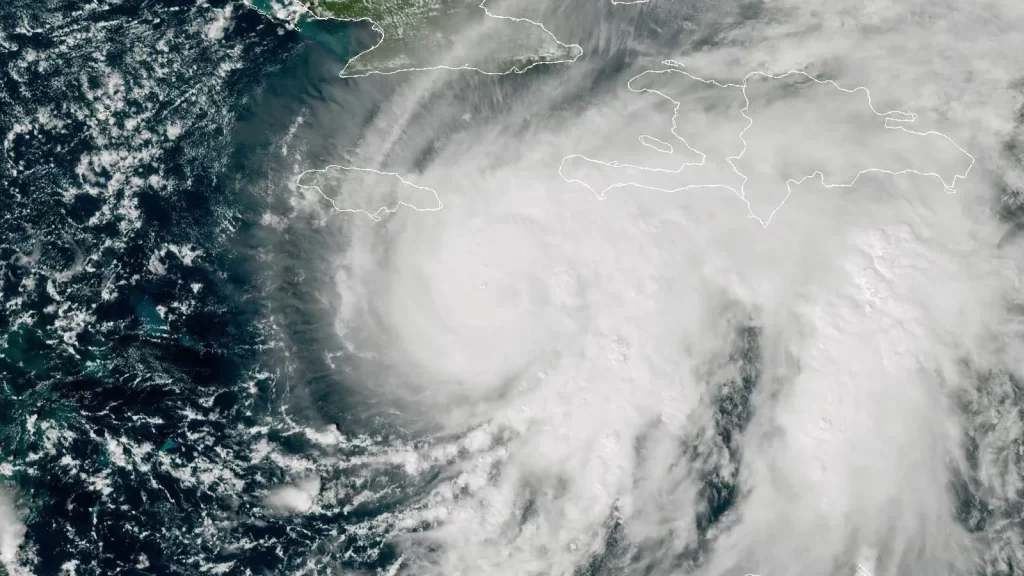
As global weather patterns intensify, two powerful tropical systems are simultaneously posing significant threats in different parts of the world. In the Caribbean, Hurricane Melissa has rapidly strengthened into a Category 5 storm and is closing in on Jamaica. Meanwhile in India, Cyclone Montha is preparing to make landfall on the coast of Andhra Pradesh, bringing heavy rainfall and strong winds. Both events underscore the urgent need for disaster-preparedness and climate-resilient responses.
Hurricane Melissa has intensified into a Category 5 hurricane with sustained winds estimated at around 160 mph (≈260 km/h), making it one of the strongest storms ever projected to strike Jamaica. Forecasters warn that Melissa’s slow forward motion will prolong its destructive potential, with rainfall amounts of up to 40 inches (≈1 m) expected in some eastern parts of Jamaica. The government of Jamaica has ordered mandatory evacuations in vulnerable low-lying communities, activated hundreds of shelters, and closed international airports.
Melissa’s projected track also threatens Haiti, the Dominican Republic, and eastern Cuba, placing large populations at risk of storm surge, flooding, landslides, and widespread infrastructure damage. The potential impact of Melissa is compounded by its intensity and slow movement—experts warn that lingering over vulnerable terrain dramatically magnifies damage.
On the other side of the globe, Cyclone Montha is gathering strength in the southeast Bay of Bengal and is forecast to make landfall on the Andhra Pradesh coast between Machilipatnam and Kalingapatnam, near Kakinada, on October 28 as a severe cyclonic storm. The India Meteorological Department (IMD) has issued red and orange alerts across multiple districts, warning of heavy to very heavy rainfall, wind gusts up to 110 km/h, and localized flooding.
State authorities are mobilising relief frameworks, positioning essential supplies, suspending fishing activities, and evacuating tens of thousands in vulnerable coastal and hilly regions. Although Montha’s wind strength is lower than a major Atlantic hurricane, its timing—during seasonal transitions—and its potential to trigger flooding and landslides in low-lying coastal areas make it a serious threat for the region.
These concurrent storms highlight several global trends and risks:
- Climate-linked intensification: Hurricanes and cyclones are demonstrating faster intensification and higher rainfall rates—Melissa’s rapid upgrade to Category 5 is a case in point.
- Compound hazards: Slow-moving storms like Melissa or storms with large rainfall footprints like Montha create prolonged exposure, increasing risk of flooding, infrastructure failure, and humanitarian need.
- Preparedness disparity: While Jamaica has extensive experience with hurricanes, the scale of Melissa might surpass past events. In India, improved forecasting and disaster response capacity are being tested yet again by Montha.
- Global interconnectedness: Though geographically distant, both storms reflect how tropical weather systems remain a major part of global risk portfolios—economic, humanitarian, and ecological.
As Hurricane Melissa barrels toward Jamaica and Cyclone Montha approaches India’s eastern coast, immediate risk management efforts are underway in both regions. For Jamaica, the challenge is to protect life and infrastructure from one of its most powerful storms on record. For Andhra Pradesh and adjacent states, the focus is on mobilising evacuation, relief, and early-warning systems to reduce damage and casualties. Ultimately, these parallel events serve as a stark reminder: effective disaster preparedness, climate adaptation, and resilient infrastructure are more vital than ever in a warming world.
Readers are advised to follow official updates from local meteorological agencies and heed evacuation orders immediately if issued.

