
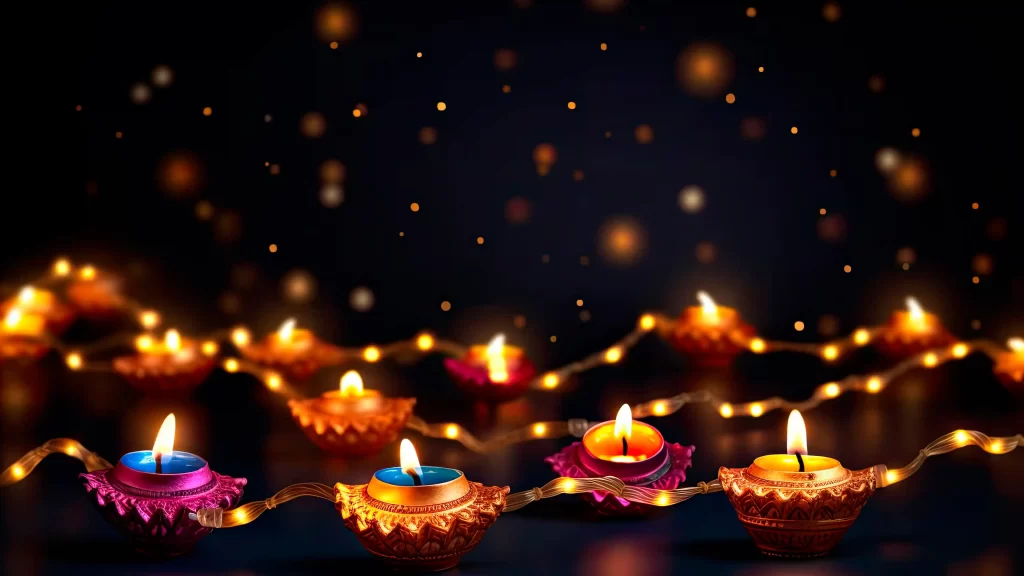
As the five-day festival of Diwali unfolds across India, one memorable highlight in Maharashtra is “Diwalicha Padva” (also known as Bali Pratipada) — a day that honours marital bonds, prosperity, and tradition. Observed immediately after the main Lakshmi-puja day, this part of the festival stands out for its unique ritual: wives performing aukshan (the ceremonial waving of a lamp) for their husbands, and husbands presenting meaningful gifts to their wives.
In this article, we explore the cultural significance of Diwali Padwa in Maharashtra, the key rituals of aukshan and gift-giving, and the broader themes of love, family, and prosperity it encapsulates.
In Maharashtra, Diwali Padwa is celebrated on the day following the main Lakshmi puja, marking the beginning of the bright lunar fortnight of Kartik. The festival has deep mythological roots — it is associated with the return of the daitya-king Mahabali (or Bali) to the earthly realm, granted by Lord Vishnu in his Vamana avatar. Thus, Diwali Padwa symbolizes renewal, goodness, abundance, and the triumph of positive values.
However, in Maharashtrian households, the emphasis is more personal and familial. This day, known as “Padva” (from Pratipada), marks the first day of the bright moon phase and is celebrated as a day of marital harmony. Homes are adorned with rangoli, diyas are lit, and families come together in joy and devotion.
The central ritual of the day — aukshan — is deeply symbolic. The wife lights a lamp (diya), circulates it in an aarti motion in front of her husband, applies a tilak, and offers sweets. This act invokes blessings for his health, longevity, and success while also reaffirming their marital bond. In return, husbands present gifts — often new clothes, jewellery, sweets, or other thoughtful items — to their wives, symbolizing gratitude, love, and mutual respect.
Beyond the couple’s ritual, Diwali Padwa underscores themes of prosperity and family unity. As part of the broader Diwali celebrations, households prepare special sweets, savour traditional delicacies, and decorate homes to invite auspiciousness and well-being. It’s a time when marital relationships are reaffirmed, parental roles are honoured, and the family unit gathers to celebrate shared values. From a cultural perspective, this festival reinforces continuity, gratitude, and togetherness across generations.
In addition, the festival serves as a reminder of generosity and humility — echoing the legend of King Bali who, despite his power, humbly offered himself to Lord Vishnu. His story continues to inspire the spirit of devotion, humility, and thanksgiving that defines this auspicious day.
In Maharashtra, Diwali Padwa is far more than a festive occasion; it is a celebration of love, respect, family harmony, and prosperity. Through the ritual of aukshan, the tradition of gift-exchange, and the warmth of family gatherings, couples reaffirm their bond and seek blessings for a joyful year ahead. Rooted in ancient mythology yet celebrated vibrantly in modern households, Diwali Padwa beautifully bridges the essence of tradition with the rhythm of everyday life — illuminating homes and hearts with love and devotion.

