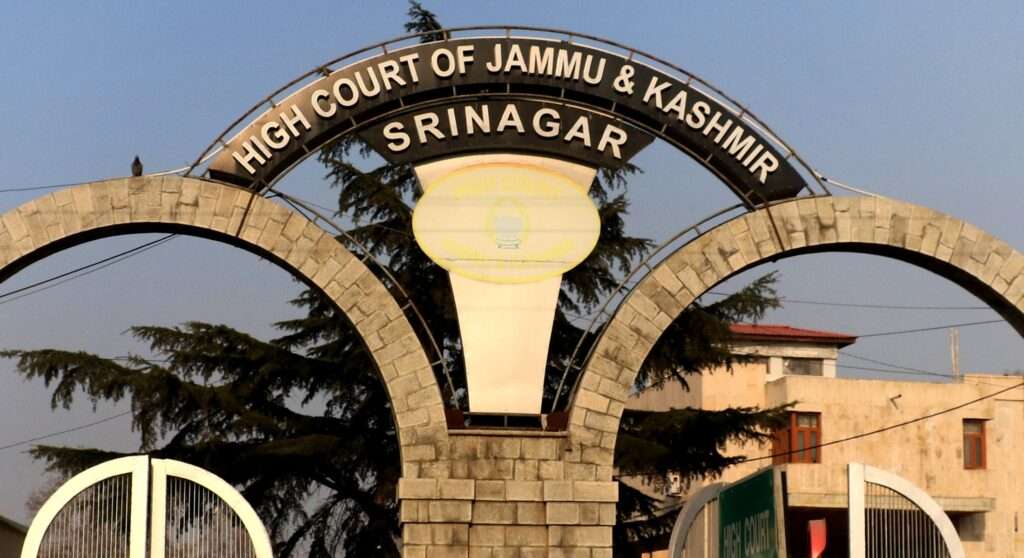
August 11, 2025 — The Union Ministry of Home Affairs (MHA) has informed the Jammu and Kashmir High Court that the Lieutenant Governor (LG) possesses the constitutional authority to nominate five members to the Union Territory’s Legislative Assembly without seeking the “aid and advice” of the elected government.
In an affidavit submitted before the court, the MHA maintained that this provision, enshrined in the Jammu and Kashmir Reorganisation Act, 2019, as amended in 2023, aims to ensure representation for underrepresented communities, including women, Kashmiri migrants, and West Pakistan refugees.
Background and Legislative Basis
The legislation allows the LG to nominate two women members, two members from the Kashmiri migrant community (including at least one woman), and one representative from the West Pakistan refugee community. The government argues that the nominations are essential to promote inclusivity in the legislative process.
The framework for such nominations mirrors the model followed in the Union Territory of Puducherry, where nominated members enjoy the same voting rights as elected legislators. The MHA emphasised that the statute clearly vests this power in the LG and does not require concurrence from the council of ministers.
Judicial Challenge and PIL
The matter reached the High Court after several petitions questioned the legality of the LG exercising this power independently. Petitioners contended that bypassing the advice of the elected government undermines democratic principles and violates constitutional norms.
Earlier, the Supreme Court had declined to hear direct challenges to the provision, directing the petitioners to approach the High Court instead. The Public Interest Litigation (PIL) before the J&K High Court now seeks to determine whether the LG’s discretionary authority should be subject to checks from the elected executive.
Diverging Legal Opinions
Legal experts remain divided on the matter. Supporters of the MHA’s stance point to the explicit wording of the Reorganisation Act, which does not stipulate ministerial consultation for such appointments. They argue that the legislative intent was to safeguard representation for specific groups regardless of the political composition of the assembly.
Critics, however, stress that governance in a democratic setup should be guided by the elected executive’s advice. They argue that the unilateral nomination of legislators by an appointed official could tilt the balance of power, especially during government formation or in a hung assembly scenario.
Some commentators also refer to the 2018 Supreme Court ruling on Puducherry’s nominated MLAs, noting that while the judgment upheld the LG’s power in that context, it left certain constitutional questions unresolved. Others believe the debate is premature until the nominations are actually made following the upcoming assembly elections.
Implications for Governance
The High Court’s verdict will likely have far-reaching implications not only for the governance structure of Jammu and Kashmir but also for other Union Territories with similar administrative provisions. A ruling in favour of the MHA could reinforce gubernatorial autonomy in legislative appointments, while an adverse verdict could reaffirm the primacy of the elected government in such decisions.
Next Steps
The High Court is expected to continue hearings in the coming weeks. Political observers note that the timing of the case is critical, given that Jammu and Kashmir is moving towards its first assembly elections since its reorganisation in 2019.
As the legal battle unfolds, the issue underscores a broader national debate over the balance between appointed administrators and elected representatives in India’s federal framework.