In a landmark step aimed at promoting scientific learning and innovation among underprivileged students, the Union Government has announced the installation of 100 space science laboratories in tribal schools across the country. This initiative, launched under the Atal Innovation Mission in collaboration with the Indian Space Research Organisation (ISRO), is designed to nurture scientific temperament and build capacity in remote and tribal regions.
The announcement was made by Union Minister for Tribal Affairs, Arjun Munda, during a press briefing in the national capital on Tuesday. The minister emphasized the importance of providing equal opportunities in science and technology to students from Scheduled Tribe (ST) communities, stating that the move aligns with the government’s broader goal of inclusive development.
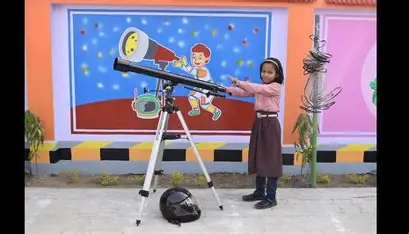
“These space labs will provide hands-on learning opportunities for tribal students, enabling them to explore satellite technology, space missions, and modern scientific tools that were once out of their reach,” said Munda. He added that the labs will also serve as hubs for STEM (Science, Technology, Engineering, and Mathematics) innovation at the grassroots level.
The project is being implemented under the Eklavya Model Residential Schools (EMRS) scheme, which caters specifically to tribal children. Each lab will be equipped with state-of-the-art space kits, 3D models, mini-satellites, and computer-based simulations. Experts from ISRO and other science institutions will offer training and mentorship to schoolteachers, ensuring quality delivery of content and experiments.
The decision comes at a time when India is increasingly asserting itself as a global space power, with the success of missions such as Chandrayaan-3 and Aditya-L1. Encouraging interest in space science among tribal youth could help tap into a largely underutilized talent pool and inspire the next generation of scientists and engineers from diverse social backgrounds.
Educationists and policy experts have hailed the initiative as a crucial intervention in bridging the educational divide. Dr. Vikas Rajan, an education policy analyst, said, “This is a progressive move that not only ensures access but also promotes excellence in science learning among marginalized communities. The long-term impact of this investment in talent can be transformative.”
According to official estimates, the project is expected to benefit more than 40,000 tribal students in the initial phase. The selection of schools is being done based on geographical representation, performance metrics, and infrastructure readiness.
In the coming months, training modules and teacher orientation programs will be rolled out, followed by the phased installation of the labs. The government has also hinted at the possibility of expanding the initiative based on its success and feedback from stakeholders.
With this bold step, the Union Government reiterates its commitment to the principle of “Sabka Saath, Sabka Vikas, Sabka Vishwas,” ensuring that no child is left behind in the journey toward scientific empowerment.