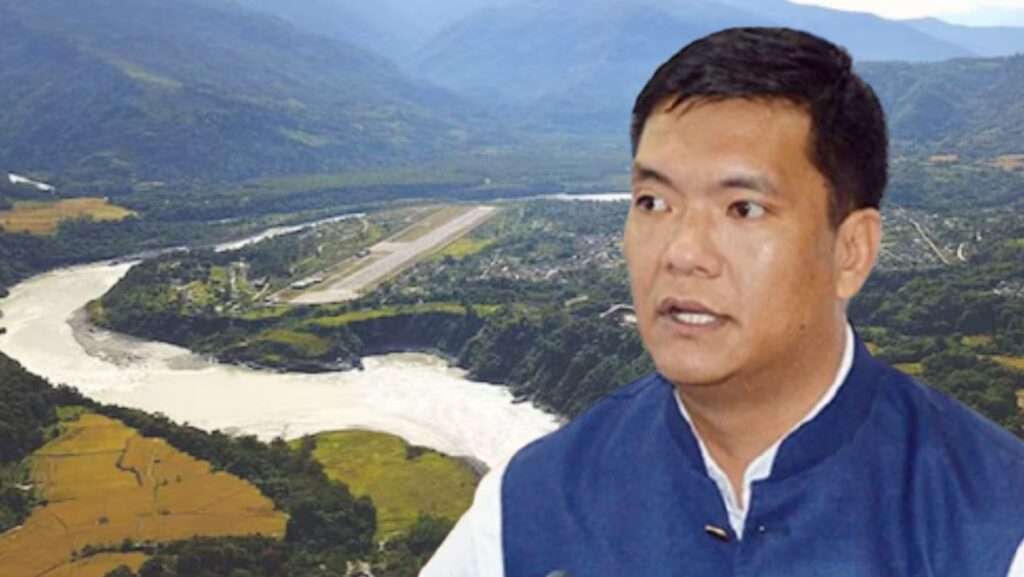
9 July, 2025-The Chief Minister has raised serious concerns over China’s proposed Yarlung Tsangpo dam project near the Arunachal Pradesh border, calling it a “ticking water bomb” that poses significant environmental and strategic risks to India.
The mega dam, announced in 2021 following a visit by then Chinese Premier Li Keqiang to the region, is being constructed on the Yarlung Tsangpo river in Tibet, just before it enters India as the Brahmaputra. Once completed, it is expected to be the world’s largest hydroelectric power project, surpassing even the Three Gorges Dam in terms of capacity.
Speaking to media, the Chief Minister warned that the dam’s strategic location gives China the potential to use it as a “hydrological weapon.” He noted that in the event of a conflict or rising tensions, Beijing could manipulate the river’s flow — either by releasing excess water to flood downstream areas or by holding it back, leading to water shortages in India’s northeast.
Experts have supported the Chief Minister’s concerns, emphasizing the ecological dangers posed by the dam. Environmentalists warn that altering the river’s natural flow could have long-term impacts on biodiversity, agriculture, and livelihoods in Arunachal Pradesh and Assam. Hydrologists also expressed fears of increased sedimentation, soil erosion, and loss of aquatic habitats downstream.
“There is limited transparency from China on the technical and environmental aspects of the project,” said a senior water resources expert. “India lacks access to real-time hydrological data from upstream, making it vulnerable to both floods and droughts.”
India has repeatedly flagged the issue with Beijing, urging the need for a binding water-sharing agreement and greater cooperation on transboundary rivers. However, China has so far refrained from entering into any formal pact on the Brahmaputra’s management, citing its sovereign rights over the river.
Strategic analysts believe the project is part of China’s broader plan to strengthen its control over key natural resources along the Line of Actual Control (LAC). The dam, they argue, enhances Beijing’s leverage in any potential standoff with India and adds a new layer of complexity to the already strained bilateral relations.
Meanwhile, the Indian government has reportedly stepped up surveillance and contingency planning in the northeastern region to monitor any sudden changes in river flow. Discussions are also underway to strengthen infrastructure and early warning systems to mitigate potential flood risks.
The Yarlung Tsangpo dam project remains a source of unease for both policymakers and local communities, with calls growing louder for a regional framework on water security. As construction progresses, India continues to watch developments closely, urging China to consider the environmental and humanitarian consequences of its actions.