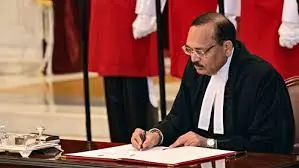
In a crucial hearing that has sparked nationwide debate, the Supreme Court of India raised pointed questions regarding the legal status of Rohingya individuals allegedly missing from police custody. The matter, heard on December 2, 2025, revolved around a petition alleging the disappearance of five Rohingya migrants detained earlier this year.
The bench, led by Chief Justice Surya Kant and Justice Joymalya Bagchi, expressed concern about undocumented migration and questioned whether individuals who enter India illegally should be entitled to state protection and welfare benefits. The Chief Justice’s remark — “Do we give a red carpet welcome?” — quickly became the focal point of national discussion.
Petition on Missing Rohingya Migrants
The case was initiated through a habeas corpus petition filed by activist Rita Manchanda, who claimed that five Rohingya nationals had gone missing after being detained in May 2025. The petition demanded clarity on their whereabouts and emphasised that any deportation must follow proper legal procedures.
During the hearing, the Court scrutinised the claims and sought evidence of the migrants’ official refugee status. The bench stressed that refugee recognition is a legal process, not an informal designation, and asked the petitioner to produce documentation proving that the individuals were registered as refugees under any government-approved framework.
CJI Surya Kant Questions Legitimacy of Claims
The Chief Justice’s remarks underscored the tension between humanitarian concerns and national security obligations. The Court remarked that without valid documentation, the individuals would fall under the category of “illegal entrants”.
The bench observed that extending the same welfare benefits to undocumented entrants as those provided to citizens — including food, shelter, healthcare, education and legal protection — may not be feasible. The Chief Justice cautioned that doing so might open the floodgates for similar demands, potentially straining administrative systems and national resources.
The Court further clarified that while India must ensure that no individual, regardless of nationality, faces torture or inhumane treatment, this does not automatically entitle undocumented migrants to long-term settlement or state-sponsored benefits.
National Security vs. Humanitarian Obligations
The hearing throws light on India’s broader immigration challenges. The Rohingya community, fleeing decades of persecution in Myanmar, has sought refuge in various countries, including India. However, India does not have a dedicated refugee law, which leaves their legal status ambiguous.
Human rights groups have frequently expressed concern about alleged forced repatriations and custodial disappearances. They argue that principles such as non-refoulement — the global norm prohibiting the return of individuals to a place where they may face harm — should guide India’s approach.
On the other hand, government agencies maintain that illegal entry poses security risks and complicates border management. The Supreme Court’s latest interventions reflect the delicate balance between compassion and compliance with the country’s immigration laws.
What Comes Next?
The case has been adjourned to December 16, 2025, with the Court directing the petitioner to produce concrete evidence regarding the migrants’ legal status. The forthcoming hearing is expected to shed more light on the rights of undocumented migrants in India and the extent of judicial intervention in such matters.