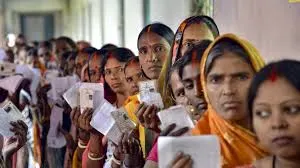
The state of Bihar braces for the crucial vote counting scheduled to commence tomorrow in the 243-seat assembly election, marking the culmination of a two-phase poll. Exit polls released after the conclusion of voting overwhelmingly forecast a return to power for the ruling National Democratic Alliance (NDA). With anticipation high in political circles and among voters, the results are expected to shape the state’s governance landscape for years to come.
According to multiple exit poll agencies, the NDA is poised to secure a comfortable majority, with projections ranging from 121 to 170 seats. In contrast, the primary opposition bloc, the Mahagathbandhan (MGB), is expected to trail behind with a smaller seat share. The predictions suggest that the NDA’s strong organisational base, combined with Chief Minister Nitish Kumar’s long-standing influence and the Bharatiya Janata Party’s (BJP) extensive campaign strategy, may have swayed the final outcome in their favour.
Leaders from the NDA have welcomed the exit poll predictions as an endorsement of their governance record and development policies. Chief Minister Nitish Kumar described the projections as a “stamp of approval” on his administration’s work in areas like infrastructure, education, and women’s empowerment. Meanwhile, opposition leaders from the Rashtriya Janata Dal (RJD) and Congress have expressed skepticism, asserting that exit polls often misrepresent ground realities and that the final results will tell a different story.
The counting day holds broader political significance, as the Bihar election is viewed as a crucial test for the NDA’s influence in eastern India. A strong performance would reinforce its dominance in the Hindi heartland and could serve as a morale booster ahead of upcoming state and national elections. Political analysts have noted that a win for the NDA in Bihar would strengthen its national narrative of stability and development, while a setback could embolden the opposition to regroup.
Preparations for counting are already underway across all districts, with the Election Commission of India implementing enhanced security arrangements. Thousands of personnel have been deployed to ensure transparency and safety during the process. Electronic Voting Machines (EVMs) are stored under strict surveillance, and senior officials are monitoring the logistics closely. Opposition parties have raised concerns about potential irregularities, but the Election Commission has assured that all procedures are being followed meticulously.
The outcome will also shed light on changing voter dynamics in Bihar. Early reports indicate that youth participation and women’s turnout were notably high this year, with many first-time voters showing strong interest in local governance issues. Analysts believe these groups may have played a decisive role in shaping the final mandate.
As the counting begins tomorrow, all eyes will be on whether the exit polls’ predictions align with the actual results. A decisive victory for the NDA would reaffirm its political grip on Bihar and consolidate its standing nationally. However, if the outcome diverges from the projections, it could set the stage for a major political realignment in the state. Regardless of the result, Bihar’s election verdict will have far-reaching implications for both regional and national politics in the coming years.