
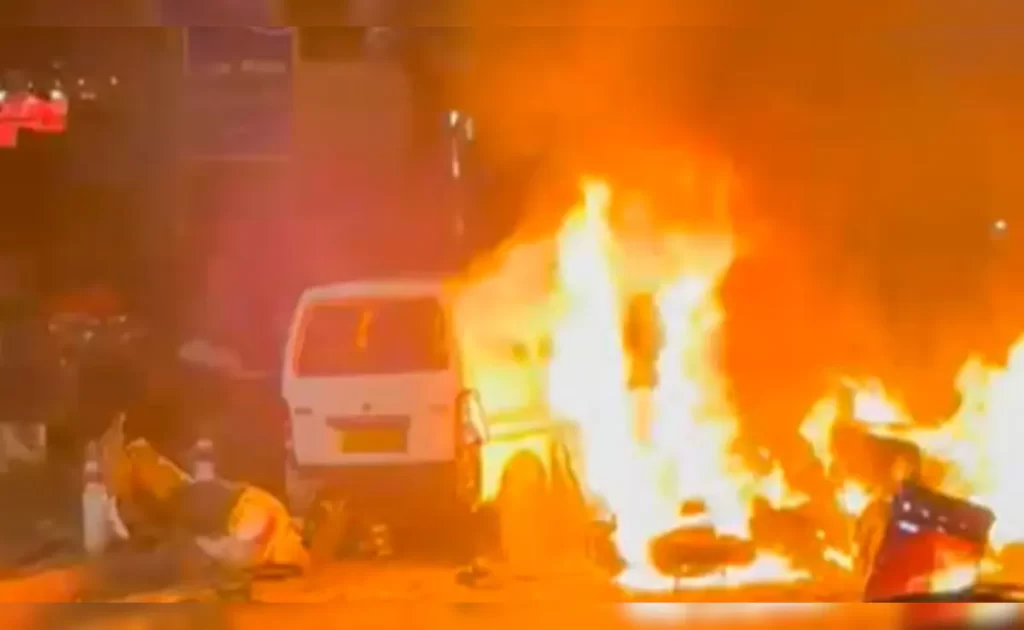
New Delhi, November 11, 2025 — A powerful car explosion near Delhi’s iconic Red Fort on Monday evening sent shockwaves across the capital, killing at least eight people and injuring more than two dozen others. The blast, which occurred around 6:50 p.m. near the Lal Qila Metro Station on Subhash Marg, is now being treated as a suspected terror attack, prompting a nationwide security alert and a multi-agency investigation.
The Incident: A Normal Evening Turns Tragic
According to eyewitnesses, the explosion occurred when a white Hyundai i20 with Haryana registration (HR-26 CE 7674) suddenly caught fire after halting at a traffic signal. Within seconds, the car erupted in a massive explosion that engulfed nearby vehicles and injured several pedestrians and commuters. Firefighters and Delhi Police teams rushed to the scene, where flames and debris were visible for nearly an hour.
Videos circulating on social media showed thick black smoke rising into the evening sky as bystanders scrambled to rescue the injured. Local shop owners reported hearing a “deafening sound” that shook windows several blocks away. The Delhi Fire Service deployed five fire tenders to control the blaze, while police cordoned off the entire Red Fort area—a major tourist and heritage zone.
Investigation Underway: Terror Angle Suspected
Preliminary reports from the Delhi Police’s Special Cell and the National Investigation Agency (NIA) indicate that the explosion was caused by high-intensity explosives placed inside the vehicle. Forensic experts have recovered fragments of a detonator and traces of ammonium nitrate from the scene.
Officials have invoked the Unlawful Activities (Prevention) Act (UAPA) and the Explosives Act, confirming that the case is being probed as a possible act of terrorism. Investigators are analysing CCTV footage from over 100 cameras installed in and around the Red Fort area. Early footage reportedly shows the suspect vehicle entering the vicinity several hours before the blast and remaining parked in one spot for an extended period.
The registered owner of the car, identified as Salman, a resident of Gurugram, has been detained for questioning. Police sources claim the vehicle changed ownership multiple times in the last few weeks, raising suspicions about its use by a larger terror network.
National Security Response and Political Reactions
In response to the blast, the Ministry of Home Affairs has directed all state police departments to tighten surveillance at public places, transport hubs, and religious sites. Security has been heightened across Delhi, Uttar Pradesh, Haryana, and Maharashtra, with anti-terror units placed on high alert.
Union Home Minister Amit Shah held an emergency meeting with senior intelligence officials late Monday night, instructing agencies to submit a preliminary report within 48 hours. Prime Minister Narendra Modi expressed condolences to the victims’ families, calling the incident “a cowardly act intended to disturb peace and harmony in the nation.”
Delhi Chief Minister Arvind Kejriwal visited the site early Tuesday morning, demanding a thorough investigation and promising compensation for victims. “This is an attack on the soul of our capital. The perpetrators must be identified and brought to justice,” he said.
Possible Links to Wider Terror Network
Investigators are examining potential connections between the Red Fort blast and a recently foiled terror plot in Jammu and Kashmir, where over 2,900 kilograms of explosives were seized from an underground cache. Intelligence sources suggest the same network may have supplied the materials used in the Delhi explosion.
A senior intelligence officer told The Indian Express that the pattern of the blast and type of explosives used “bear resemblance” to devices recovered during anti-terror operations in northern India earlier this year.
Symbolic Target Raises Alarm
The choice of location has intensified national concern. The Red Fort, a UNESCO World Heritage Site and the venue for India’s Independence Day address by the Prime Minister, is one of the most secure areas in Delhi. Experts believe the attackers may have aimed to send a symbolic message by targeting a site so deeply tied to India’s national identity.
Security analysts note that such an attack near a high-security zone highlights the need for stricter vehicle screening, especially in heritage and high-traffic areas. The Delhi Police have already initiated a review of security protocols around major landmarks.
Conclusion
As investigators piece together evidence from the charred remains of the vehicle, the Red Fort blast serves as a grim reminder of India’s continuing vulnerability to acts of terrorism. The tragedy has reignited debates over urban surveillance, counter-terror preparedness, and intelligence coordination among agencies.
For now, Delhi mourns its dead while security forces across the country remain on alert — determined to ensure that such a breach never happens again.

