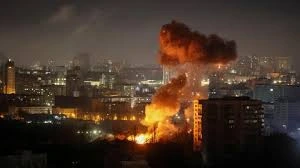
A fresh wave of overnight missile and drone strikes exchanged between Russia and Ukraine has resulted in at least six deaths in Kyiv and three fatalities in Russia’s Rostov region, marking one of the deadliest nights of cross-border escalation in recent weeks. The strikes targeted residential areas and critical energy infrastructure, further underscoring the war’s growing emphasis on crippling the opponent’s power grid as winter approaches.
Kyiv Hit by Ballistic Strikes, Civilian Areas Devastated
According to Ukrainian emergency services, multiple residential districts in Kyiv were struck by ballistic missiles shortly after midnight. The Svyatoshynskyi and Dniprovskyi neighborhoods suffered the greatest damage, with entire sections of apartment structures collapsing under the impact.
Authorities confirmed that at least six people, including an 86-year-old woman, were killed, while dozens sustained serious injuries. Rescue workers continued clearing debris as fires burned through upper floors of impacted buildings. Local officials warned that the death toll could rise as search operations progress.
The attack also hit key components of Kyiv’s electricity distribution system, causing widespread power outages. Transmission lines, substations, and distribution nodes were damaged, prompting emergency shutdowns in several districts. City officials cautioned residents to prepare for intermittent blackouts and disruptions to water supply.
Ukraine Carries Out Retaliatory Strikes Inside Russia
Within hours, Russia reported three deaths in the Rostov region following what it described as a Ukrainian drone and missile barrage. The strikes damaged several homes and an industrial facility, though Russian authorities did not identify the nature of the site.
Local administrators reported fires and structural destruction in residential blocks, where emergency crews worked through the night to contain the damage. Moscow claimed to have intercepted the majority of incoming drones but acknowledged that fragments caused secondary explosions and fires.
The retaliatory assault reflects Ukraine’s widening strategy of targeting energy facilities, industrial plants, and military-linked infrastructure deep inside Russian territory. Ukrainian officials maintain that such strikes are aimed at undermining Russia’s war logistics and reducing its capacity to sustain long-term operations.
Energy Infrastructure Emerges as Central Battleground
Analysts note that both Kyiv and Moscow have increasingly shifted their focus toward each other’s energy grids, making this winter uniquely perilous for civilians on both sides. Ukraine has repeatedly warned that Russia aims to cripple its power network to inflict maximum hardship during cold months.
Meanwhile, Russian authorities have accused Ukraine of conducting long-range attacks on oil depots, power stations, and industrial zones across multiple regions. This reciprocal targeting has heightened concerns of a broader energy crisis, with both nations bracing for potential shortages and prolonged outages.
Outlook
The deadly overnight attacks highlight the escalating severity of the conflict as both sides deepen their strategic reliance on targeting critical infrastructure. With winter conditions tightening, experts warn that the humanitarian impact could worsen significantly. The latest strikes demonstrate not only the intensifying military confrontation but also the growing vulnerability of civilian populations caught in the crossfire.