
In a shocking incident that has reverberated across the nation, a powerful car bomb exploded near the Red Fort metro station in New Delhi on the evening of November 10, 2025, killing at least nine people and injuring several others. Senior leaders including Prime Minister Narendra Modi and Defence Minister Rajnath Singh issued strong statements promising a full-scale investigation and swift action against the perpetrators.
The explosion occurred at approximately 6:52 p.m. local time when a white vehicle, reportedly a Hyundai i20, stopped at a red light near the Red Fort Metro Station in the Old Delhi area and detonated. The blast triggered fires which engulfed nearby vehicles and caused chaos among bystanders. Emergency services, including seven fire tenders, reached the scene within minutes, battling flames and evacuating the injured to nearby hospitals.
Preliminary forensic analysis suggests that a volatile mixture of ammonium nitrate and fuel oil (ANFO) was used to power the explosion. Authorities have invoked stringent provisions under the Unlawful Activities (Prevention) Act (UAPA) and the Explosives Act to investigate the case. Early reports indicate possible links to a recently busted terror module in the neighbouring state of Haryana, raising fears of a larger coordinated operation targeting key landmarks in the national capital.
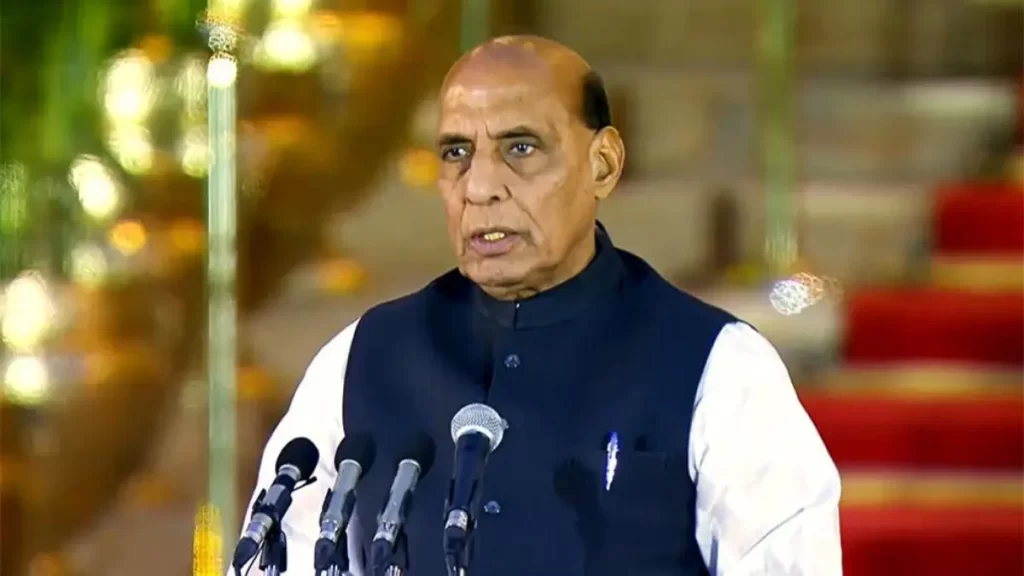
Both the Prime Minister and Defence Minister responded swiftly to the incident. Narendra Modi expressed deep sorrow over the loss of lives and assured full support to the victims and their families. Rajnath Singh stated that those behind the attack “will not be spared under any circumstances,” adding that the government will ensure a transparent and time-bound investigation. The National Investigation Agency (NIA) has taken charge of the probe, with assistance from Delhi Police’s Special Cell and the Intelligence Bureau. Several suspects have already been detained for questioning as authorities piece together the sequence of events leading to the explosion.
In response to the attack, security measures have been intensified across Delhi and adjoining states. Major transport hubs, tourist attractions, and government buildings are under high alert, with anti-sabotage teams conducting thorough checks. The blast site, located near one of India’s most iconic monuments, has been completely sealed off, and forensic teams are analysing CCTV footage and vehicle registration records to trace the origins of the car used in the blast.
This attack comes at a time when urban security in India’s major cities is already under scrutiny. The choice of location—adjacent to the Red Fort, a UNESCO World Heritage Site and a symbol of India’s sovereignty—adds a grim symbolic layer to the assault. The use of a car bomb and advanced explosive materials points to a meticulously planned operation rather than a random act of violence. This raises serious questions about intelligence lapses, surveillance capabilities, and the preparedness of law enforcement agencies to counter such threats in densely populated zones.
The government’s invocation of the UAPA and rapid mobilization of national agencies underline its view that this was a deliberate act of terror aimed at destabilizing public confidence. The blast also adds to the political and security challenges faced by the Centre, particularly in ensuring safety during the upcoming festive and election seasons.
The car bombing near the Red Fort serves as a grim reminder of the persistent threat of terrorism and the urgent need for robust preventive frameworks. With at least nine lives lost and several others battling injuries, the tragedy underscores the importance of coordinated intelligence sharing and urban surveillance reforms. As investigations continue, the nation watches closely, awaiting accountability and assurance that such a catastrophic breach of security will not recur.

