
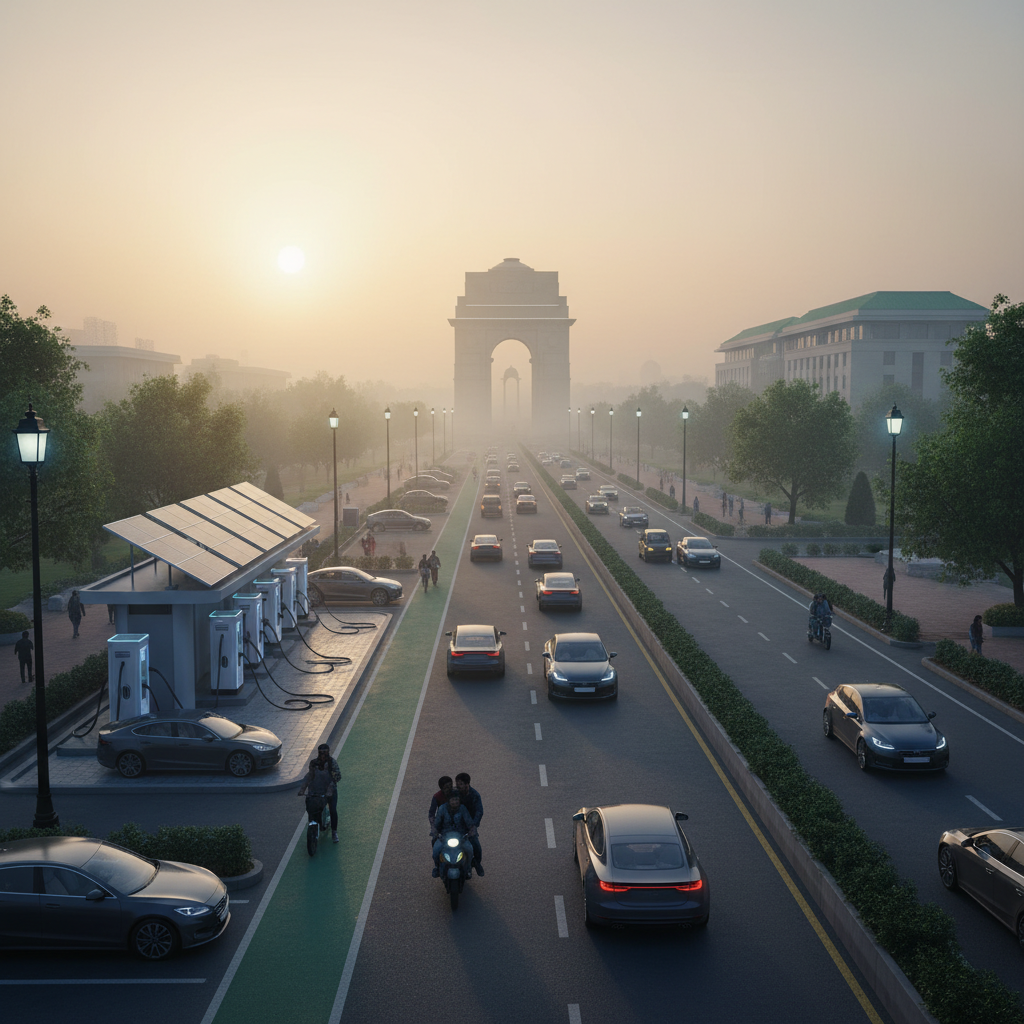
After months of consultations, deliberations and no shortage of public debate, the Delhi government has finally approved its awaited Delhi EV Policy 2026. The Delhi Cabinet, led by Chief Minister Rekha Gupta, on this week approved the policy and it could change the way the capital moves, commutes and breathes over the next four years, if all goes according to plan. The policy is set to take effect from July 1, 2026, and will remain valid until March 31, 2030.
For a city that’s been wrestling with toxic air quality for years, this isn’t just another government scheme. It’s being pitched as one of the most aggressive EV adoption pushes seen anywhere in the country.
What’s Actually in the Policy
Let’s get into the details, because there’s a lot here. The policy offers a complete exemption on road tax and registration fees, purchase incentives going up to Rs 1 lakh, and scrappage benefits for older vehicles. For electric four-wheelers, this tax waiver applies for vehicles costing up to Rs 30 lakh ex-showroom, which constitutes the vast majority of EVs sold in India at present.
The incentive structure is tiered by vehicle class. Electric two-wheelers can get incentives up to Rs 30,000, three-wheelers up to Rs 50,000, and N1 category electric goods vehicles up to Rs 1 lakh. On top of that, there’s a separate scrappage incentive designed to nudge people away from older, more polluting vehicles. Scrapping incentives range up to Rs 1 lakh for four-wheelers, Rs 25,000 for three-wheelers, Rs 10,000 for two-wheelers, and Rs 50,000 for N1 trucks. Officials have made it clear that this part of the policy specifically targets BS-IV and older vehicles, which are some of the biggest contributors to vehicular pollution in the city.
Charging Infrastructure Gets a Major Boost
One of the recurring complaints about EV adoption in India, not just Delhi, has been the lack of charging infrastructure. Range anxiety is real, and without enough charging points, even the best incentives don’t always translate into actual sales. It looks like the new policy is serious about this. It contains a large scale expansion plan with more than 30,000 new charging points planned across the city.
It’s a big leap from the current state of affairs and if done well it could make Delhi one of the most EV friendly cities in the country in terms of sheer charging availability. Of course, building out infrastructure at this scale isn’t just about putting in chargers, but also raises questions about grid capacity and substation upgrades — something that’s already being talked about among industry watchers following the rollout.
The Bigger Picture: A Gradual Shift Away from Petrol Cars The most talked-about part of this policy is the slow shift away from fossil-fuel cars in certain classes. Starting January 1, 2027, only electric auto-rickshaws and N1 goods carriers will be eligible for new registration in Delhi. Then, from April 1, 2028, only electric two-wheelers will be eligible for fresh registration in the capital. Existing petrol two-wheeler owners won’t be affected immediately, but this marks Delhi as the first major Indian state to set a firm deadline for ending new petrol two-wheeler registrations.
This is a fairly bold regulatory move, and it’s likely to influence how other states approach their own EV policies down the line.
The Money Behind the Plan
None of this comes cheap, and the government hasn’t shied away from putting numbers on the table. Delhi has approved a financial outlay of more than Rs 7,000 crore in the next four years to fund the policy including purchase incentives, scrappage benefits, charging infrastructure and revenue losses from tax exemptions. Officials estimate that the overall benefit to citizens and the EV industry, factoring in incentives and infrastructure support, could exceed Rs 15,000 crore.
There’s also a transparency angle built in. All eligible incentives will be transferred directly into beneficiaries’ bank accounts through Direct Benefit Transfer (DBT), which should, at least in theory, reduce delays and middlemen interference that have plagued similar schemes in the past.
Beyond Private Vehicles: School Bus and Commercial Fleet . This policy is not only for private car and bike owners. It also sets electrification goals for school buses, seeking a 10 percent fleet conversion in two years, 20 percent in three years, and 30 percent by March 31, 2030. Even commercial and institutional fleets are expected to be electrified in phases indicating the government’s intent to impact multiple layers of Delhi’s transport ecosystem and not just individual buyers.
What Happens Next
Technically, the policy still needs final clearance. It will now be sent to the Lieutenant Governor for final approval before rollout, a procedural step that’s expected to move fairly quickly given the political backing it already has.
Reactions so far have been a mix of optimism and cautious skepticism. For many residents, especially those with older BS-IV vehicles, the scrappage incentives are a real opportunity to switch to cleaner options. Others have rightly pointed out that EVs alone won’t solve the pollution crisis in Delhi without simultaneously addressing problems like industrial emissions and the seasonal stubble burning in neighbouring states.
But for a city that regularly ranks among the world’s most polluted cities during the winter months, the Delhi EV Policy 2026 is a serious, well-funded attempt at change. Its success in terms of meeting these ambitious targets will depend largely on execution, readiness of infrastructure and speed at which Delhi’s residents are willing to embrace electric mobility.

