
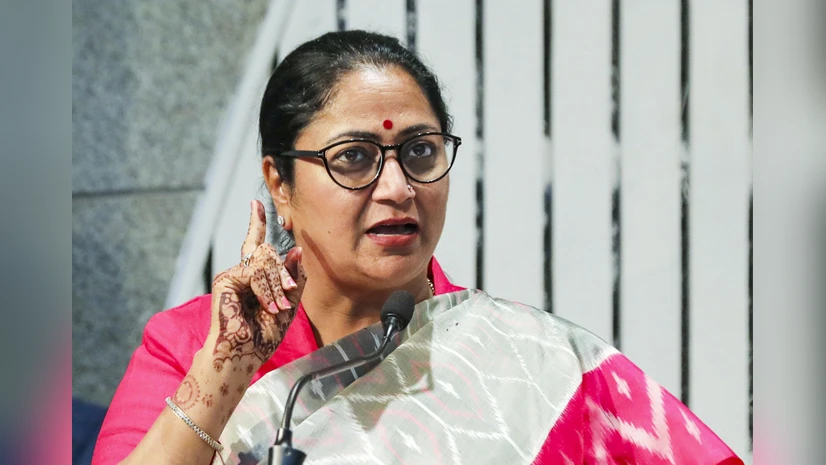
Delhi Chief Minister Rekha Gupta has urged neighbouring states to join hands in tackling the National Capital Region’s escalating air pollution crisis and the long-standing deterioration of the Yamuna river. Addressing leaders at the 32nd meeting of the Northern Zonal Council in Faridabad, Gupta emphasized that both issues extend far beyond Delhi’s borders and require a coordinated, multi-state strategy for lasting impact.
A Shared Environmental Burden
Gupta highlighted that Delhi’s severe winter pollution cannot be resolved without regional cooperation, pointing particularly to the impact of stubble burning in neighbouring states. She noted that despite significant progress in crop-residue management across parts of Haryana, Uttar Pradesh, and Rajasthan, emissions from Punjab continue to contribute heavily to Delhi’s declining air quality.
Amid rising pollutant levels and the city’s Air Quality Index frequently slipping into the “very poor” category, she called for stronger measures to curb farm fires, stricter enforcement of industrial pollution norms, improved dust-control operations, and an accelerated shift toward electric mobility across the NCR.
Yamuna’s Revival: A Collective Duty
Turning to the Yamuna, the Chief Minister reiterated the need for robust inter-state coordination to curb sewage and industrial waste entering the river. While acknowledging recent cooperation from Haryana, she urged neighbouring administrations to ensure:
- Comprehensive trapping and treatment of drains entering Delhi.
- Completion of pending sewer-line networks and desilting works.
- Discharge of only treated water from modern sewage treatment facilities.
Gupta also renewed Delhi’s long-pending demand to increase its share of Yamuna water from 980 million gallons per day to 1,250 MGD, arguing that rising population and urban expansion necessitate a higher allocation. Additionally, she pressed for the transfer of maintenance responsibilities for the Munak Canal and the ITO barrage to Delhi, along with faster completion of upstream dam projects crucial for regional water security.
A ₹9,000 Crore Vision for a Cleaner Yamuna
In one of the most ambitious environmental pushes in recent years, the Chief Minister outlined a ₹9,000 crore Yamuna Action Plan. The initiative includes the construction of small sewage-treatment plants, expansion of drain coverage, and direct engagement with local communities to prevent dumping and encroachment along the riverbanks.
Gupta expressed optimism that with firm coordination and steady implementation, the Yamuna could witness visible rejuvenation within three years. She even projected that parts of the river could eventually support public recreation, including ferry and cruise activities, similar to successful riverfront projects in other Indian cities.
Political Heat and Public Expectations
Her remarks come amid mounting political scrutiny, with opposition leaders questioning the government’s claims of progress and challenging the administration to demonstrate real, measurable improvements in pollution levels. Despite political tensions, Gupta maintained that environmental management must rise above partisan divides.
Moving Forward: Cooperation as the Key
Gupta’s call for collaborative action underscores a growing recognition that Delhi’s environmental challenges demand regional solutions. Improved air quality, a cleaner Yamuna, and long-term ecological stability will depend on sustained commitments from all states in the NCR.
As winter pollution peaks and the Yamuna continues to face unprecedented ecological stress, the success of Gupta’s proposals may well determine the environmental future of the National Capital Region — and set a benchmark for regional cooperation across India.

