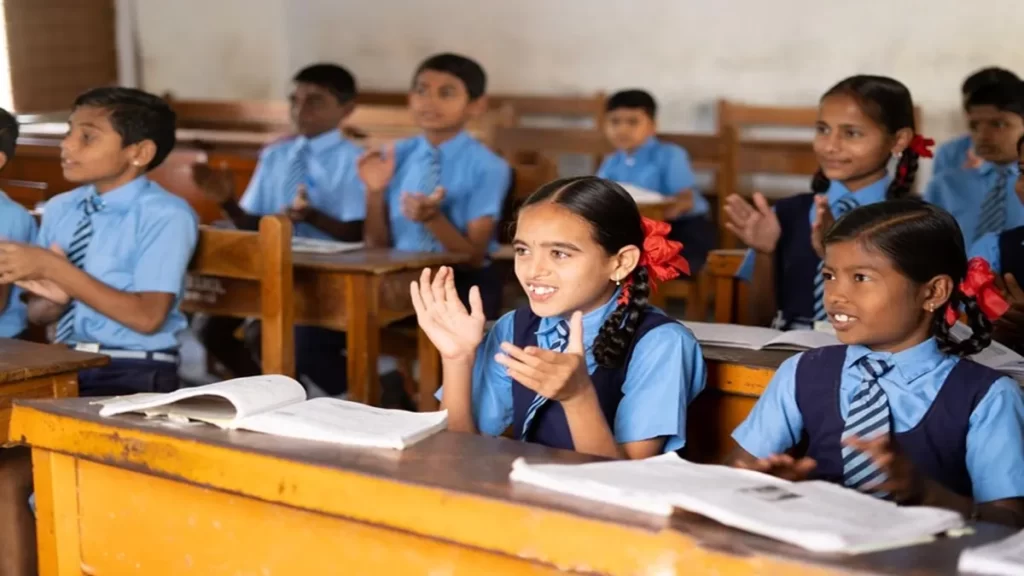
July 11 ,2025— In a significant move aimed at enhancing language proficiency and academic competitiveness, the Delhi government has decided to introduce at least one English-medium section in every class across all government schools in the national capital.
The initiative, announced by the Directorate of Education, will be implemented from the current academic session and will cover classes from Grade 1 to Grade 12. The decision is part of the government’s larger vision to improve learning outcomes and ensure that students from public schools are equipped to compete at national and global levels.
Deputy Chief Minister and Education Minister Atishi said, “English is not just a language; it is a tool of empowerment. We want every child in Delhi’s government schools to have access to quality English education so they are not left behind in the job market or higher education opportunities.”
Until now, most government schools in Delhi operated primarily in Hindi or used a bilingual mode of instruction. With the implementation of this policy, students will have the option to study in English-medium classrooms, a demand that has been growing steadily among parents and guardians.
The Directorate of Education has issued detailed guidelines for schools to set up these new sections. Teachers who will lead the English-medium classes are being trained to ensure fluency in the language and effectiveness in subject delivery. New textbooks and academic materials in English will also be provided to students free of cost.
Education officials confirmed that this move is aligned with broader educational reforms under the Delhi Model of Education, which aims to deliver high-quality public education. “We are committed to removing the linguistic barriers that often separate students of government schools from their peers in private institutions,” a senior education department official stated.
Experts have welcomed the initiative but have also highlighted potential implementation challenges. Dr. Ramesh Chand, an education policy expert, noted, “This is a forward-thinking policy that addresses socio-economic and academic disparities. However, the availability of trained teachers and infrastructure will be key to its success.”
Concerns have also been raised about the risk of creating inequalities within schools between English-medium and Hindi-medium students. In response, the government has reiterated that it will continue to strengthen instruction in regional and mother-tongue languages to ensure balanced development.
The new policy is expected to benefit lakhs of students enrolled in Delhi government schools and marks a shift toward multilingual education that values both global readiness and linguistic diversity.
With this initiative, Delhi becomes one of the first states in India to implement English-medium education uniformly across all public school classes—setting a benchmark for inclusive and progressive education reform.