
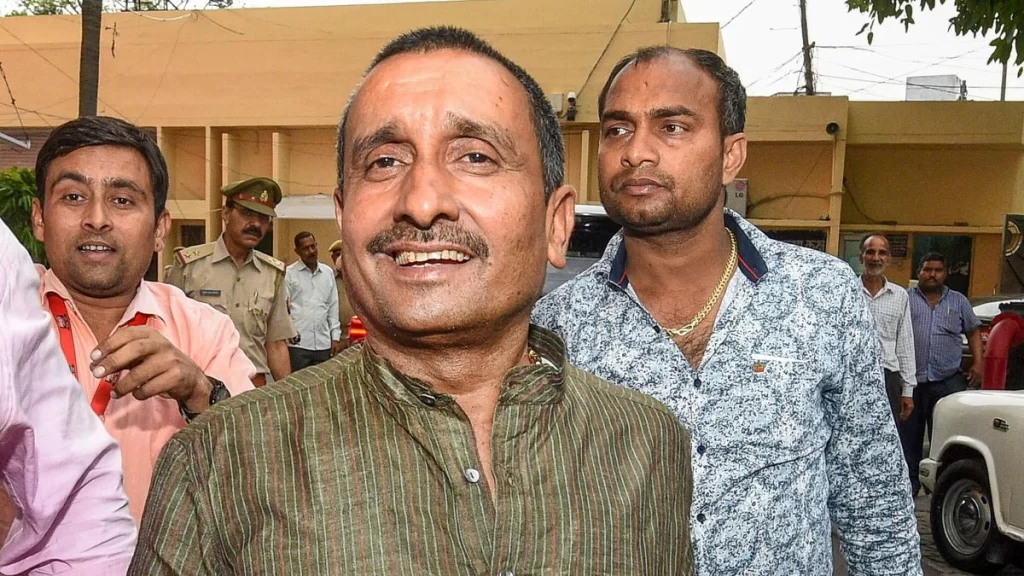
In a decision that has reignited national debate on judicial accountability and political influence in high-profile criminal cases, a bench of the Delhi High Court on Tuesday granted conditional bail to expelled BJP leader Kuldeep Singh Sengar and suspended his life imprisonment sentence in the notorious Unnao rape case while his appeal proceeds.
The ruling by Justices Subramonium Prasad and Harish Vaidyanathan Shankar marks a dramatic turn in a saga that has riveted the country since 2017, when a minor girl from Unnao, Uttar Pradesh, was kidnapped and raped — crimes for which Sengar was convicted and sentenced to life imprisonment in December 2019.
High Court’s Order and Bail Conditions
Delivering its judgment, the Delhi High Court suspended the execution of Sengar’s life term on the grounds that his appeal against the conviction and sentence merits consideration. The court released him on bail after imposing stringent safeguards to minimise risk to the victim and uphold judicial process integrity.
Key conditions set by the court include:
- Personal bond of ₹15 lakh with three sureties of the same amount
- A direction that Sengar must not come within a 5‑kilometre radius of the victim’s residence
- A requirement to remain in Delhi during the pendency of the appeal
- Regular reporting to police and strict prohibition against intimidating or contacting the victim or her family
The bench emphasised that any violation of these terms would lead to immediate cancellation of bail and reinstatement of his sentence.
Background: Unnao Case and National Outcry
The Unnao rape case began in June 2017 when the then‑BJP legislator was accused of abducting and raping a 17‑year‑old girl in Uttar Pradesh’s Unnao district. Despite initial inaction by local authorities, the case drew widespread public attention after the victim attempted self‑immolation outside the office of the Uttar Pradesh Chief Minister demanding justice.
The Supreme Court later transferred the proceedings to Delhi in August 2019 over concerns of intimidation and inadequate protection for the victim’s family, underscoring the systemic failures and the imperative of impartial adjudication.
In December 2019, the trial court convicted Sengar under charges including kidnapping, rape under the Protection of Children from Sexual Offences Act (POCSO), and criminal intimidation, sentencing him to life imprisonment and imposing a fine.
Custodial Death Case and Parallel Appeals
In addition to the rape conviction, Sengar is serving a separate 10‑year term in connection with the custodial death of the victim’s father. That case too is under appeal, with legal counsel arguing that the time already spent in jail warrants sentence suspension in the interest of justice.
Public Debate and Legal Implications
The High Court’s order has sparked intense discussion across legal, political, and civil society circles. Critics argue that granting bail to a convicted rapist — particularly one with significant political connections — risks eroding public confidence in the justice system and could set a precedent in how appeals are handled for serious offences against women. Supporters of the judgement stress the presumption of innocence pending appeal and the strict conditions imposed to safeguard the survivor’s rights.
Looking Ahead
The development shines a spotlight on the intersection of law, political influence, and survivors’ rights in India’s judicial landscape. As Sengar’s appeals are heard, stakeholders from advocacy groups to legal experts will be watching closely, debating not only legal technicalities but the broader implications for victim protection frameworks, bail jurisprudence, and criminal justice reform.

