
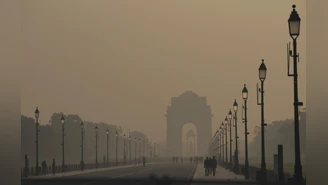
The national capital, New Delhi, is once again under siege from toxic air pollution even as authorities resort to experimental fixes such as cloud seeding. The recent trial of artificial rainfall, launched in partnership with the Indian Institute of Technology Kanpur (IIT Kanpur) and the Delhi government, failed to generate measurable rain and left the city’s air quality index firmly in the “very poor” category. The episode highlights how the pollution challenge is driven by a complex interplay of meteorology, emissions, and regional practices—and warns that quick fixes alone will not suffice.
The Delhi government initiated its first full-scale cloud-seeding flights on 28 October 2025. Using a Cessna 206H aircraft, flares containing silver iodide and sodium chloride were deployed over areas such as Burari, Mayur Vihar, and Karol Bagh in an effort to “wash out” fine particulate matter (PM2.5, PM10) from the atmosphere. Though technically the flights were executed, no significant rainfall occurred—cloud moisture levels hovered at 10–15 percent, well below the 50–60 percent threshold typically needed for effective seeding.
In the immediate aftermath, air quality in the Delhi-NCR region improved only marginally: the overall AQI dropped from 294 to 273, yet remained in the “poor” rather than “good” category. Experts observing the trial pointed out the fundamental limitation of such interventions. Many environmental scientists have cautioned that even if cloud seeding produces rainfall, the relief would be short-lived, as pollutants tend to return rapidly due to continued emissions and stagnant weather conditions.
Underlying Delhi’s seasonal smog are deep-rooted factors: intense vehicle emissions, industrial effluents, dust from construction, and the annual stubble burning in neighboring states that sends plumes of smoke into the region. During the colder winter months, a stagnant boundary layer traps pollutants close to the ground, while calm winds and low dispersion exacerbate the problem. Meteorologists note that these atmospheric dynamics make the city especially vulnerable to pollution build-up.
While cloud seeding may offer temporary relief if conditions align, it does not address the root causes: uncontrolled vehicular emissions, lax industrial regulation, unrestrained construction dust, and agricultural residue burning. Scholars argue that measures such as “smog towers” and “artificial rain” may attract public attention, but without simultaneous emission-source control, they are unlikely to produce lasting improvement.
Even if rainfall were successfully induced, its effect would be fleeting. Once pollutants are resuspended or fresh emissions enter the air, the AQI deteriorates again. Moreover, cloud seeding demands precise meteorological conditions—moist, rain-bearing clouds—which are rarely present in Delhi during the peak smog season. The capital’s arid post-monsoon climate and limited cloud cover make such interventions technically uncertain and economically inefficient.
The recent cloud-seeding trials in Delhi underscore a key lesson: technological fixes alone cannot solve a systemic problem. As the city continues to struggle with hazardous air quality, policymakers must shift emphasis toward long-term, sustainable solutions—tightening emission norms, improving public transport, enforcing construction-dust controls, incentivizing cleaner agricultural practices, and expanding green cover. Only a coordinated, multi-pronged approach will enable the capital to breathe easier. Until then, temporary measures like artificial rain remain largely symbolic and insufficient.

