
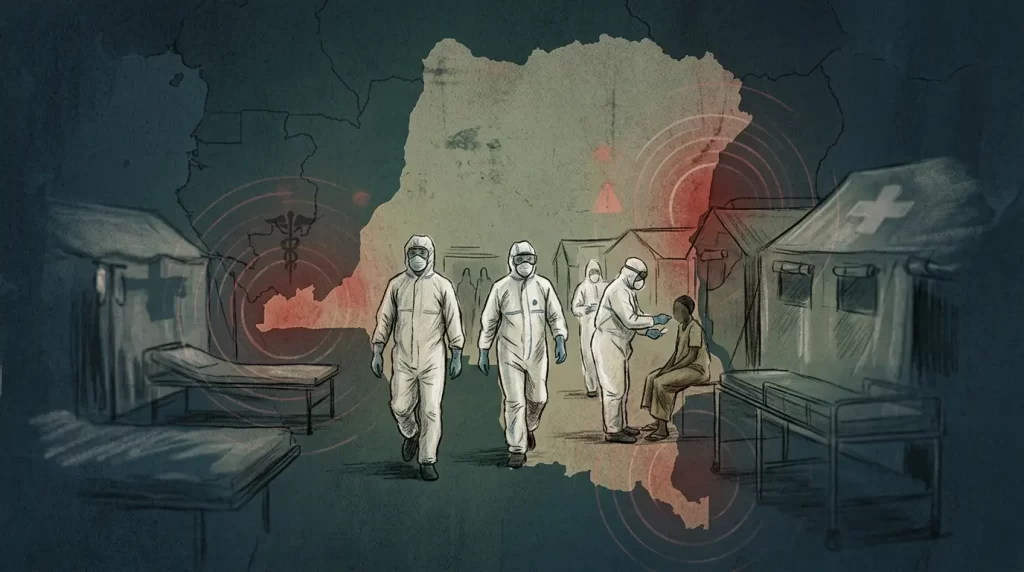
Behind every outbreak figure is a long list of families, health workers and neighbourhoods living with fear. That is worth remembering as the numbers from the Democratic Republic of Congo grow. The US Centers for Disease Control and Prevention (CDC) reported 8,750 confirmed Ebola cases and 4,208 deaths in the DRC as of October 6. It also said the outbreak is spreading faster than earlier Ebola outbreaks and has become the second-largest on record.
The Numbers Behind the Headline
The World Health Organization (WHO) gives a slightly different count, as is common when agencies update their data at different times. Its figures stand at 8,728 cases and 4,205 deaths, with 2,269 recoveries. The crude fatality ratio is 48.2%, meaning that nearly half of the people counted in this outbreak have died.
The gap between the CDC and WHO figures is small. Both point to the same conclusion: a very large outbreak, still growing, with a heavy human toll. A “crude” fatality ratio can also shift as cases are resolved, since some people who are still sick have not yet recovered or died. It is a snapshot, not a final verdict.
What “Second-Largest” Really Means
An Ebola second-largest outbreak ranking can sound abstract, so some context helps. The largest Ebola epidemic ever recorded remains the one that swept through West Africa between 2014 and 2016. Being second on that list places the current crisis among the most serious public health emergencies the world has faced from this disease.
The CDC’s observation that this outbreak is moving faster than earlier ones is the most worrying part. Speed leaves health systems less time to trace contacts, isolate patients and train staff. It also strains supplies, from protective equipment to hospital beds, in places that were often short of them to begin with.
A Different Virus, a Harder Fight
This outbreak is caused by the Bundibugyo virus, one of several species in the Ebola family. Many people associate Ebola with the Zaire species, which caused the West African epidemic and has been the target of most vaccine development. The licensed vaccine on the market was designed for Zaire ebolavirus, not Bundibugyo.
Because Bundibugyo cases are a different challenge, responders cannot simply copy the playbook from earlier outbreaks. They have to lean more heavily on classic public health tools: finding cases quickly, tracing and monitoring contacts, isolating the sick, and supporting safe burials. These measures work, but they demand people, money, transport and, above all, community trust.
Spreading Into New Areas: North Kivu
The latest report adds that the virus has reached another health zone, Alimbongo, in North Kivu. Every new health zone matters, because it means new communities that must be reached, new contacts to be traced and new clinics that need support.
North Kivu has faced Ebola before and has also endured years of insecurity and displacement. Anyone who has followed earlier outbreaks in eastern DRC knows how conflict, long travel distances and mistrust can slow a response. Health workers sometimes struggle to reach villages, and families may hesitate to bring a sick relative to a treatment centre. Those obstacles do not reduce the importance of the response; they make it more difficult.
Beyond the DRC: Uganda and France
The outbreak is no longer confined to one country. Uganda has reported 20 confirmed cases, and France has reported one. The two figures are very different in scale, and neither should be read as a sign of widespread transmission abroad. A single imported case in a country with a strong health system is usually managed quickly, through isolation and contact monitoring.
Still, they show how connected the world is. Ebola does not respect borders, and travel links between Central and East Africa and the rest of the world mean that a major outbreak is never only a local problem. For Uganda, which shares a long border with eastern DRC, the 20 confirmed cases make strong surveillance and cross-border cooperation especially important.
What Ordinary People Should Know
For readers far from the affected region, the risk is low, and there is no reason for panic. Ebola spreads through direct contact with the blood or body fluids of a person who is sick or has died of the disease, not through casual contact in public places. That’s why the response emphasizes isolation, protective gear and safe burial practices so much.
Several practical points are worth keeping in mind:
Rely on official sources such as the WHO and national health ministries for updates, rather than social media rumours.
Anyone returning from an affected area who develops fever or other symptoms should seek medical advice and mention their travel history right away.
Misinformation can do real harm in outbreaks, so check claims before sharing them.
What Comes Next
Several things will show where this outbreak is heading: whether the case count keeps rising at the current pace, whether more health zones in North Kivu report infections, and whether Uganda’s numbers stay contained. Funding and staffing will matter just as much as the science, since sustained responses cost money and require trained people on the ground.
The WHO Ebola update and CDC reports will continue to refine the picture. Numbers will change, and early estimates are often revised as data from remote areas arrives.
Final Thoughts
The DRC Ebola outbreak is now one of the largest the world has seen, with more than 8,700 confirmed cases, over 4,200 deaths and a Bundibugyo virus that is spreading faster than past outbreaks. Each number represents a person, and each new health zone represents a community that now needs help.
The encouraging part of this story is that proven tools exist and that thousands of health workers are using them every day. What they need is steady support, accurate information and the trust of the communities they serve. Until the case counts begin to fall, the world’s attention should stay on North Kivu and its neighbours.