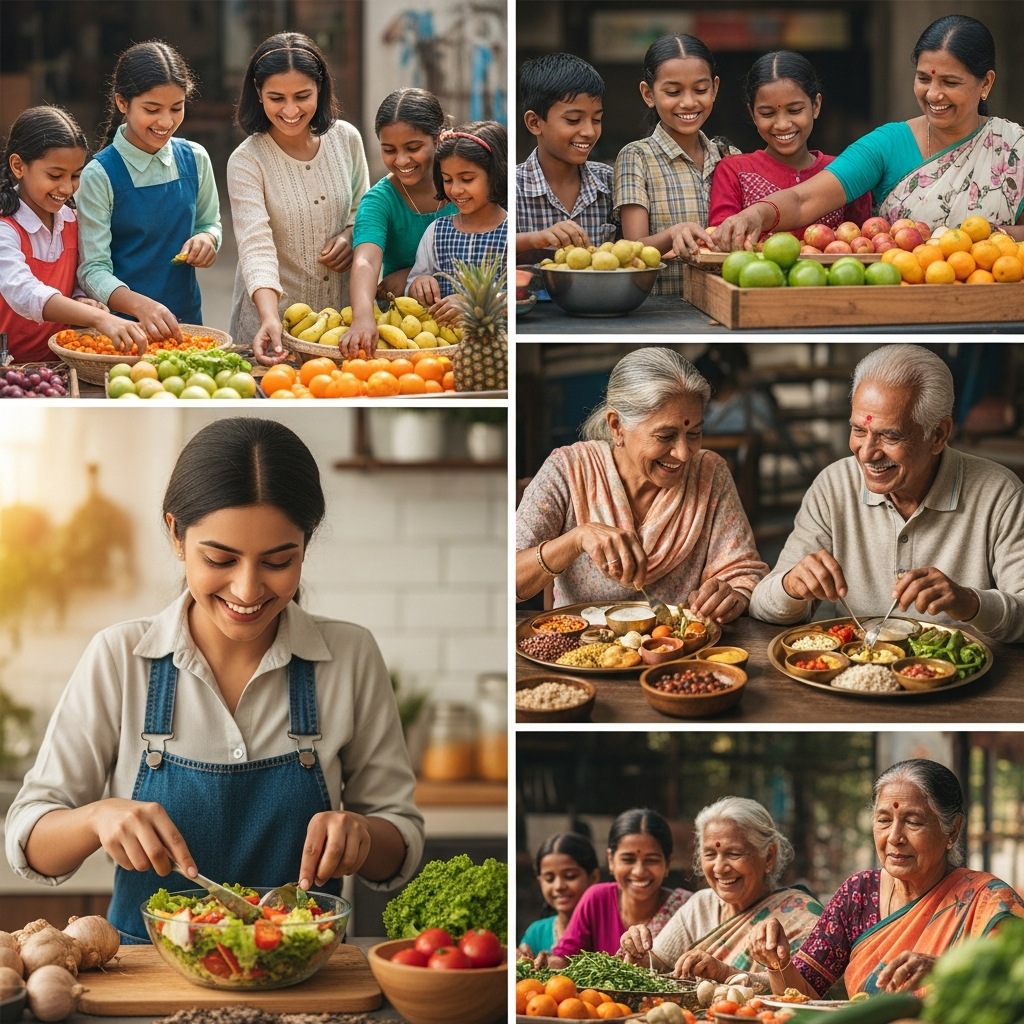
It usually starts with something small. A persistent tiredness that sleep doesn’t seem to fix. A string of headaches that paracetamol keeps at bay but never quite resolves. Skin that looks dull despite a full eight hours of rest. A heaviness that follows you through the afternoon no matter how much chai you drink.
Most of us brush these things off. We blame the weather, the workload, the commute. We tell ourselves we’ll eat better “once things settle down.” And then things don’t settle down, and the cycle continues.
But something is shifting in India. Quietly, steadily, a conversation about food, health, and how we treat our bodies is growing louder — in clinics, on social media, in school curricula, and in the way ordinary families are beginning to think about what goes on their plates. Nutrition awareness in India is no longer a niche concern for fitness enthusiasts and urban professionals. It is becoming, slowly but meaningfully, a mainstream conversation.
And not a moment too soon.
The Problem Hidden in Plain Sight
India faces a nutritional paradox that doesn’t get enough attention. On one side is undernutrition — stunted growth in children, anaemia in women, deficiencies in iron, vitamin D, and B12 that affect hundreds of millions of people across rural and semi-urban areas. On the other side is the rapid rise of lifestyle diseases — obesity, Type 2 diabetes, hypertension, and fatty liver disease — driven by processed foods, sedentary habits, and diets heavy in refined carbohydrates and sugar.
Both problems exist simultaneously, sometimes within the same household. A mother who is anaemic and a child who is overweight. A grandfather managing diabetes while his grandchildren eat instant noodles for dinner. This is the complex nutritional reality that public health experts are trying to address.
Fatigue — that most common and most ignored symptom — sits at the intersection of both problems. Whether it comes from not eating enough of the right things, or from eating too much of the wrong things, the result is the same: a body running on poor fuel, struggling to keep up with the demands placed on it.
What Experts Are Actually Saying
Nutritionists and public health professionals across India are consistent in their core message, even if the details vary. Eat more whole foods. Reduce ultra-processed products. Don’t skip meals. And drink more water than you think you need.
That last point — hydration — is chronically underappreciated in the Indian context. In a country where summers are brutal and physical activity often happens outdoors, dehydration is a quiet contributor to fatigue, poor concentration, and headaches. Many people confuse thirst for hunger, reaching for a snack when a glass of water would have served them better. Experts recommend at least eight to ten glasses of water daily, more during summer months or periods of physical exertion.
On the diet front, the advice is less about following any particular trend and more about returning to fundamentals. Traditional Indian meals — dal, sabzi, roti, rice, curd — when prepared thoughtfully and eaten in reasonable portions, are actually nutritionally well-balanced. The problem is when those meals are skipped in favour of packaged convenience foods, or when portion sizes grow unchecked, or when vegetables quietly disappear from the plate.
Diet tips for Indian households often focus on practical adjustments rather than dramatic overhauls: add one more vegetable to lunch, switch refined oil for a healthier alternative, reduce sugar in chai gradually rather than all at once, include seasonal fruits as snacks rather than biscuits. Small changes, consistently made, add up.
Awareness Campaigns Making a Difference
Across India, government bodies, NGOs, and private health organizations are running wellness awareness campaigns aimed at educating citizens at every level. The National Nutrition Mission — Poshan Abhiyaan — has been working to address malnutrition particularly among women and children. State governments have launched initiatives around healthy eating in schools. Digital campaigns are reaching younger audiences with accessible, practical health information in regional languages.
Perhaps most encouragingly, community health workers — ASHAs and Anganwadi workers — are increasingly trained to deliver basic nutrition counselling at the grassroots level. This is where the real impact happens: not in polished advertisements, but in conversations between a health worker and a young mother in a village about why iron-rich foods matter during pregnancy.
Urban India is also seeing a quiet revolution in wellness awareness driven partly by the pandemic’s lasting impact on health consciousness. More people are reading ingredient labels, asking questions about what they’re eating, and seeking professional nutritional guidance. Dietitians who once served primarily athletes and weight-loss clients are now seeing patients managing chronic conditions, recovering from illness, or simply wanting to feel more energetic and alive.
Making It Personal
Here’s the thing about nutrition that no campaign can fully capture: it has to become personal to stick. Information alone doesn’t change behaviour. What changes behaviour is relevance — understanding how what you eat connects to how you feel, how you perform, how you age.
That connection is different for everyone. For a working mother in Chennai, it might be realising that her afternoon energy crash is linked to a carbohydrate-heavy lunch with no protein. For a college student in Delhi, it might be discovering that cutting back on energy drinks and drinking more water improved his focus during exams. For an elderly man in Pune, it might be the moment his doctor connects his vitamin D deficiency to his joint pain.
A healthy lifestyle in India doesn’t require expensive superfoods or imported supplements. It requires attention — to what we eat, when we eat it, and whether we’re actually listening to what our bodies are telling us.
That attention, more than anything else, is what nutrition awareness is really trying to build.