
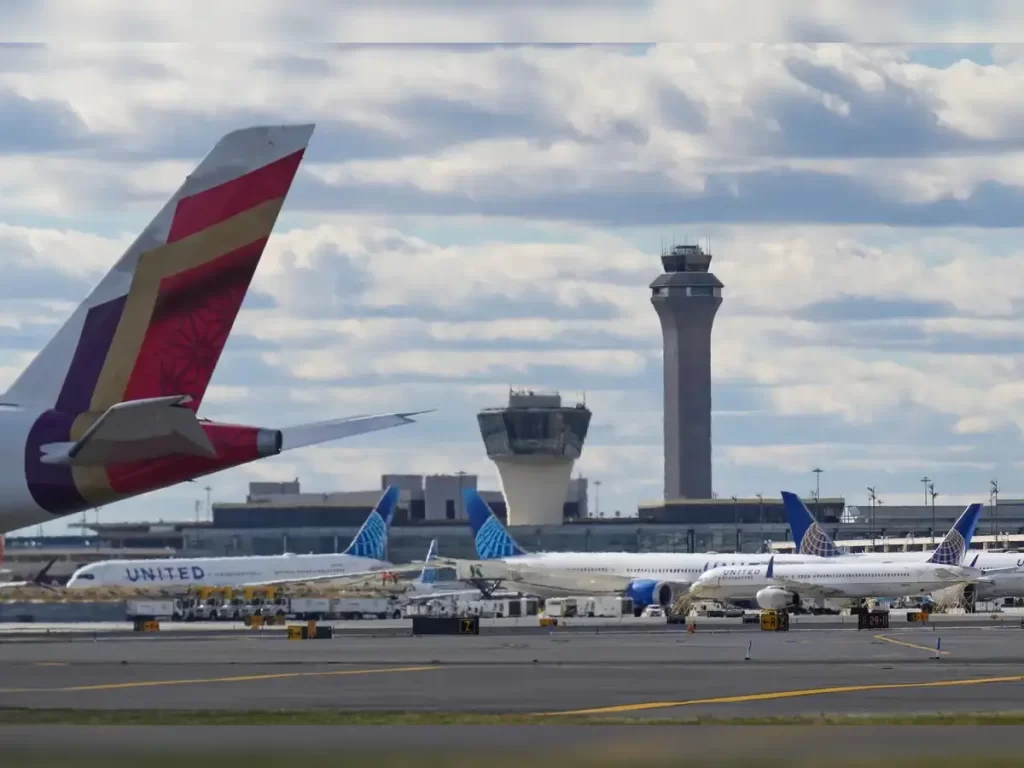
The Federal Aviation Administration (FAA) has mandated a sweeping reduction in flight operations at 40 of the United States’ busiest airports in response to the ongoing federal government shutdown, citing severe staffing shortfalls and mounting safety concerns. The move marks one of the most significant disruptions to U.S. aviation in recent memory and signals broader ripple effects across domestic travel, logistics, and airline scheduling.
Under the directive issued by the FAA and U.S. Transportation Secretary Sean Duffy, airlines must immediately trim domestic flight operations by 4 per cent beginning Friday at 40 designated airports. If the shutdown drags on, the reduction is set to escalate to 10 per cent by November 14.
The affected airports include major hubs such as Hartsfield–Jackson Atlanta International Airport, Chicago O’Hare International Airport, Los Angeles International Airport, and John F. Kennedy International Airport, among others. The reductions will affect not just passenger flights but also private-plane operations and cargo movements in some instances.
The measure stems from the combination of the prolonged government shutdown — now in its 38th day — and the resulting strain on air traffic control staffing. According to data cited by the FAA, thousands of air traffic controllers and other essential aviation employees are working without pay, leading to increased absenteeism and fatigue.
Airlines began cancelling or rescheduling flights in anticipation of the mandated reductions. On the first day of the cuts, more than 1,000 flights were cancelled at airports across the nation. Aviation analysts have described the situation as “the calm before the storm,” suggesting that worse disruptions may follow if the shutdown continues.
Industry insiders warn that the scheduled cutbacks could remove up to 1,800 flights and more than 268,000 seats across the impacted airports, based on analytics firm estimates. Meanwhile, airlines are already implementing contingency plans: waiving change fees, advising travellers to monitor flight status closely, and adjusting regional operations to minimise impact.
Beyond passenger inconvenience, cargo operations are also at risk. With many freight shipments relying on passenger aircraft bellies for carriage, the cutbacks could affect just-in-time supply chains and logistics networks.
With the Thanksgiving holiday travel season approaching, the timing of this intervention raises additional concerns. The FAA has stated that these actions are driven by safety metrics rather than politics, emphasising the need to maintain the “world’s safest aviation system.”
As the U.S. federal government shutdown persists, aviation authorities have moved to reduce flight capacity at 40 major airports to safeguard safety amid mounting staffing pressures. The 4 per cent reduction now—ramping to 10 per cent next week—marks a serious escalation with far-reaching implications for passengers, airlines, and cargo networks. With thousands of flights trimmed and seat availability diminished, the disruption may well extend into the holiday travel window. Ultimately, this episode underscores how the cascading effects of a federal stalemate can reach deep into sectors as critical as air transport. The resolution of the shutdown will determine whether these reductions remain manageable or escalate into a broader aviation crisis.

